
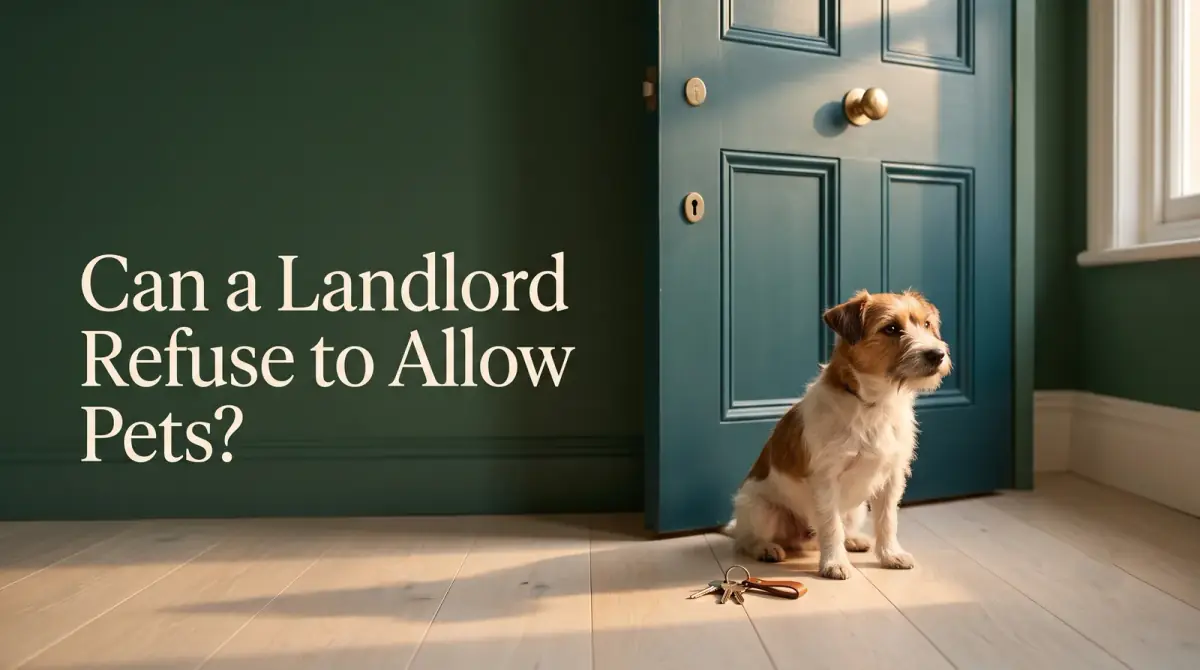
The short answer
Pet rules for renters are changing fast. Learn in general terms when a landlord can refuse pets, where bans are easing, and how to ask the right way.
- Landlords have often been free to allow or refuse pets.
- Some regions are limiting outright, blanket pet bans.
- Assistance and service animals are usually treated differently.
- A responsible, well-prepared request improves your chances.
- This is general information, so check your local rules.
In many places, yes, a landlord can refuse pets, though the ground is shifting. Whether can a landlord refuse pets depends on where you live and the type of animal, but traditionally landlords have had wide discretion to say no. This is general educational information rather than legal advice, so treat it as background for your own decisions.
Across the US, UK, and Australia some regions are moving toward giving tenants more room to keep pets, while others still leave it largely to the landlord. Assistance and service animals are often treated as a separate matter. For your specific case, a tenancy authority or qualified professional can confirm the rules.
- Landlords have often been free to allow or refuse pets.
- Some regions are limiting outright, blanket pet bans.
- Assistance and service animals are usually treated differently.
- A responsible, well-prepared request improves your chances.
- This is general information, so check your local rules.
Can a landlord refuse pets? The general position
The general position, in many places, is that a landlord can decide whether to allow pets. Property owners have often been free to set their own policy, and a blanket refusal has long been common.
However, this is one of the faster-changing areas of renting. A growing number of regions are limiting outright bans or encouraging landlords to consider requests fairly rather than refusing by default. So the traditional answer is softening, even if it has not disappeared entirely.
Understanding a no pets clause
A no pets clause is a term in a lease that bans animals from the property. It has been a standard feature of many agreements, reflecting landlord worries about damage, noise, or allergies for future tenants.
- It may ban all animals or only certain types.
- It sometimes allows pets with written permission.
- Its enforceability can depend on local law.
Importantly, a clause on paper is not always the final word. In some regions, blanket no-pet terms are being questioned or overridden, so it is worth checking whether a strict clause still holds where you live.
Where the rules on pets are loosening
The direction of travel in several countries is toward more balance between owners and tenants. Rather than allowing automatic refusals, some rules now expect landlords to have a genuine reason to say no.
For example, a landlord might reasonably refuse where a property is genuinely unsuitable for a large animal, but not simply out of habit. This shift does not guarantee you can keep a pet, yet it often means your request must at least be considered on its merits.
Assistance and service animals are different
One area stands apart: animals that support a person with a disability. Assistance or service animals are frequently treated differently from ordinary pets, and a standard no-pets rule may not apply to them.
In many places, refusing such an animal can raise separate legal issues around disability and fair treatment. Because these protections are specific and vary by country, anyone relying on an assistance animal should check the exact rules or seek advice from the relevant authority.
Renting with pets: how to ask well
Renting with pets often comes down to how you make your case. Even where a landlord can refuse, a thoughtful, reassuring approach improves your odds considerably.
- Ask before signing, not after moving in.
- Offer references from a previous landlord about your pet.
- Suggest reasonable terms, such as extra cleaning at the end.
- Be honest about the animal's size, breed, and temperament.
Presenting yourself as a responsible owner addresses the landlord's real concern, which is risk. In short, make it easy for them to say yes.
What a fair pet policy in a rental looks like
A reasonable pet policy rental arrangement tries to protect the property without being needlessly rigid. Instead of a flat ban, it sets sensible conditions both sides can live with.
- Clear rules on which pets are allowed.
- Expectations around cleaning and any damage.
- A simple process for requesting permission.
Some landlords ask for a pet-related deposit or added terms, though the legality of extra charges varies by region. A fair policy balances the owner's caution with the tenant's wish for a settled home.
What to do if your request is refused
If a landlord says no, it helps to understand why before deciding what to do next. Sometimes a specific worry can be addressed; other times a refusal is simply within their rights.
- Ask for the reason in writing.
- Offer to resolve the concern, such as with references or terms.
- Check whether local rules limit blanket refusals.
- Seek advice if you think the refusal is unlawful.
Because pet rights differ so much from place to place, the relevant tenancy authority or a qualified professional is the best source for whether a refusal can be challenged in your area.
Why some landlords say no to pets
Understanding the landlord's point of view makes it easier to address their concerns directly. Most refusals come down to a handful of practical worries rather than any dislike of animals.
Common concerns include possible damage to floors and furnishings, noise that might disturb neighbours, and allergies affecting future tenants. When you can show how you would manage each of these, a hesitant landlord often becomes far more open to agreeing. It also helps to put your request in writing rather than raising it only in passing, because a short, polite note gives the landlord something concrete to consider and to keep on file.
Finally, if permission is granted, try to get it in writing too. A verbal yes can be forgotten or disputed later, so a brief note confirming that your pet is allowed protects both of you and saves any awkward conversations down the line. None of this guarantees a yes, but it tilts the odds, because a landlord weighing risk responds well to evidence that you have thought it through.
The bottom line
So, can a landlord refuse pets? In many places, yes, though the rules are gradually loosening and assistance animals are often treated separately. Your best strategy is usually to ask early, present yourself as a responsible owner, and understand the policy you are agreeing to. Since the law varies across the US, UK, and Australia, treat this as general information and check with a qualified professional or your local tenancy authority about your situation.



Comments
0 total