
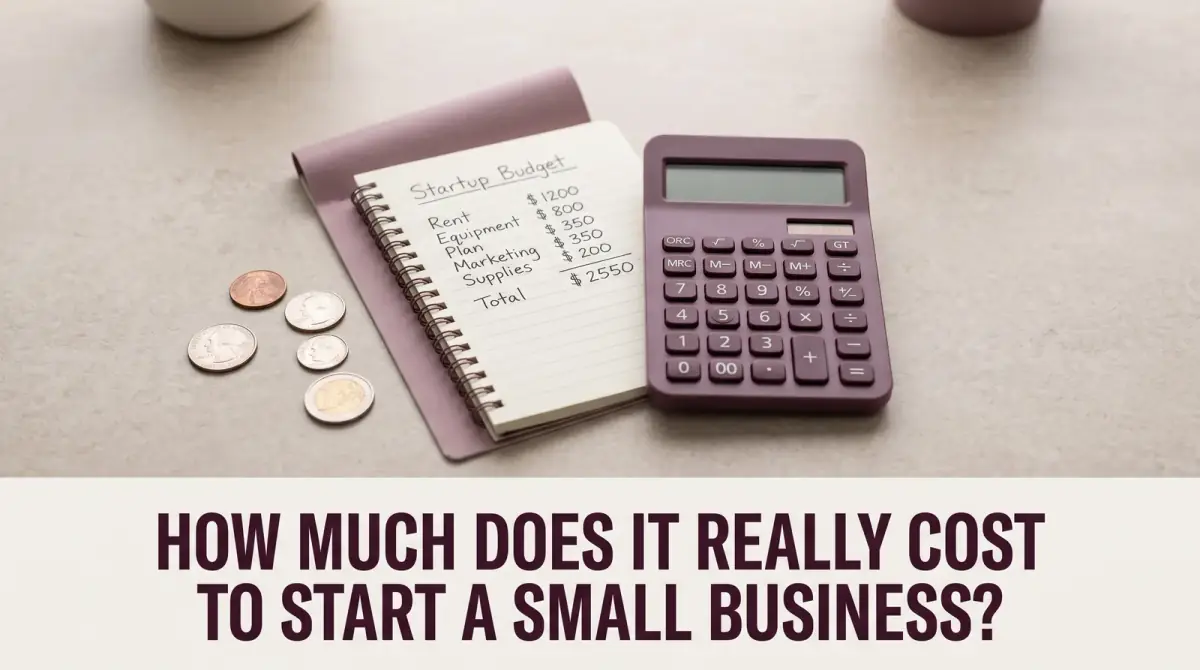
The short answer
Startup costs vary widely, but the categories are predictable. Here is what it really costs to start a small business, plus where new owners tend to overspend early on.
- Costs depend heavily on your business type and setup.
- The main spending categories are the same for most businesses.
- Separate one-time costs from the ongoing monthly ones.
- Many owners overspend on things customers never notice.
- Starting lean lets you learn before you commit big money.
The real cost to start a small business ranges from almost nothing to a large sum, depending on what you sell and how you run it. A home-based service can start with little more than a laptop and a few tools, while a shop or workshop needs premises, stock, and equipment. The exact figure varies, but the categories of spending are surprisingly predictable, which means you can plan for them.
Most new owners are not caught out by the obvious costs. They are caught out by the small, recurring ones that add up quietly in the first few months.
Here is the short version before we break it down:
- Costs depend heavily on your business type and setup.
- The main spending categories are the same for most businesses.
- Separate one-time costs from the ongoing monthly ones.
- Many owners overspend on things customers never notice.
- Starting lean lets you learn before you commit big money.
What drives the cost to start a small business
The biggest factor in your cost to start a small business is the model you choose. A freelancer selling skills online spends very little to begin, while a business holding physical stock or renting space faces far higher upfront bills.
Location, scale, and ambition matter too. Starting from a spare room costs less than a high-street unit, and testing with a small range costs less than launching a full catalog on day one.
Because figures differ so much by country, industry, and personal choices, treat this as general information rather than financial advice. For numbers specific to your plan, price your own suppliers and speak with a qualified professional.
The main startup cost categories
Whatever you build, your spending tends to fall into a handful of familiar buckets. Mapping these early is the heart of any realistic plan.
- Registration and admin: forming the business, licenses, and any permits.
- Equipment and tools: devices, machinery, or software you need to work.
- Premises: rent, a deposit, and fit-out if you need a physical space.
- Stock or materials: the goods or supplies you sell or use.
- Branding and website: a logo, a simple site, and basic marketing.
- Insurance and professional help: cover and any advice you buy in.
Not every business needs every category. A consultant may skip stock and premises entirely, while a cafe leans heavily on both. List only the buckets that apply to you.
One-time costs versus ongoing costs
A common planning mistake is to add up only the one-time costs and forget the monthly ones. Both belong in your small business startup costs, and the ongoing figures often matter more for survival.
One-time costs include things like registration, initial equipment, and your first batch of stock. Ongoing costs are the bills that return every month, such as rent, subscriptions, restocking, and any wages.
Plan for both. Many businesses do not fail because the launch was too expensive. They fail because the owner did not budget for the months of running costs before the income caught up.
How much to start a business in practice
People often want one number for how much to start a business, but the honest answer is that it depends on the choices above. Still, you can group businesses loosely by their starting needs.
Rough tiers to think in
- Very low: a service you sell using skills and tools you already own.
- Moderate: a small product line, a simple website, and light equipment.
- Higher: a business needing premises, staff, or significant stock.
Rather than chasing an average, price your own version. Cost out each category that applies to you, add a cushion for surprises, and you will have a figure grounded in your real plan instead of someone else's.
Where new owners overspend
Overspending early is one of the most common and avoidable mistakes. Excitement makes it tempting to buy the best of everything before a single customer arrives.
Frequent culprits include a polished office or shop fit-out before there is steady income, premium software with features you will not use for months, and large stock orders based on hope rather than proven demand. Elaborate branding can wait too, since customers care far more about the product than a perfect logo at launch.
The pattern is spending on how the business looks instead of what it needs to earn its first sales. Delay anything that does not directly help you get and serve customers.
A simple test helps here. Before any purchase, ask whether it will win a customer, keep a customer, or let you deliver what you sold. If it does none of those things, it can usually wait until the business is earning and you have real income to spend rather than hopeful savings.
How to start lean and learn first
Starting lean means spending the minimum needed to test whether the business works, then reinvesting once you see real demand. It lowers your risk and buys you time to learn.
- List only the costs that are truly essential to make your first sale.
- Borrow, rent, or buy used equipment instead of new where you can.
- Use free or low-cost tools until paid ones clearly pay for themselves.
- Start with a small range and expand based on what sells.
- Reinvest early profit rather than funding growth with debt too soon.
Lean does not mean cheap in a way that hurts quality. It means spending carefully on what matters to customers and waiting on the rest until the business proves itself.
Building a realistic startup budget
A simple startup budget turns guesswork into a plan you can act on. It does not need to be fancy, just honest and complete.
List every one-time cost, then every monthly cost, using real quotes from suppliers wherever possible instead of hopeful guesses. Add a cushion for the unexpected, because something always comes up, and estimate how many months you will run before income covers the bills. That runway figure is often the most important number of all.
Review the budget as you go and update it with real numbers. A living budget keeps you in control and helps you spot trouble while there is still time to react.
The bottom line
The cost to start a small business depends on your model, but the categories are predictable enough to plan around. Separate one-time costs from ongoing ones, resist the urge to overspend on appearances, and start lean so you learn before you commit big money. Price your own plan, build in a cushion, and focus your early spending on the few things that actually win and keep customers.

Comments
0 total