

The short answer
Difficult conversations with your partner do not have to end in a fight. Learn how timing, soft openers, and real listening turn tension into closeness.
- Avoid the door. Do not start big talks as someone arrives home or leaves.
- Avoid depletion. Late at night or mid-stress is the worst time.
- Ask for a time. A simple can we talk this evening lets both of you show up ready.
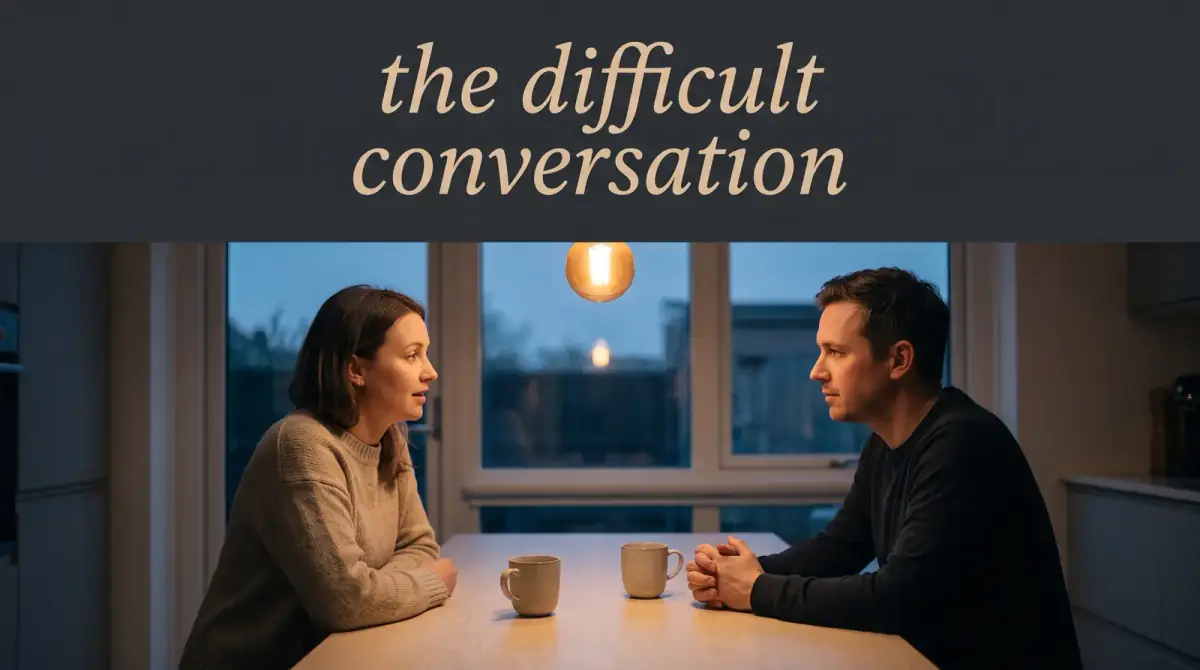
Difficult conversations with your partner become far less scary once you realize the goal is not to win, but to understand and be understood. Most hard talks go badly not because of the topic, but because of how and when they start. Get the timing and the opening right, and even tense subjects can bring you closer instead of driving you apart.
This is a skill, not a personality trait. Couples who handle conflict well are not calmer by nature. They have simply learned a few habits that keep the conversation from tipping into a fight.
Pick the right moment
Timing decides more than wording. A serious talk launched when one of you is tired, hungry, rushing out the door, or already upset is set up to fail. Instead, name that you want to talk and ask when works.
- Avoid the door. Do not start big talks as someone arrives home or leaves.
- Avoid depletion. Late at night or mid-stress is the worst time.
- Ask for a time. A simple can we talk this evening lets both of you show up ready.
How to start difficult conversations gently
The first sixty seconds set the tone. Research on couples consistently points to the soft start, opening without blame or attack. Lead with how you feel and what you need, not with what your partner did wrong.
Use the soft opener
Compare I need to talk about something and I would love your help with it to we need to talk. The first invites partnership. The second triggers defense.
Speak from your side
Start sentences with I feel and I need rather than you always or you never. Statements that begin with you put your partner on trial, and people defend themselves instead of listening.
Make it one topic, not a case file
Difficult conversations with your partner collapse when one issue becomes a pile of every past grievance. Keep it to a single subject. If other things come up, note them for later and return to the one thing you set out to discuss.
The aim of a hard conversation is not to prove you are right. It is to leave both people feeling understood enough to solve the problem together.
Listen to understand, not to reply
Real listening is the part most of us skip. While your partner speaks, resist building your rebuttal. Instead, reflect back what you heard before responding. A quick so what I am hearing is shows them they landed, and it slows the whole exchange down in a good way.
Manage the heat before it boils
When your heart is pounding and your thoughts narrow, you have lost access to the calm part of your brain. That is the moment to pause, not push. Agree in advance that either of you can call a short break, then actually return to finish. A twenty minute reset can save a two hour spiral.
The repair attempt
If things get sharp, a small repair, a softer tone, a bit of humor, an honest that came out wrong, can pull the conversation back from the edge. Noticing and accepting these repairs matters as much as making them.
Aim for a next step, not a verdict
End with something concrete rather than a winner. What is one small change each of you can try? Agreeing on a next step turns a hard talk into progress and gives you both a reason to feel hopeful.
When to seek outside help
If the same fights keep repeating, or if conversations regularly turn to contempt, stonewalling, or feeling unsafe, a couples therapist can help you build patterns you cannot easily build alone. Seeking that support early is a sign of investment in the relationship, not a sign that it is failing.
Prepare before you speak
A little preparation prevents a lot of escalation. Before you raise a hard topic, get clear with yourself about what you actually want from the conversation. Vague frustration tends to come out as attack, while a clear intention keeps you grounded when emotions rise.
- Name the real issue. Look under the surface complaint for what you truly need.
- Decide your goal. Understanding, a decision, or simply being heard are different aims.
- Choose one or two points. Walking in with a list guarantees defensiveness.
Common traps to avoid
Even with good intentions, a few habits reliably derail difficult conversations with your partner. Knowing them in advance helps you catch yourself.
- Mind reading. Assuming you know their motive puts words in their mouth.
- Keeping score. Turning the talk into a tally of past wrongs kills any chance of resolution.
- The always and never. Absolute words invite your partner to argue the exception instead of the issue.
- Winning. If one of you loses, the relationship loses. Aim for a solution you can both live with.
What to do after the conversation
How a hard talk ends and what happens next shapes whether it strengthened the relationship or strained it. Do not just walk away and hope it sticks.
- Acknowledge the effort. Thank your partner for staying in a hard conversation. It reinforces that these talks are safe.
- Confirm the next step. Restate what each of you agreed to try, so there is no fuzzy memory later.
- Reconnect. A small gesture of warmth afterward reminds you both that you are on the same team.
Give it time to work
One good conversation rarely fixes a long-standing issue. Change tends to come in small increments, with the occasional stumble. If you both slip back into an old pattern, treat it as a chance to practice again rather than proof that the talk failed. The couples who do this well are not the ones who never struggle, they are the ones who keep returning to the conversation with patience and goodwill.
Remember you are on the same side
It is easy to slip into treating a hard conversation as a contest with a winner and a loser. But you and your partner are not opponents, you are two people trying to solve a shared problem. Holding that in mind changes your tone from attack to teamwork. When both of you aim for a solution rather than a victory, even the hardest talks tend to end with you closer, not further apart.
Key takeaways
- Difficult conversations with your partner go better when you pick a calm, agreed time.
- Open softly with I feel and I need, not blame.
- Stick to one topic and listen to understand before you reply.
- Take a short break when heat rises, then return and finish.
- End with a concrete next step, and see a therapist if the same conflicts keep repeating.

Comments
0 total