
The short answer
Essential safety tips for solo female travelers: smart planning, trusting your instincts, and confident habits for a safer, freer adventure.
- Research your destination. Learn which neighborhoods are considered safe, local customs, and any areas travelers are advised to avoid.
- Understand local norms. Knowing customs around dress and behavior helps you blend in and show respect, which also draws less unwanted attention.
- Book your first night in advance. Arriving somewhere new with a confirmed, well-reviewed place to stay removes stress at a vulnerable moment.
- Learn a few local phrases. Words for help, no, and thank you go a long way.
- Save key information offline. Store your accommodation address, emergency numbers, and a map you can access without data.
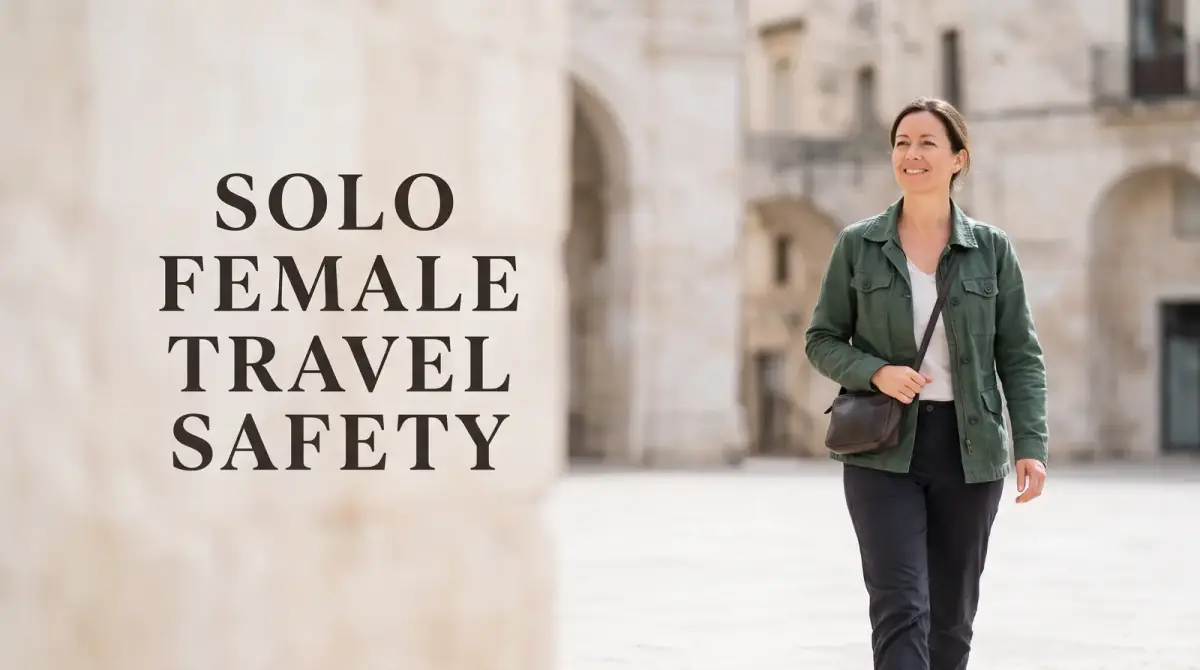
The best safety tips for solo female travelers come down to one idea: prepare well, stay aware, and trust your instincts, so you can relax and enjoy the freedom that solo travel offers. Traveling alone as a woman is deeply rewarding, and millions do it safely every year. Confidence isn't about fear; it's about being ready, so you spend your trip exploring instead of worrying.
How can solo female travelers stay safe?
Safety starts long before you leave home. The single most effective habit is thoughtful preparation, because good planning removes most of the situations that catch travelers off guard. Combine that with everyday awareness and a willingness to trust your gut, and you've covered the fundamentals.
Plan smart before you go
A little research turns unknown places into familiar ones and helps you avoid problems entirely.
- Research your destination. Learn which neighborhoods are considered safe, local customs, and any areas travelers are advised to avoid.
- Understand local norms. Knowing customs around dress and behavior helps you blend in and show respect, which also draws less unwanted attention.
- Book your first night in advance. Arriving somewhere new with a confirmed, well-reviewed place to stay removes stress at a vulnerable moment.
- Learn a few local phrases. Words for help, no, and thank you go a long way.
- Save key information offline. Store your accommodation address, emergency numbers, and a map you can access without data.
Share your plans and stay connected
Being independent doesn't mean being unreachable. A trusted contact who knows your movements is a powerful safety net.
- Share your itinerary with a family member or friend back home, including where you're staying.
- Check in regularly so someone will notice quickly if plans change unexpectedly.
- Keep your phone charged. Carry a portable power bank so you're never stranded without a working phone.
- Have a backup way to communicate, such as a local SIM or an eSIM, so you're not dependent on public Wi-Fi.
Why should you trust your instincts?
Your intuition is one of your best safety tools. If a person, place, or situation feels wrong, you don't owe anyone an explanation for leaving.
Solo travelers sometimes worry about seeming rude, but your safety always outranks politeness. It's perfectly fine to walk away, decline an invitation, change your route, or make an excuse to exit. Trusting that inner signal has kept countless travelers out of harm's way.
Smart habits while you're out and about
Daily awareness makes the biggest difference on the ground. None of this requires paranoia, just attention.
- Project confidence. Walking with purpose, even when unsure, makes you a less likely target. If lost, step into a shop or cafe to check your map rather than looking stranded on the street.
- Stay aware of your surroundings. Keep headphones out or volume low in unfamiliar areas so you can hear what's happening around you.
- Limit alcohol and watch your drink. Stay clear-headed enough to make good decisions, and never leave a drink unattended.
- Be cautious with new acquaintances. It's great to meet people, but avoid oversharing your exact plans or where you're staying with strangers.
- Prefer well-lit, populated routes, especially at night, and consider a reputable taxi or rideshare over walking alone in the dark.
What about meeting other travelers?
Connecting with others is one of the joys of solo travel and can boost safety too. Staying in social accommodations, joining group day tours, or meeting fellow travelers means you're rarely truly alone, and locals in reputable settings are often happy to help. Just let trust build gradually rather than instantly.
Protect your money and belongings
Petty theft is far more common than serious danger, so guarding your valuables handles most real-world risk.
- Don't keep everything in one place. Split cash and cards between your bag, a hidden pouch, and your accommodation safe.
- Carry a decoy amount of cash for daily spending and leave the rest secured.
- Use an anti-theft or crossbody bag worn in front in crowded areas and on public transport.
- Keep digital copies of your passport, tickets, and important documents in secure cloud storage.
- Avoid flashing valuables like expensive jewelry, cameras, or large amounts of cash.
Choosing safe accommodation and transport
Where you sleep and how you get around shape a large part of your trip's safety.
- Read recent reviews, paying attention to comments from other solo women about safety and location.
- Choose central, well-reviewed areas even if they cost a little more; convenience and safety are worth it.
- Confirm the door locks well and note the nearest exits when you arrive.
- Use licensed taxis or trusted rideshare apps, and verify the car and driver details before getting in.
- Sit near the driver or other passengers on public transport when possible.
Solo travel isn't about avoiding the world out of fear. It's about meeting it prepared, so you can say yes to adventure with confidence.
Prepare for the unexpected
Even careful travelers hit bumps. A little readiness turns a crisis into a mere inconvenience.
- Get travel insurance that covers health emergencies, theft, and trip disruptions.
- Know the local emergency number and the location of your country's nearest embassy or consulate.
- Carry a small first-aid kit and any personal medications with copies of prescriptions.
- Have an emergency fund you can access if cards are lost or stolen.
The takeaway is empowering: solo female travel is not something to fear, it's something to prepare for. With smart planning, sensible daily habits, and unwavering trust in your instincts, you dramatically reduce the risks and free yourself to embrace the confidence, growth, and joy that come from exploring the world on your own terms. Go, stay aware, and enjoy every moment.
Comments
0 total