
The short answer
People pleasing rarely comes from one cause. Explore the childhood roots, fears, and habits behind it, plus kind first steps to begin changing the pattern.
- People pleasing is often a learned survival strategy, not a flaw.
- Early family patterns can teach you that peace matters more than needs.
- A deep fear of conflict or rejection keeps the habit running.
- Approval can become a stand-in for feeling safe and worthy.
- Naming the root gently is the first step toward change.
What causes people pleasing is rarely one single thing. For most people it grows from a mix of early experiences, a fear of conflict, and a learned belief that approval keeps you safe. Understanding these roots does not excuse the habit, but it does make it easier to change with patience instead of shame.
The habit usually starts as a smart response to a real situation. Once you see where it came from, you can begin to loosen its hold.
Here are the key takeaways:
- People pleasing is often a learned survival strategy, not a flaw.
- Early family patterns can teach you that peace matters more than needs.
- A deep fear of conflict or rejection keeps the habit running.
- Approval can become a stand-in for feeling safe and worthy.
- Naming the root gently is the first step toward change.
People pleasing meaning, in simple terms
Before digging into causes, it helps to be clear on the people pleasing meaning. At its core, it is the habit of managing other people's feelings to protect yourself from their disapproval.
It can look like kindness from the outside. Inside, it often feels more like pressure, as if your safety depends on keeping everyone happy.
What causes people pleasing behavior in the first place
When people ask what causes people pleasing behavior, they often expect a single reason. In truth, several threads usually weave together over many years.
Common contributing factors include:
- Early experiences where approval felt conditional.
- A home or setting where conflict felt unsafe.
- Praise that mostly came for being helpful or easy.
- A sensitive nature that reads other people's moods closely.
No single item on this list creates the habit alone. It is the mix, repeated over time, that trains you to put others first by default.
The childhood roots beneath the habit
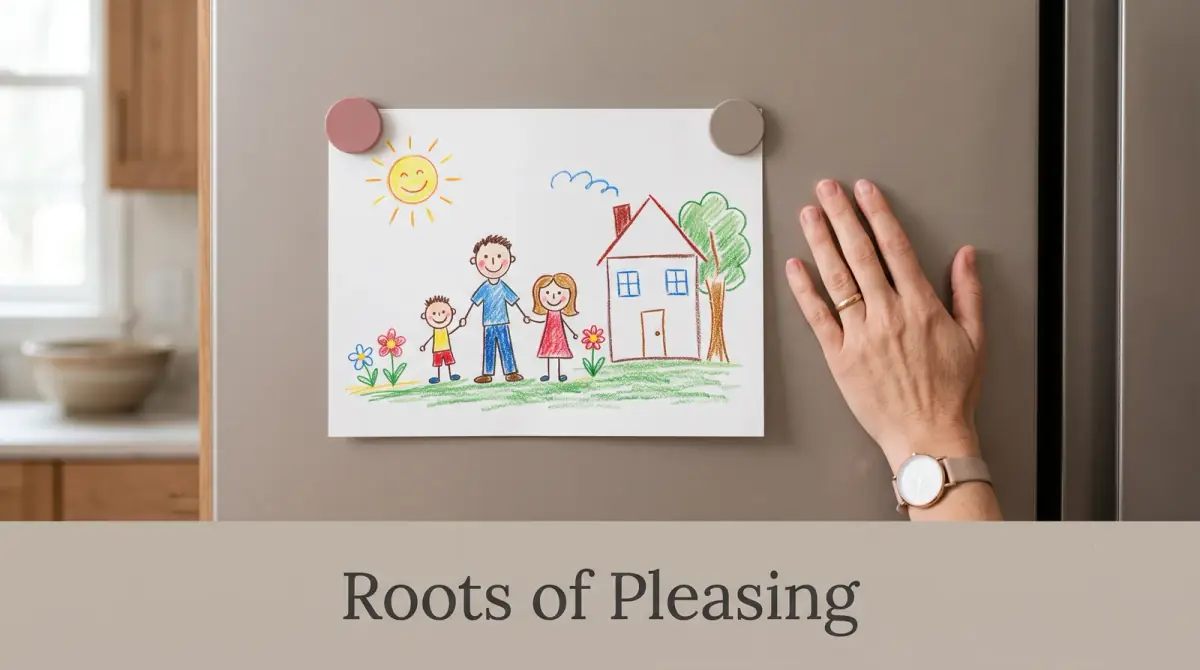
Many people trace the pattern back to childhood, though not always in obvious ways. Children learn quickly what earns warmth and what brings tension.
If being agreeable brought love or calm, you may have learned that pleasing others is how you stay connected. If speaking up led to trouble, you may have learned to go quiet.
This is not about blaming your family. Most parents do their best, and these lessons are often passed down without anyone noticing. The point is simply to see the pattern clearly.
How helpfulness becomes an identity
Some children get most of their praise for being good, easy, or helpful. That feels nice, so they lean into it.
Over years, "the helpful one" can turn from a role into an identity. Then saying no starts to feel like losing yourself, not just declining a task.
Fear of conflict and rejection
Under most people pleasing sits a simple fear. It is the worry that honesty will cost you the relationship.
If conflict feels dangerous, agreeing feels like safety. Saying yes keeps the peace in the moment, even when it costs you later.
Rejection can feel just as threatening. When you believe that disappointing someone might end the bond, pleasing them looks like the only safe move. That belief is worth questioning, because most healthy relationships can hold honest disagreement.
Approval as a stand-in for self-worth
For some people, approval becomes the main way they feel okay about themselves. When your sense of worth rides on being liked, every interaction turns into a small test.
The problem is that outside approval never fills the gap for long. You please someone, feel relief, then need it again the next day.
Real steadiness comes from valuing yourself even when someone is unhappy with you. That skill takes practice, especially if you never learned it early on.
How the pattern keeps repeating
People pleasing tends to reinforce itself. Each time you smooth things over and feel relief, your brain marks the habit as useful.
The cycle often looks like this:
- You sense possible tension or disapproval.
- You override your own needs to prevent it.
- You feel short-term relief.
- Your brain files the habit away as safe and effective.
Because the relief is real, the loop is hard to break by willpower alone. Change comes from slowly teaching yourself that honesty is safe too.
Kind first steps to begin breaking the pattern
You do not have to fix the roots all at once. Small, gentle steps work better than a sudden overhaul.
You might try to:
- Notice the moment you feel the urge to please, without judging it.
- Pause before you answer a request, even for a few seconds.
- Practice one small honest choice a day in a low-stakes setting.
- Remind yourself that your needs are allowed to exist.
Curiosity helps more than criticism here. Treat each moment as information, not proof that something is wrong with you.
The difference between kindness and people pleasing
It is easy to confuse the two, because both involve caring about others. The difference lies in where the action comes from.
Kindness flows from choice and a full tank. You help because you want to, and you can still say no without panic. People pleasing flows from fear and a sense that you have no other option.
A few clues help you tell them apart:
- Kindness leaves you feeling warm; pleasing often leaves you drained.
- Kindness can accept a no; pleasing fears one.
- Kindness respects your limits; pleasing ignores them.
This difference removes a common worry. You can change the habit and still be a caring, generous person. In fact, honest kindness is usually warmer, because it is freely given.
Personality can play a small part
Some people are simply more sensitive to others' moods and more eager to keep harmony. That natural wiring is not a problem on its own.
It only becomes a struggle when it teams up with fear and old lessons. A caring nature paired with steady self-worth turns into healthy empathy, not self-erasure.
When the roots need extra care
Sometimes the causes reach into painful territory, such as past neglect, harsh criticism, or experiences that still feel raw. These deserve more than a self-help checklist.
If exploring the roots stirs up strong distress, or if the habit is tied to anxiety or low mood that lingers, consider talking with a therapist or counselor. Trained support can help you work through the deeper layers safely.
This article offers general information, not personal advice. Reaching out for help is a sign of care for yourself, not a failure.
The bottom line
What causes people pleasing is usually a blend of early lessons, fear of conflict, and a search for approval that once kept you safe. None of it means you are broken.
See the roots with kindness, take one small honest step, and let change unfold at a pace you can handle.



Comments
0 total