
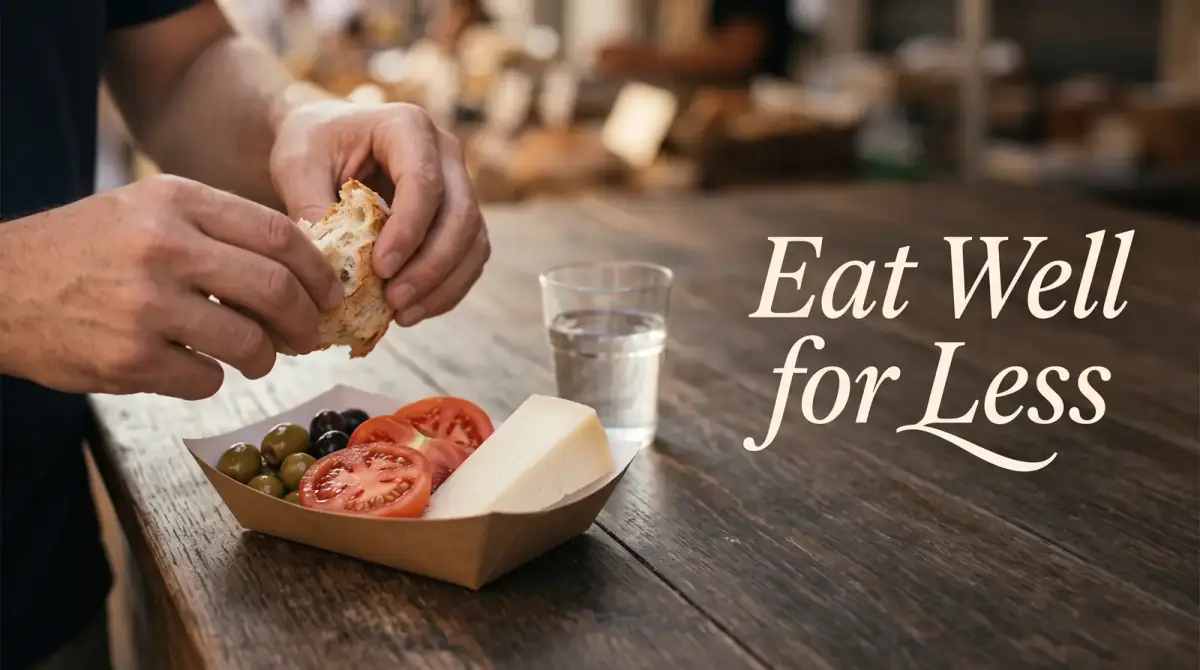
The short answer
The best food abroad is usually the cheapest. Here is how to find it, when to eat it, and how to stop your food budget quietly eating your trip.
- A short menu. Six dishes means they cook. Ninety dishes across four cuisines means a freezer.
- The menu is in the local language, or the translation is charmingly bad. A menu in six languages with photographs is aimed at you specifically.
- Locals are eating there, especially at local mealtimes rather than tourist mealtimes.
- A queue of people who look like they are on a lunch break, not a queue of people holding cameras.
- Someone outside actively inviting you in is a warning sign, not a welcome. Good places do not need to recruit from the pavement.
The best meal I have ever eaten abroad cost less than a coffee at the airport I flew out of. It was served on a plastic stool by a woman who made exactly one dish and had clearly been making it for thirty years. Meanwhile, two streets away, tourists were paying five times as much for a laminated photo menu and a microwaved version of the same thing. That gap is essentially everything worth knowing about how to eat well and cheaply while travelling.
Because this is not about eating less or worse. In most of the world, the cheapest food is also the best food, and the expensive stuff is aimed squarely at people who do not know where they are.
Why does food quietly destroy travel budgets?
Flights and accommodation get planned. Food gets improvised, three times a day, usually when you are tired and hungry and standing in the most touristed square in the city. That is the worst possible moment to make a spending decision.
The fix is not discipline. It is having a default plan so you are never choosing a restaurant while hungry in a tourist zone. Everything below is a version of that idea.
How to eat well and cheaply while travelling: the distance rule
Start with the crudest and most reliable heuristic in travel: prices fall and quality rises as you walk away from the main attraction. Two or three streets is usually enough. Five minutes of walking regularly halves the bill.
Restaurants beside a famous landmark never need a repeat customer. There will always be another coachload tomorrow. A place tucked down a side street survives on locals coming back weekly, and that changes everything about how they cook.
Signals a place is worth eating in
- A short menu. Six dishes means they cook. Ninety dishes across four cuisines means a freezer.
- The menu is in the local language, or the translation is charmingly bad. A menu in six languages with photographs is aimed at you specifically.
- Locals are eating there, especially at local mealtimes rather than tourist mealtimes.
- A queue of people who look like they are on a lunch break, not a queue of people holding cameras.
- Someone outside actively inviting you in is a warning sign, not a welcome. Good places do not need to recruit from the pavement.
- Prices are visible before you sit down. No prices means the price is whatever they think you will pay.
Eat where the working day eats
The best value in almost any country is the weekday lunch aimed at workers. It goes by different names everywhere, a set lunch, a menu of the day, a plate lunch, a thali-style tray, but the structure is universal: a fixed price, a couple of courses, often a drink, served fast because people need to get back to work.
The same kitchen will charge substantially more for a similar dinner. So flip your day: make lunch your main meal and keep dinner light. You eat better, spend less, and you are not sitting down to a heavy plate at 10pm.
Markets are the other half of the answer
Local food markets are simultaneously the cheapest meal in town and one of the best free attractions in it. Go in the morning, buy bread, fruit, cheese or cooked items from stalls, and you have breakfast plus a picnic lunch for the price of one cafe sandwich.
Look for the market where people are buying ingredients rather than souvenirs. If the stalls sell fridge magnets, you are in the wrong hall.
Street food: how to eat it confidently
Street food is where travellers get nervous, and often that nervousness costs them both money and the best food of the trip. A few sensible filters make it straightforward.
- Go where it is busy. High turnover means the ingredients have not been sitting out, and locals have already done the quality control for you.
- Prefer food cooked to order in front of you, hot and fresh, over anything lukewarm in a tray.
- Watch how they handle money and food. Separate hands or gloves is a good sign anywhere in the world.
- Follow the specialists. A stall doing one thing all day is almost always better than one offering everything.
- Be cautious with raw items washed in local water if your stomach is not adjusted, and be sensible about ice and tap water where the water is not considered safe to drink.
- Eat at peak hours. The busiest time is the freshest food, not the longest wait.
Use your accommodation as a food strategy
Where you sleep quietly determines what you spend on food.
- A kitchen, even a kettle and a fridge, changes your budget meaningfully. Breakfast at home and a packed lunch means only one paid meal a day.
- Included breakfast is worth real money, and a big one can push your first paid meal to mid-afternoon.
- Being near a supermarket beats being near a restaurant strip. Local supermarkets also have excellent cheap prepared food and are a genuinely interesting window into how people actually eat.
Carry a refillable water bottle. In places where tap water is safe, this alone saves a surprising amount over a two-week trip, and where it is not, a bottle with a filter or purification tablets covers you.
The small habits that add up
- Ask what the house does best rather than ordering the most familiar item. You will eat better and usually cheaper.
- Check whether bread, water, olives or table snacks are free. In some countries they are charged automatically, and it is entirely fine to decline them.
- Order the local staple, not the imported one. Imported ingredients carry a premium everywhere; the dish the region is built around does not.
- Drink what is local. Local beer, local wine, local tea or coffee is a fraction of the price of the imported alternative.
- Share and order in rounds. Start with less than you think, then add. Portion sizes vary wildly between countries.
- Learn three food words: the local word for delicious, for the bill, and for one of these please while pointing. It transforms how you are treated.
Cheap food abroad is rarely a compromise. It is usually the food the place is actually proud of.
A simple daily structure
If you want one repeatable pattern, use this: market or accommodation breakfast, a proper set lunch out, and a light dinner from a bakery, street stall or supermarket. One real meal, two cheap ones, and one indulgent restaurant night at the end of the trip that you actually researched instead of stumbling into.
The takeaway
Walk three streets from the landmark, eat your main meal at lunch, use markets for everything else, and trust the busy stall with the short menu. That is the entire system, and it holds up almost anywhere on earth.
You will spend less than the travellers eating on the main square, and you will eat considerably better than they will.



Comments
0 total