
The short answer
A realistic system for travelling with only a carry-on, including the capsule wardrobe, liquids rules, and the mindset shift that makes it easy.
- Four to five tops, mostly fast-drying, one of them long-sleeved
- Two bottoms, one you can wear on the plane, one packed
- One layer that works over everything, such as a light fleece or overshirt
- One outer shell, packable and weather-resistant
- One smarter item so you can walk into a nice restaurant without feeling like a hiker
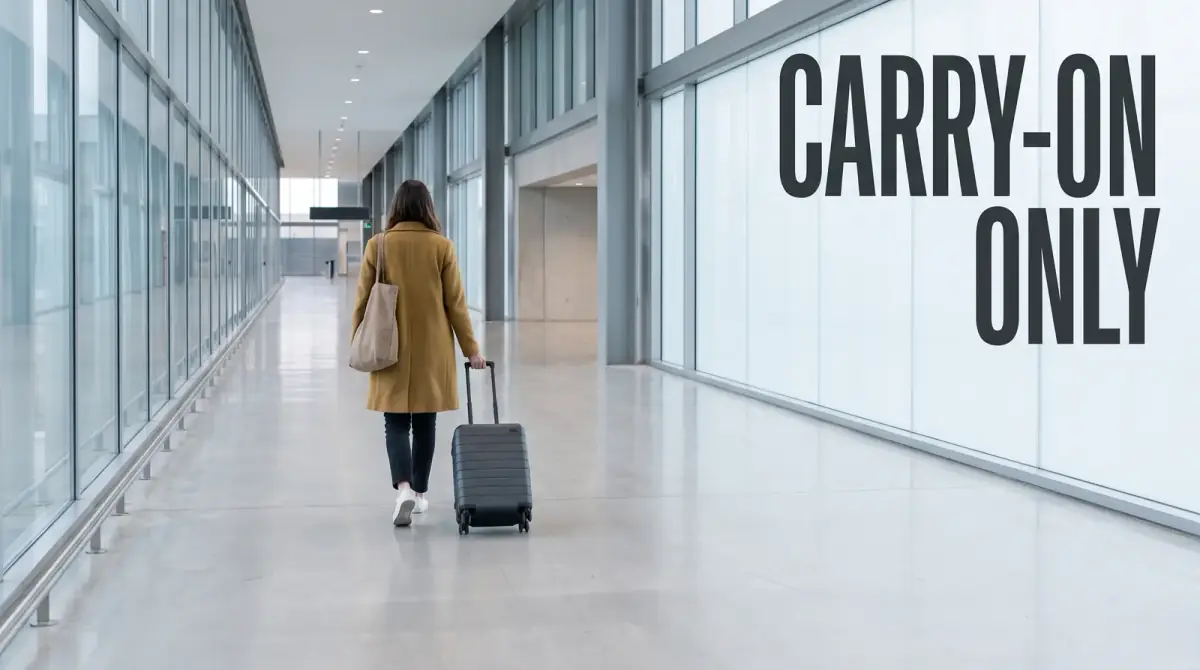
There is a specific kind of smugness that comes from walking straight past the baggage carousel while everyone from your flight stands around watching an empty belt. I am not going to pretend it is noble. It is just genuinely better, and once you learn how to travel with only a carry-on, going back to checked luggage feels like carrying a filing cabinet on holiday.
The short version: carry-on travel is not about buying clever gadgets, it is about ruthlessly limiting your colour palette and accepting that you will do laundry. That one trade unlocks trips of two weeks or more out of a single bag.
Why bother going carry-on only?
The obvious win is time. No bag drop queue, no carousel, no lost luggage. But the changes that actually alter your trip are subtler.
You become mobile. A missed connection, a spontaneous overnight somewhere, a hotel that turns out to be grim, a train instead of a taxi. All of these are easy with one bag on your back and miserable with a heavy case on cobblestones.
You stop guarding stuff. Less luggage means fewer things to lose, fewer things to insure, and less mental overhead. You can leave a bag in a locker and walk off feeling fine.
You spend less. Checked bag fees on budget airlines can rival the fare itself, especially on multi-leg trips.
How to travel with only a carry-on: pick two colours
Almost everyone who fails at carry-on travel fails for the same reason. They pack outfits. Outfits do not scale, because each one has exactly one use.
Instead, choose a base colour and one accent colour and buy into it completely. Navy and grey. Black and olive. Whatever suits you. When every top works with every bottom, eight garments produce a couple of weeks of combinations without anyone noticing you are repeating.
A capsule that covers most trips
Adjust for climate and activity, but this shape works surprisingly widely for a one to two week trip:
- Four to five tops, mostly fast-drying, one of them long-sleeved
- Two bottoms, one you can wear on the plane, one packed
- One layer that works over everything, such as a light fleece or overshirt
- One outer shell, packable and weather-resistant
- One smarter item so you can walk into a nice restaurant without feeling like a hiker
- Underwear and socks for around five days, not for the length of the trip
- Two pairs of shoes maximum: the bulky pair goes on your feet, the flat pair goes in the bag
Shoes are where most carry-on ambitions die. They are heavy, awkwardly shaped, and psychologically hard to cut. Two pairs. That is the deal.
How do you handle liquids in a carry-on?
Liquids are the other classic failure point, and the fix is mostly to stop travelling with liquids at all.
Cabin liquid rules generally restrict you to small individual containers carried inside a single clear resealable bag, with limits that vary between airports and change over time, so check your departure airport's current rules before you fly rather than relying on what was true last year.
The workaround is solid alternatives:
- Solid shampoo and conditioner bars are not liquids and do not count against your allowance
- Toothpaste tablets instead of a tube
- Solid or stick deodorant rather than roll-on or spray
- Decant anything remaining into small refillable bottles instead of buying travel-size products
- Assume your accommodation provides basic soap, and buy anything else on arrival
Medication is the exception where you should carry plenty, keep it in original labelled packaging, and never put it in a bag you might be forced to check at the gate.
The packing method itself
People argue about rolling versus folding as if it were a moral question. Honestly, both work. What matters more is compression and structure.
- Lay everything out first, then remove a quarter of it. Not a joke, and not optional. The pile you assemble instinctively is always too big.
- Use packing cubes as compartments, not as compressors. Their real value is that you can find your socks without excavating the whole bag on a hostel bunk.
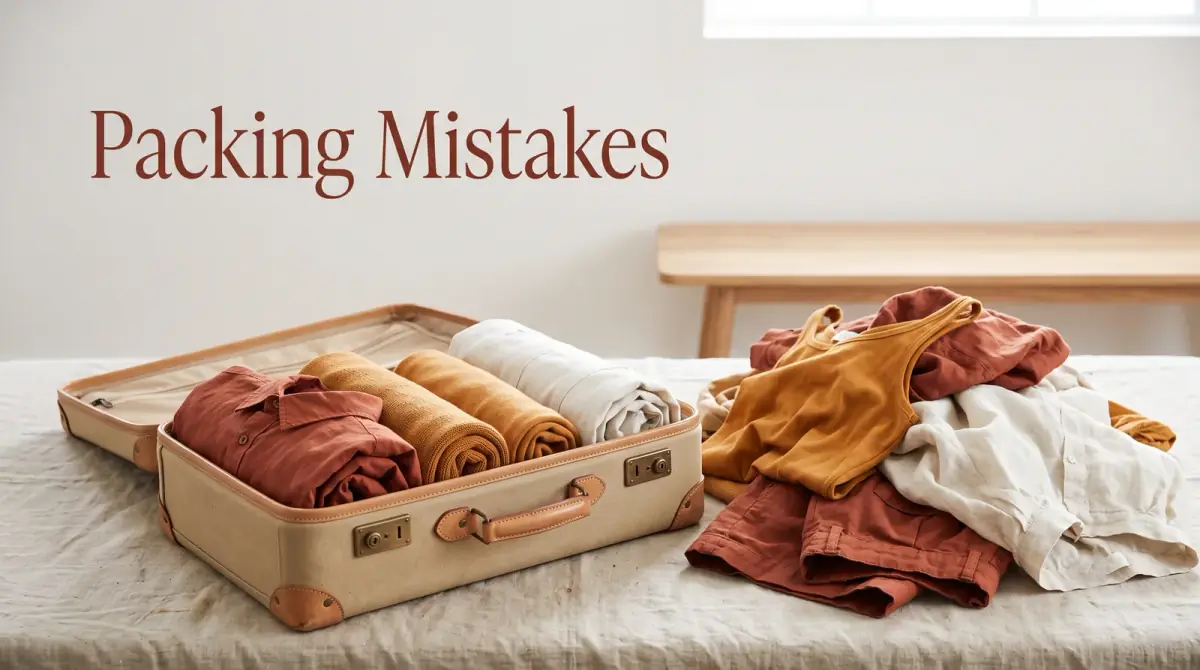
- Roll soft items, fold structured ones. T-shirts and underwear roll well. Shirts and anything you want crease-free should be folded flat and placed on top.
- Stuff the shoes. Socks, chargers and cables live inside footwear. Empty shoes are wasted volume.
- Heavy items go closest to your back in a backpack, or at the wheel end in a roller case. It changes how the bag carries far more than you would expect.
- Wear your bulkiest items on the plane. Boots, jacket, the heaviest jumper. Airlines weigh bags, not passengers.
The personal item is your secret weapon
Most airlines allow a small under-seat bag in addition to the cabin bag. Use it properly. It should hold your electronics, documents, medication, a change of shirt, and anything you would hate to lose if your main bag ended up in the hold at a busy gate. On tight-allowance airlines, a slim daypack that packs flat inside your main bag doubles as your sightseeing bag once you arrive.
Laundry is the whole trick
Nobody wants to hear it, but this is the actual mechanism that makes long trips possible with a small bag. You are not packing for the trip. You are packing for about five days, then repeating.
Fast-drying synthetic or merino fabrics can be washed in a sink at night and worn the next morning. Merino in particular resists odour for multiple wears, which is why one-bag travellers become slightly evangelical about it. Beyond that, a laundrette costs a small amount and an hour, and most accommodation can point you at one. Build a single laundry afternoon into a two-week trip and the maths stops being tight.
What to leave at home
The honest list of things travellers pack and never touch:
- A second book, when you have an e-reader or a phone
- Full-size towels, when a compact quick-dry towel exists
- Jeans, unless they are the pair you are wearing, because they are heavy and dry slowly
- Hairdryers, which nearly every hotel provides
- Just in case outfits for an event that is not on your itinerary
- More than one bulky adaptor when a single universal one works
The test for any item is not could I use this. It is what would I actually do if I did not have it, and is that outcome worse than carrying it every single day.
The takeaway
Pick two colours, cap the shoes at two pairs, replace liquids with solids, and plan for laundry rather than volume. That is essentially the whole system, and it works for a long weekend or a month.
Do a dry run before your next trip. Pack your carry-on, weigh it, then live out of it at home for three days. You will discover exactly which items you never reach for, and that list is the real packing guide, because it is yours.

Comments
0 total