
The short answer
Some safety gear earns its spot; a lot of it is dead weight. Here are the travel safety gadgets worth packing, plus the overhyped gimmicks to leave at home.
- A handful of simple gadgets are worth the space; most are not.
- Door alarms and locks add real security in unfamiliar rooms.
- Item trackers help you find lost or stolen bags.
- Skip bulky, single-use gadgets that duplicate what you already carry.
- Gadgets support good habits; they do not replace them.
A few small travel safety gadgets genuinely earn their place in your bag, like a portable door alarm, a sturdy lock, and a tracker for your belongings. Plenty of others are overhyped gimmicks that just add dead weight. This guide sorts the useful from the pointless, so you pack protection instead of clutter.
None of these gadgets replace common sense or good travel habits. Think of them as small helpers that make you a slightly harder target and give you a little more peace of mind.
Key takeaways
- A handful of simple gadgets are worth the space; most are not.
- Door alarms and locks add real security in unfamiliar rooms.
- Item trackers help you find lost or stolen bags.
- Skip bulky, single-use gadgets that duplicate what you already carry.
- Gadgets support good habits; they do not replace them.
What is travel safety, really?
Travel safety is simply reducing your risk while you are away from home. It covers your body, your belongings, and your information, without wrapping your trip in so much worry that you stop enjoying it.
Gadgets play a small supporting role in that. The biggest wins still come from awareness, planning, and not advertising that you are a distracted tourist. With that framing set, here is the gear that actually helps.
Travel safety gadgets worth packing
These are the items that tend to earn their space. They are small, genuinely useful, and solve a real problem travelers face.
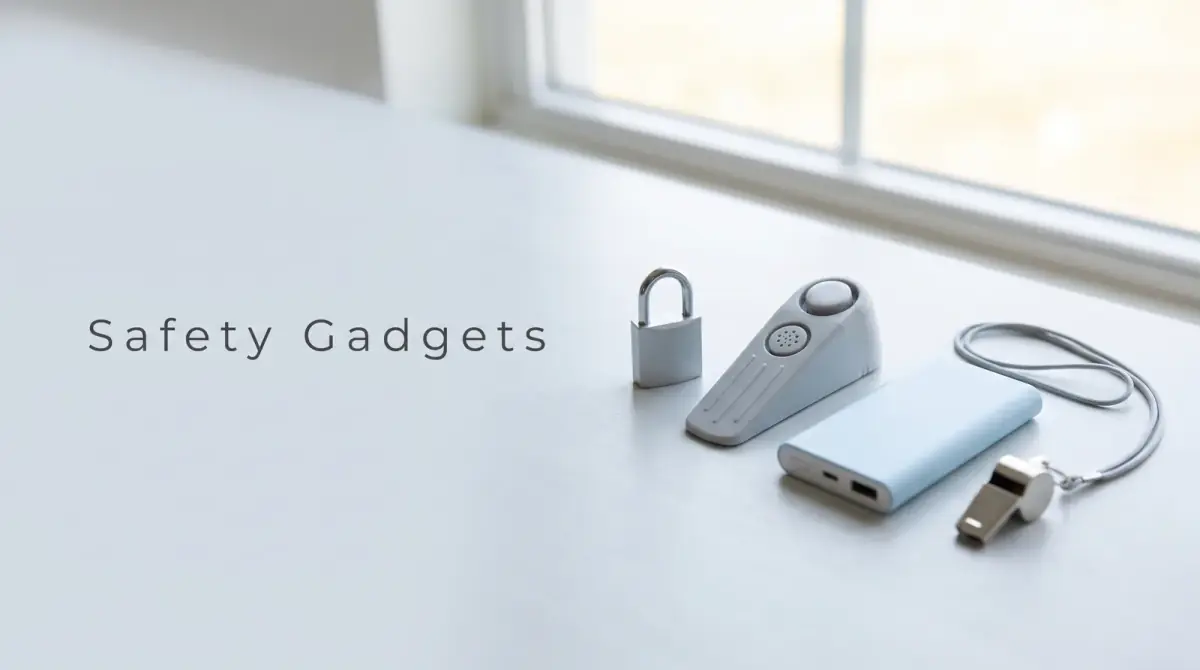
A portable door alarm or door stop
A wedge-style door stop or a small door alarm adds a layer of security to a room that may not feel secure. If a door is pushed open, the wedge resists and an alarm can sound.
These are light, cheap, and reassuring in unfamiliar accommodation. For many travelers, they are the single best safety item to pack.
A sturdy travel lock
A good padlock or cable lock secures a bag, a locker, or a zipper. It will not stop a determined thief, but it deters the casual, opportunistic kind, which is most of them.
Look for one that suits how you travel, whether that is a hostel locker or a backpack zipper on a crowded train.
An item tracker
Small Bluetooth trackers tucked into a bag or wallet help you locate lost items and can reveal where a stolen bag ended up. They are among the best travel safety items for peace of mind.
They are not perfect and depend on being near other devices to update, but they cost little and weigh almost nothing.
A power bank
Safety often comes down to a charged phone. A dead battery leaves you without maps, translation, contacts, or a way to call for help.
A compact power bank keeps your most important safety tool alive. It is not flashy, but it may be the most practical item on this list.
An RFID-blocking pouch, with a caveat
These pouches aim to block wireless reading of cards and passports. Views differ on how necessary they are, and the real-world risk is debated.
They are cheap and light, so if it eases your mind, it is a low-cost choice. Just do not treat it as essential armor.
The overhyped gadgets to skip
Now the dead weight. These gadgets sound clever in a product description but rarely justify the space on real trips.
- Bulky all-in-one security gadgets that combine ten features and do none of them well.
- Single-use gizmos that solve a problem you will face once, if ever.
- Anything that duplicates your phone, which already handles maps, alarms, lights, and contacts.
- Heavy locks and chains far stronger than your actual bag, which a thief will just cut around.
- Gadgets that make you fiddle so much you stop using them by day two.
A good test: if a gadget is heavy, complicated, or does one narrow job, it probably stays home.
The best safety gear is the gear you will actually use. Complicated gadgets get left in the bag.
How to choose what makes the cut
You do not need every gadget here. Match your choices to your trip and your worries. A quick filter helps.
- Does it solve a real problem you expect to face? If not, leave it.
- Is it light and small? Safety gear should not become the reason your bag is heavy.
- Is it simple to use? A gadget you have to think about is a gadget you will abandon.
- Would your phone do the same job? If yes, save the space.
- Does it match your destination? A quiet town and a crowded city call for different care.
Gadgets are not a substitute for habits
Here is the part gear marketing skips. The most effective travel safety comes free. No gadget beats staying aware and blending in.
Some habits do more than any device. Keep copies of important documents. Share your plans with someone you trust. Split your cash and cards across a couple of places. Stay alert in crowds, and trust your gut when something feels off.
People sometimes ask what the real travel hacks are. The best ones are not products at all. They are awareness, preparation, and not looking like the easiest target in the room.
The short version
A small set of travel safety gadgets is worth packing: a door alarm or wedge, a solid lock, an item tracker, a power bank, and maybe an RFID pouch if it eases your mind. Skip the bulky, single-use, phone-duplicating gadgets.
Choose light, simple gear that fits your trip, then lean on good habits to do the heavy lifting. Pack a few smart items, stay aware, and you will be far better protected than someone whose bag is full of gadgets they never use.


Comments
0 total