
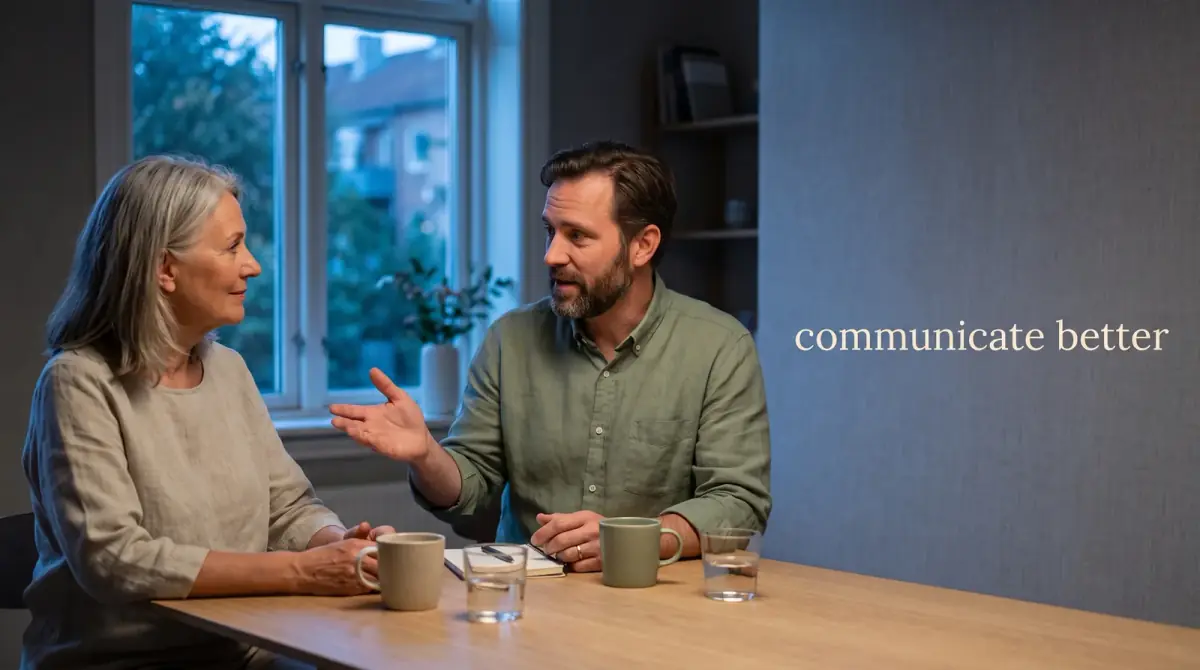
The short answer
You can build better communication skills at any age. Learn practical ways to listen closely, speak clearly, and repair mix-ups so you feel truly understood.
- Strong communication skills are learned, not inborn.
- Listening well is often more powerful than speaking well.
- Clear, simple words beat long, impressive ones.
- Your tone and body language carry much of the message.
- Knowing how to repair a misunderstanding keeps relationships strong.
Communication skills are the everyday abilities that help you listen well, speak clearly, and feel understood. The good news is that they can be learned at any age through small, repeatable practices. You do not need to be naturally outgoing to become a clear, calm communicator.
Most improvement comes from a few basics done consistently, not from clever tricks. Focus on listening, clarity, tone, and repairing mix-ups when they happen.
Here are the key takeaways:
- Strong communication skills are learned, not inborn.
- Listening well is often more powerful than speaking well.
- Clear, simple words beat long, impressive ones.
- Your tone and body language carry much of the message.
- Knowing how to repair a misunderstanding keeps relationships strong.
Why communication skills are important
It is worth pausing on why communication skills are important before diving into how-to steps. Almost everything in daily life runs through them.
Clear communication helps you:
- Get your point across without repeating yourself.
- Avoid needless conflict caused by mixed signals.
- Build trust at work and at home.
- Feel understood instead of overlooked.
When communication breaks down, small problems grow. When it works, even hard conversations become manageable.
Start by listening better
Most people think communication is about talking. In reality, listening does much of the heavy lifting. When someone feels heard, they relax and open up.
To listen better, try to:
- Put your phone down and face the person.
- Let them finish before you plan your reply.
- Notice their tone, not just their words.
- Reflect back what you heard in a short sentence.
Reflecting back is a quiet superpower. Saying "so the deadline moved up" shows you were listening and catches errors early.
Ask before you advise
When someone shares a problem, the urge to fix it is strong. But quick advice can leave people feeling unheard.
Try a simple question first: "Do you want ideas, or do you just need to vent?" That one question prevents a lot of friction.
Speak with clarity, not complexity
Clear communication is not about big words. It is about being easy to follow. Simple, direct language helps people understand you the first time.
A few habits that help:
- Say the main point first, then explain.
- Use short sentences when the topic is important.
- Swap jargon for plain words when you can.
- Pause instead of filling silence with filler words.
If you tend to ramble, name your goal before you speak. Ask yourself, what is the one thing I want them to understand? Then lead with that.
Mind your tone and body language
Your words are only part of the message. How you say something often lands harder than what you say.
The same sentence can feel warm or sharp depending on your tone. A rushed, flat voice can read as cold even when you mean well.
Simple adjustments help:
- Slow down when a topic matters.
- Make steady, comfortable eye contact.
- Keep your arms relaxed rather than crossed.
- Let your face match your words.
You do not need to perform. You just want your body and tone to agree with your message instead of fighting it.
How communication skills can be improved with daily practice
People often ask how communication skills can be improved without a class or coach. The answer is small reps in real conversations you already have.
Try picking one skill per week:
- Week one, practice letting people finish their sentences.
- Week two, lead with your main point.
- Week three, ask one clarifying question in each talk.
- Week four, slow your pace when it matters.
Because you talk every day, you get constant practice. Focusing on one skill at a time keeps it from feeling overwhelming.
Use "I" statements to reduce tension
When something bothers you, how you phrase it changes everything. Starting with "you" can sound like blame and put people on guard.
Instead, describe your own experience. "I felt confused when the plan changed" lands softer than "you never tell me anything." The message gets through without a fight.
Learn to repair misunderstandings
Even skilled communicators get it wrong sometimes. The difference is that they repair the mix-up instead of ignoring it.
Repair can be simple. You might say, "I don't think that came out right, let me try again." That one line resets a tense moment.
When you have caused hurt, a clear, short apology works best. Own the specific thing, skip the excuses, and ask how you can make it right. This single skill protects relationships more than perfect wording ever could.
Adjust to the person in front of you
Good communication is not one fixed style. It flexes to fit the person and the moment. Some people want details; others want the short version.
Pay attention to how someone responds. If they look lost, slow down and simplify. If they seem rushed, get to the point faster.
This is not about being fake. It is about meeting people where they are so your message actually lands. Results vary from person to person, so stay curious and adjust as you go.
Handle difficult conversations calmly
Hard talks test every skill at once. A little preparation keeps them from turning into arguments.
Before a tough conversation, get clear on your goal. Do you want to solve a problem, share a feeling, or make a request? Naming it keeps you focused when emotions rise.
During the talk, these habits help:
- Start with one clear point instead of a long list of complaints.
- Stick to the current issue rather than dragging in old ones.
- Pause and breathe if you feel heat rising.
- Check that you understood before you respond.
If things get too tense, it is fine to take a break. You might say, "I want to get this right, can we continue in a bit?" A short pause often prevents words you would regret.
Do not forget written messages
Much of daily communication now happens in text and email. Tone is easy to lose there, so a friendly message can read as cold.
Read your message once before sending, as if you were receiving it. A short greeting, a clear ask, and a warm close go a long way toward being understood.
Be patient with your progress
Communication is a skill, and skills grow unevenly. Some days you will listen beautifully. Other days you will interrupt and forget everything here. That is normal.
Notice your small wins. A calmer talk, a caught misunderstanding, a moment where someone felt heard. Those add up faster than you think.
The bottom line
Better communication skills come from a handful of basics repeated in real life: listen closely, speak simply, watch your tone, and repair mistakes early. None of it requires a big personality.
Pick one skill from this list and practice it in your next conversation. Small, steady effort is how clear communication is truly built.



Comments
0 total