

The short answer
Saving from your salary gets easier when you save first and spend second. Learn a simple payday system, automation, and small cuts that quietly build up over time.
- Save first, spend second, by moving money to savings on payday.
- Automate the transfer so you never have to decide each month.
- Start small if you must, because a habit beats a big number you cannot keep.
- Track a few weeks of spending to find easy cuts.
- A clear reason to save keeps the habit alive when money is tight.
The simplest way to save money from your salary is to move a set amount into savings the day you get paid, before you spend anything else. Treat that transfer like a bill you owe yourself. If you are asking how save money from salary when the cash seems to vanish every month, the fix is almost always a system, not more willpower.
Most people try to save whatever is left at the end of the month. There is rarely anything left. Flip the order and saving becomes automatic instead of hopeful.
Key takeaways
- Save first, spend second, by moving money to savings on payday.
- Automate the transfer so you never have to decide each month.
- Start small if you must, because a habit beats a big number you cannot keep.
- Track a few weeks of spending to find easy cuts.
- A clear reason to save keeps the habit alive when money is tight.
Pay yourself first
The single rule that changes everything is called pay yourself first. It means your savings come out before your spending, not after.
Here is the difference. If you plan to save what is left, your spending expands to fill your whole paycheck. If you save first, your spending shrinks to fit what remains. Same salary, very different result.
Pick a number you can live with. Even a small slice of each paycheck works, because the point right now is the habit, not the size. You can raise it later.
Automate it and remove the decision
Willpower is a poor savings plan. Some months you feel disciplined, other months you do not, and the inconsistent months quietly undo your progress.
So take the decision out of your hands. Most banks let you set up an automatic transfer from your checking account to a separate savings account. Schedule it for the day after your salary lands.
Once it runs on its own, saving stops feeling like a monthly choice you can talk yourself out of. The money is gone before you notice it, and you learn to live on the rest.
Automation also protects you from your own moods. On a stressful week, the last thing you want is one more decision. A transfer that happens without you keeps your plan alive even when your motivation dips.
Keep your savings a little out of reach
Where you keep the money matters almost as much as how much you save. If your savings sit in the same account you spend from, they tend to quietly disappear into everyday buys.
Move savings into a separate account, ideally one without a card attached. The small friction of transferring money back before you can spend it is often enough to stop an impulse purchase.
Some people go further and use different accounts or labels for different goals, so an emergency fund never gets raided for a holiday. Whatever you choose, the aim is simple. Make spending your savings a deliberate act, not an accident.
How save money from salary when it is tight
If your budget already feels stretched, saving can seem impossible. It is not, but it does start smaller. This is how save money from salary without feeling squeezed to the breaking point.
Begin with an amount so small it feels almost silly, then let it grow. A tiny automatic transfer you never cancel beats a large one you quit after a month.
- Save a small percentage of each paycheck, not a fixed large sum.
- Raise it a little each time you get a pay rise.
- Send one-off money, like a bonus or refund, straight to savings.
The trick is to grow the habit alongside your income, so you barely feel the change from day to day.
When to start saving money
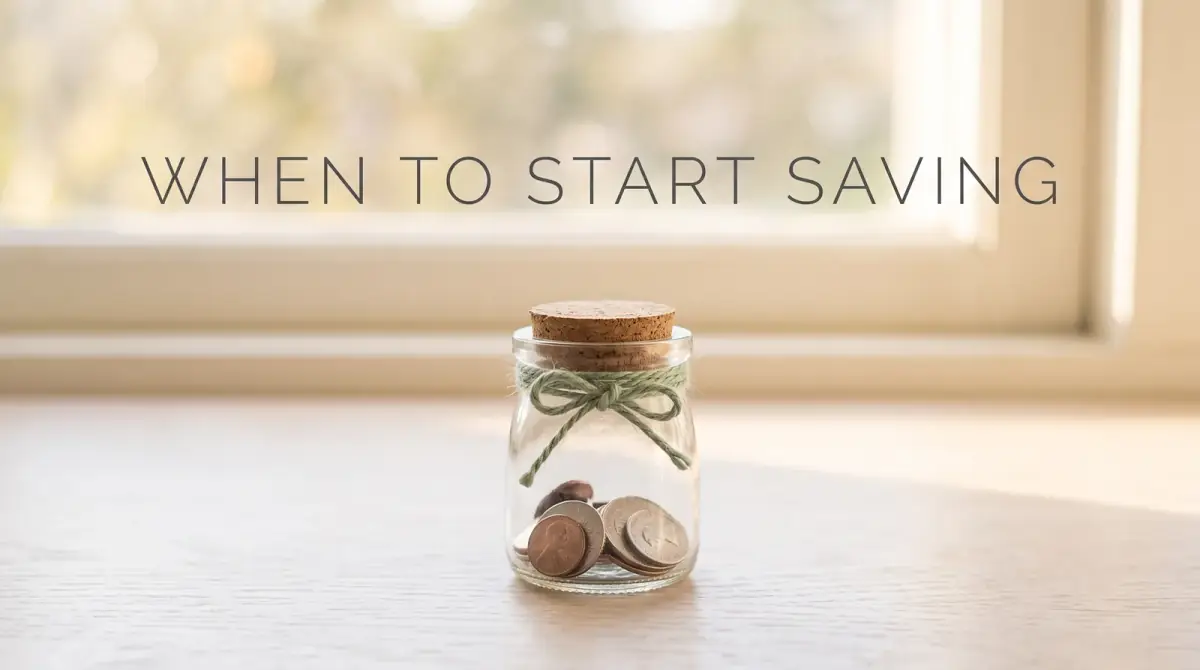
The honest answer to when to start saving money is now, with whatever you can, even a token amount. Waiting for a perfect month is the most common reason people never begin.
Time does the heavy lifting here. Money saved earlier has longer to sit, grow, and cushion you against surprises. Starting small today beats starting big later, because later rarely arrives on its own.
If you are early in your career, this is your biggest advantage. If you are not, the second best time to start is still today.
Find small cuts that quietly add up
You do not need to give up everything you enjoy. You just need to notice where money leaks out without giving you much back.
Track your spending for two or three weeks. Write down everything, or check your bank app. Most people are surprised by two or three categories that are far bigger than they guessed.
Common quiet leaks include:
- Subscriptions you forgot you were paying for.
- Daily small buys, like coffee or snacks, that add up over a month.
- Food delivery on nights you could have cooked easily.
- Bank or card fees you could avoid.
Trimming even a couple of these can fund your savings transfer without changing how your life actually feels.
Why saving money is important
It helps to be clear on why save money is important, because a strong reason keeps the habit going when it gets dull. Saving is not about hoarding cash. It is about buying yourself choices.
An emergency fund means a broken phone or a surprise bill does not become a debt spiral. Savings mean you can leave a bad job, handle a slow month, or say yes to an opportunity. That freedom, more than any single purchase, is the real payoff.
Give your savings a name and a job: an emergency cushion, a trip, a home deposit. A goal you can picture is far easier to stick with than a vague plan to save more.
A good first target for many people is a small emergency fund that covers a few essential bills. Once that is in place, saving gets easier, because a single surprise no longer wipes out your progress and sends you back to zero.
Build a system you will actually keep
Put it together and the whole plan is short. On payday, an automatic transfer moves a set amount to a separate savings account. You live on the rest. Every few months you review it and nudge the amount up.
- Open a separate savings account you do not touch for daily spending.
- Set an automatic transfer for the day after payday.
- Start with a comfortable amount and increase it over time.
- Track your spending briefly to find one or two easy cuts.
Results vary depending on your income and costs, and some months will be harder than others. That is normal. If your situation is complex or involves heavy debt, a qualified financial professional can help you tailor a plan. The goal is not to be perfect. It is to keep the system running quietly in the background, month after month, so saving stops being a struggle and simply becomes how your salary works.



Comments
0 total