
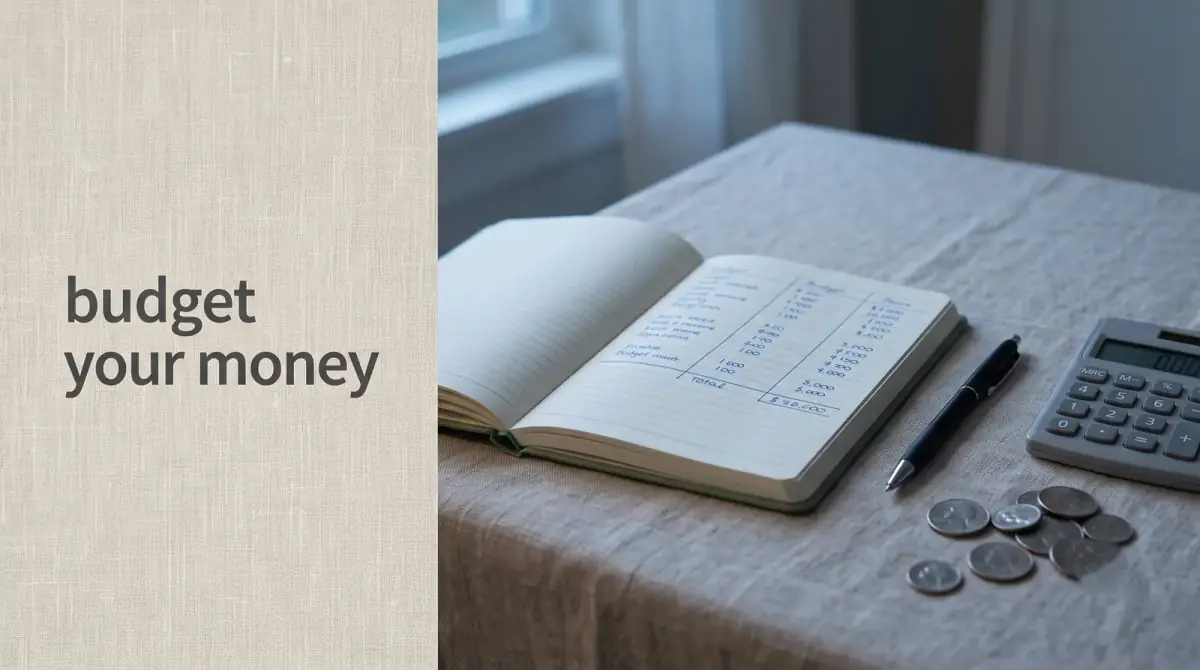
The short answer
Budgeting does not need to be complicated. Learn a simple starter method to track spending, set easy categories, and actually stick with your plan past week one.
- A budget is a plan for your money, not a punishment.
- Start by tracking real spending for about a month.
- Split income into a few simple categories you can remember.
- Adjust the plan to fit your life, not the other way around.
- Sticking with it past the first week is where the payoff starts.
To budget your money, track what you earn and spend for a month, split your income into a few clear buckets like needs, wants, and savings, then adjust until the plan matches your real life. A budget is just a plan for your money before you spend it. Learning how to budget is less about strict rules and more about building a habit you can actually keep.
You do not need to be good with numbers or use fancy software. A notebook or a free app is plenty. What follows is a simple starter method that works on almost any income.
Key takeaways
- A budget is a plan for your money, not a punishment.
- Start by tracking real spending for about a month.
- Split income into a few simple categories you can remember.
- Adjust the plan to fit your life, not the other way around.
- Sticking with it past the first week is where the payoff starts.
What a budget really is
A budget has a bad reputation. People picture it as a strict diet for their wallet, all restriction and no fun. That is the wrong picture.
A budget is simply telling your money where to go on purpose, instead of wondering where it went. It is you deciding in advance what matters, so your spending lines up with your goals rather than fighting them.
Done right, it gives you more freedom, not less, because you can spend on what you enjoy without the quiet guilt of not knowing whether you can afford it.
Why budgeting is important
It is worth being clear on why budgeting is important before you start, because the reason keeps you going. Without a plan, money tends to leak, and you reach the end of the month unsure where it all went.
A budget fixes that in three ways:
- It shows you the truth about your spending, which is often a surprise.
- It makes room for savings and goals instead of hoping for leftovers.
- It lowers money stress by replacing guesswork with a clear picture.
That last point is the big one. Much of the anxiety around money comes from not knowing your own numbers. A budget replaces that fog with facts.
A budget also helps you make trade-offs on purpose. When you can see the whole picture, choosing to spend more on one thing and less on another feels like a decision you own, not a mistake you notice later.
How to budget in five steps
Here is the core method. This is how to budget from scratch, even if you have never tried before.
- Add up your income. Know exactly what comes in each month after tax.
- Track your spending. For a month, record everything, using an app or notes.
- Sort it into categories. Group spending into a few clear buckets.
- Set limits and a savings amount. Decide what each category gets.
- Review and adjust. Check at month's end and tweak the numbers.
The tracking step is the one people skip, and it is the most important. You cannot plan your money until you see where it actually goes.
How a budget is prepared: pick your categories
When it comes to how budget is prepared, the secret is keeping your categories few and simple. Too many buckets and you will quit. A popular starting point splits your income three ways:
- Needs: rent, food, bills, transport, and other essentials.
- Wants: eating out, entertainment, hobbies, and extras.
- Savings and debt: money set aside or used to pay down what you owe.
The exact split is up to you and your costs. Treat these as a rough guide, not a rigid law. If your rent is high, your needs slice will be bigger, and that is fine. The point is a simple frame you can actually follow.
Pick tools that fit how you think
The best budgeting tool is the one you will keep using. Fancy features do not matter if you abandon the app after a week.
Some people love a spreadsheet they control completely. Others prefer an app that sorts spending automatically, or a plain notebook they update by hand. Even a simple system of separate accounts, one for bills and one for spending, counts as a budget.
Try one method for a month before switching. Jumping between tools too often becomes its own form of avoidance, and the switching feels like progress when it is not.
How to budget your salary when income varies
A steady paycheck makes this easier, but many people have income that changes month to month. Here is how to budget your salary when it is not the same each time.
Base your plan on a low, realistic month rather than your best one. Cover your needs first from that baseline. When a better month comes, send the extra to savings or debt instead of letting spending balloon.
This way, a slow month never catches you off guard, and a strong month quietly builds your cushion. Irregular income takes a little more care, but the same simple method still works.
It also helps to keep a small buffer in your account between months. That float smooths out the timing gaps, so a late payment or a lean patch does not throw the whole plan into chaos.
How to stick with it past week one
Most budgets fail not because the math is wrong but because the habit fades. The plan is easy. Keeping it going is the real skill.
A few things help:
- Check in briefly each week, not just once a month.
- Expect to get it wrong at first and adjust without guilt.
- Leave a little room for fun so the plan does not feel like a cage.
- Automate savings so one good decision runs on its own.
Give it two or three months before you judge it. The first month is messy for almost everyone, because you are still learning your own patterns. Treat a blown budget as information, not failure. Each miss shows you where your plan and your real life do not yet match, and that is exactly what you fix next month. If your money situation is complicated or involves heavy debt, a qualified financial counsellor can help you build a plan that fits. Stick with the habit, though, and budgeting stops feeling like work and starts feeling like control.



Comments
0 total