
The short answer
Wondering what AI actually is? This plain-English guide explains artificial intelligence with everyday examples like autocomplete and maps, and clears up the sci-fi myths.
- AI is software that learns from examples instead of following only fixed rules.
- You already use it daily: autocomplete, spam filters, maps, recommendations.
- It makes smart guesses from patterns. It does not think or feel.
- It can be confidently wrong, so it needs a human check.
- Movie robots are fiction. Today's AI is narrow and task-specific.
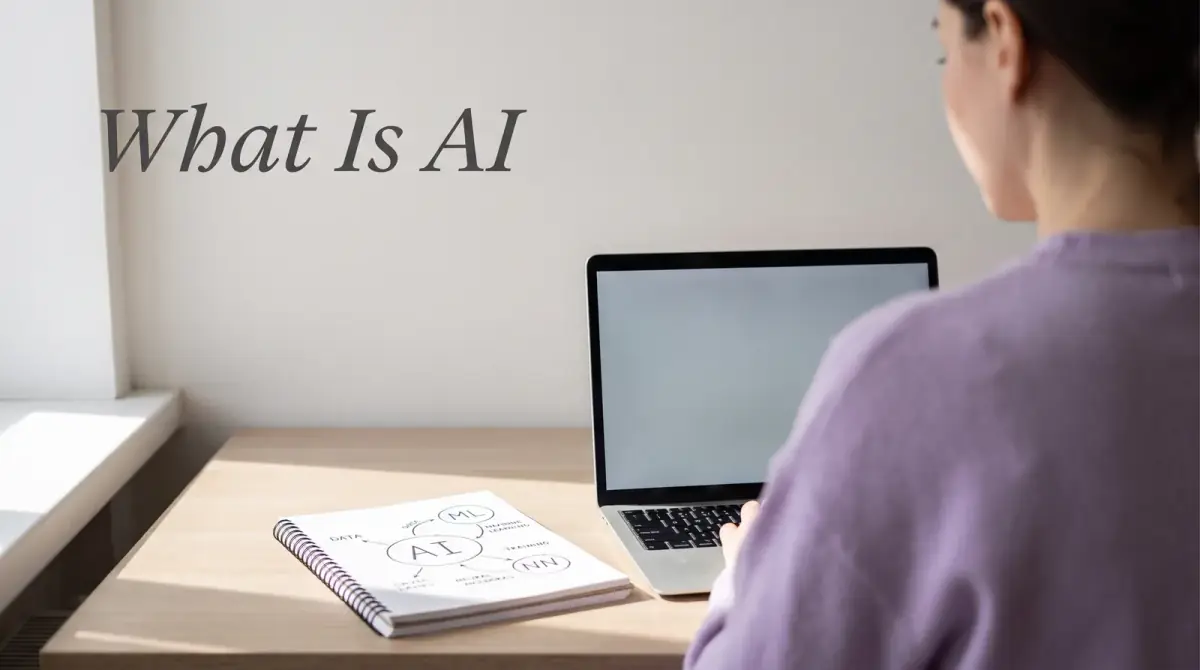
AI, or artificial intelligence, is software that learns patterns from lots of examples and uses them to make guesses, sort things, or produce something new. That is the short answer to what is AI for beginners, minus the jargon. When your phone predicts the next word, when spam gets filtered out, when maps reroute you around traffic, you are already using AI.
If you are looking for a clear answer to what is AI for beginners, this guide skips the jargon and the sci-fi. We will use examples you already know, then clear up the myths.
Key takeaways
- AI is software that learns from examples instead of following only fixed rules.
- You already use it daily: autocomplete, spam filters, maps, recommendations.
- It makes smart guesses from patterns. It does not think or feel.
- It can be confidently wrong, so it needs a human check.
- Movie robots are fiction. Today's AI is narrow and task-specific.
What is AI for beginners, really?
At its simplest, artificial intelligence is a way of getting computers to do tasks that normally need human judgment. Not by writing out every rule by hand, but by showing the computer many examples and letting it work out the pattern.
Think about how you learned to tell a cat from a dog. Nobody gave you a rulebook. You saw many of each as a kid, and the pattern sank in. A lot of modern AI learns in a loosely similar way, from examples rather than fixed instructions.
That is the core shift. Older software followed rules a person typed in. AI figures out patterns from data. The difference sounds small and changes everything, because it lets one system handle messy real-world tasks that nobody could ever write out by hand.
AI you already use every day
You do not need a lab to find AI. It is already stitched into ordinary apps, quietly doing small jobs.
- Autocomplete and text prediction. Your keyboard guesses your next word from patterns in how people write.
- Spam filters. Your email learned, from millions of examples, what junk tends to look like, and hides it.
- Maps and navigation. Route apps predict traffic and suggest the fastest way based on current and past data.
- Recommendations. The you might also like row on a shopping or streaming app is AI guessing your taste.
- Photo search. Type beach in your photos and it finds beaches, because it learned what beaches look like.
None of this is dramatic. That is the point. Most AI for beginners is not a talking robot. It is a helpful guess running in the background.
How AI works for beginners
Let's keep the how simple. Most AI today is built in two big steps: training and using.
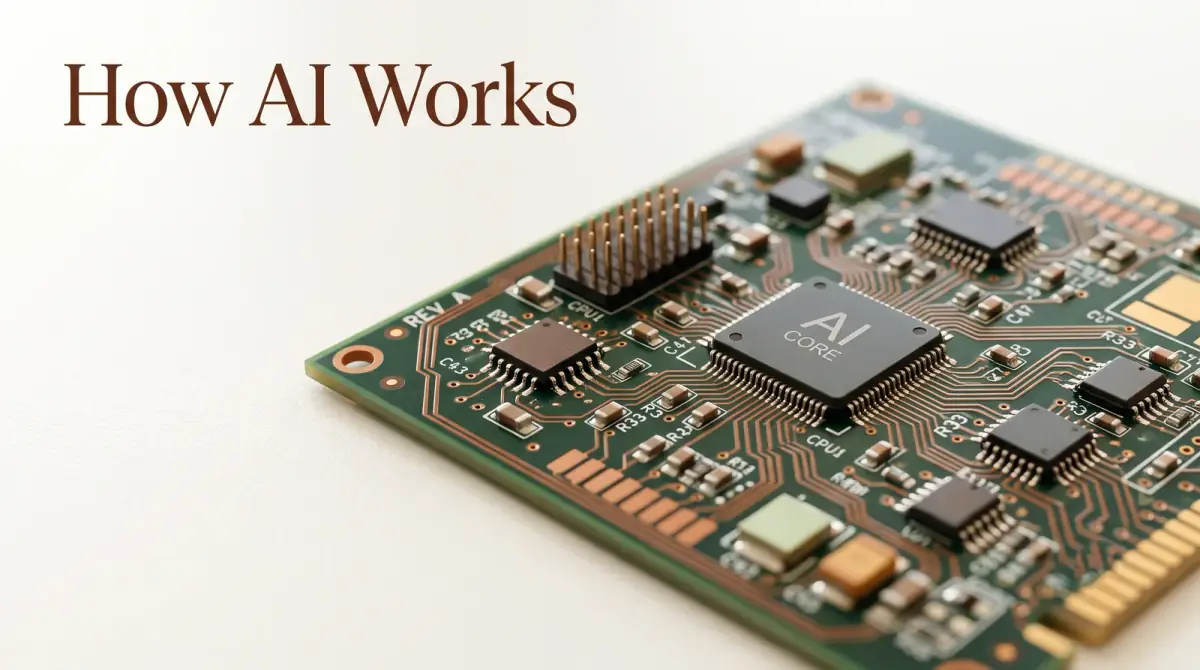
In training, the system is shown a huge number of examples. To build a tool that spots cats, you show it many photos labeled cat and not cat. It slowly adjusts itself until it gets good at telling them apart. This training is the slow, expensive part.
Then comes using it. Once trained, you show it a brand-new photo it has never seen, and it makes its best guess. That is how AI works for beginners in a nutshell: learn the pattern from many examples, then apply it to something new.
The key word is guess. AI does not know in the way you do. It produces the most likely answer based on the patterns it saw, which is powerful and also the source of its mistakes.
What AI is not
This is where the movies mislead people. It helps to be clear about what today's AI does not do.
It does not understand meaning the way you do. A text tool can write a sweet birthday message without feeling anything, because it is matching patterns of words, not sharing an emotion.
It is not conscious, and it has no goals or feelings of its own. It does not want anything. When a chatbot says I think, that is a pattern of language it learned, not a mind at work.
And it is not magic. It can be confidently, completely wrong, stating a false fact in a calm and convincing tone. That is why anything important an AI tells you still needs a human check.
The types you will hear about
You do not need deep categories, but a couple of terms come up often.
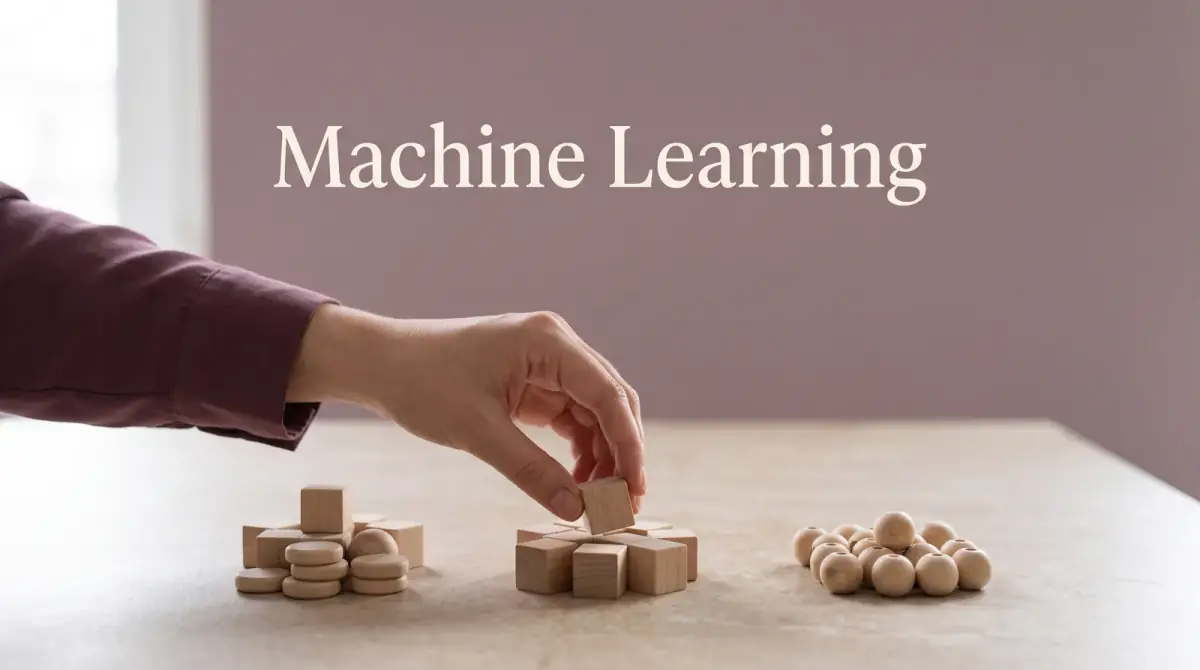
- Machine learning is the broad approach of learning from data. It is the engine under most AI you meet.
- Generative AI is the newer kind that creates things: text, images, audio. Chatbots and image makers live here.
Almost everything in the news lately is generative AI, because making it write and draw feels striking. Underneath, it is still the same idea: learn patterns from examples, then produce a likely result.
Choosing the best AI for beginners
If you want to try it yourself, you do not need to pick perfectly. The best AI for beginners is usually a free, popular chatbot or a tool already built into an app you use.
Start with something low-stakes. Ask it to explain a topic simply, draft an email, plan a trip, or summarize a long article. You will quickly get a feel for what it is good at and where it stumbles.
Keep one habit from the start: check anything that matters. Treat AI as a fast, helpful assistant that is sometimes wrong, not as an all-knowing source. That mindset will serve you well as the tools change.
Why this matters now
AI is showing up in more of the tools you already use, often without a label. Understanding the basics means you can use it well, spot its mistakes, and not be fooled by either the hype or the fear.
You do not need to code or do math to get this. You just need the plain-English version: software that learns patterns from examples and makes smart guesses. Everything else is detail.
Start noticing where you already meet it. Once you do, AI stops feeling like a mystery and starts looking like what it is, a set of useful, imperfect tools.

Comments
0 total