
The short answer
What machine learning is, explained in plain English: how computers learn from examples instead of rules, why it powers modern AI, and whether it is really that hard.
- Machine learning teaches computers from examples rather than fixed instructions.
- It is the engine behind most of the AI you use every day.
- The main flavors are learning with labeled answers and finding patterns without them.
- The big idea is simple, even though building advanced systems takes real skill.
- You can start learning the basics with everyday tools and no advanced degree.
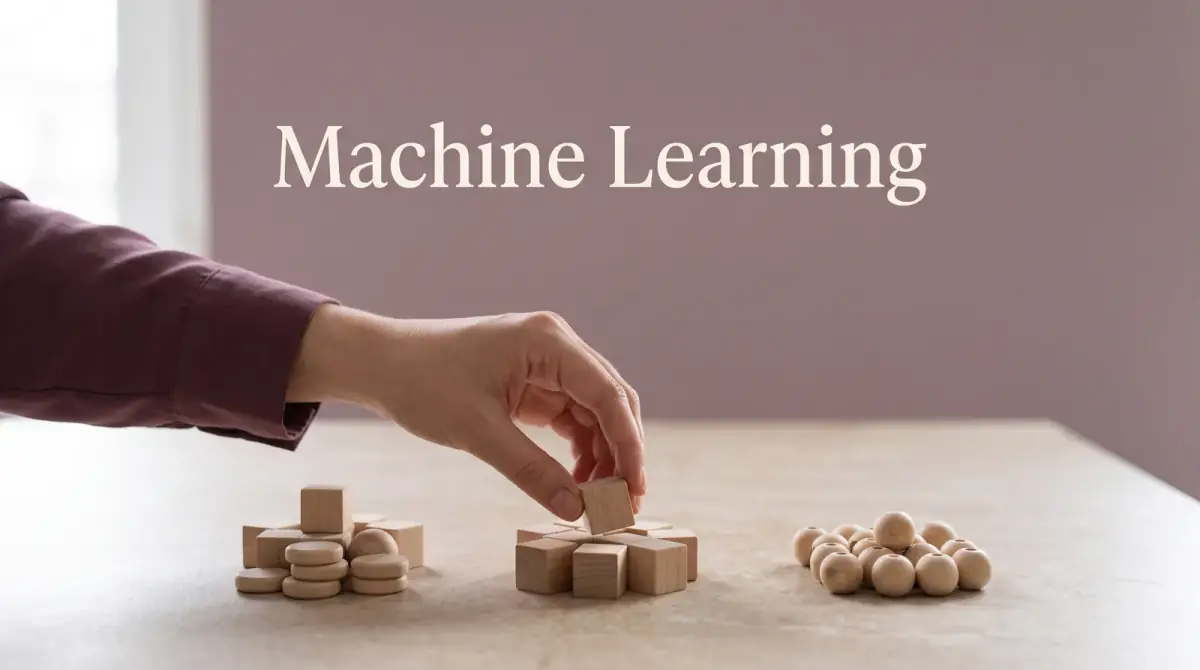
Machine learning is a way of teaching computers by example instead of by rules. You show the computer lots of data, it works out the patterns on its own, and then it uses those patterns to handle something new. Understanding what machine learning is really comes down to that one shift: from telling a computer exactly what to do, to letting it learn what to do.
This guide keeps things plain. No math, no code, just clear examples and the ideas that matter. By the end you will know what machine learning is, how it works, and whether it is as hard as people say.
Key takeaways
- Machine learning teaches computers from examples rather than fixed instructions.
- It is the engine behind most of the AI you use every day.
- The main flavors are learning with labeled answers and finding patterns without them.
- The big idea is simple, even though building advanced systems takes real skill.
- You can start learning the basics with everyday tools and no advanced degree.
What machine learning is, in one plain sentence
Machine learning is the practice of getting software to improve at a task by studying data, instead of following rules a person wrote by hand. That is the whole idea in a sentence.
Traditional programs are like a recipe. A person spells out every step, and the program follows it exactly. Machine learning is more like teaching. You provide plenty of examples, and the system figures out the steps for itself.
This matters because many real tasks are too messy to write rules for. Nobody can list every rule that separates a friendly email from spam. But show a system enough of each, and it learns the difference.
How machine learning works, step by step
Once you see the process, how machine learning works stops feeling mysterious. It usually runs in three stages.
- Feed it data. You gather many examples, such as thousands of photos or past sales records.
- Let it train. The system hunts for patterns in that data, adjusting itself to make better guesses over time.
- Put it to work. You give it something new, and it applies the pattern to predict an answer.
Think of a child learning to recognize dogs. You do not hand them a list of rules about ears and tails. They see many dogs, hear the word, and the pattern sinks in. Machine learning works in a loosely similar way, only with data instead of daily life.
The main types you will hear about
You do not need deep categories, but two terms come up again and again.
Supervised learning
Here the examples come with the right answers attached, called labels. You show the system photos marked "cat" or "dog," and it learns to tell them apart. Most everyday tools, from spam filters to loan scoring, use this approach.
Unsupervised learning
Here there are no labels. You hand the system a pile of data and ask it to find structure on its own. It might group your customers into similar clusters, for example, without being told what those groups are in advance.
There are other styles too, but these two cover most of what beginners meet. Both are just different ways of learning from data.
Machine learning you already use
You meet machine learning far more often than you might guess. It quietly runs inside apps you open every day.
- Streaming suggestions. Your "recommended for you" row is a model guessing your taste from past viewing.
- Spam filters. Your inbox learned what junk looks like from millions of messages.
- Photo search. Type "beach" and it finds beaches, because it learned what beaches look like.
- Fraud alerts. Your bank flags odd purchases by learning your normal spending pattern.
None of these feel like science fiction, and that is the point. Most machine learning is a helpful, invisible guess running in the background.
Is machine learning hard?
Here is an honest answer to the question so many beginners ask: is machine learning hard? The core idea is not hard at all. Learn from examples, spot patterns, predict. You already understood that halfway through this article.
Building advanced systems is a different story. That side involves statistics, programming, and a lot of trial and error, and it does take time to master. So the concept is beginner-friendly, while the professional craft is genuinely demanding.
The good news is you can go a long way on the ideas alone. Understanding what machine learning is, and where it can go wrong, is valuable even if you never write a line of code.
When to learn machine learning
If you are wondering when to learn machine learning, the simplest answer is now, at least at the level that fits your goals. You do not have to commit to becoming an engineer to benefit.
Start light. Read plain guides like this one, then play with existing tools to see patterns and predictions in action. If you enjoy it and want to go deeper, a basic grounding in statistics and a beginner programming language are the usual next steps.
There is no perfect age or background required. Curious people from many fields pick up the basics and use them in their own work. Results and pace vary from person to person, so let your interest set the speed.
What machine learning is not
A few myths are worth clearing up. Machine learning does not understand the world the way you do. It matches patterns in data, nothing more, so it can be confidently wrong.
It is also not a crystal ball. Its predictions reflect the data it saw, so biased or thin data leads to biased or shaky results. And it is not the same as a thinking robot from the movies. It is a focused tool that does one narrow job well.
The bottom line
Machine learning is simply computers learning from examples instead of hand-written rules, and that quiet shift powers most of the AI around you. Knowing what machine learning is, and how machine learning works, is enough to use these tools wisely and see through the hype.
You do not need a lab or a math degree to start. Grasp the core idea, notice where you already meet it, and explore from there at whatever pace feels right.



Comments
0 total