
The short answer
The right outfit builds quiet trust before you say a word. Here is what to wear to a job interview across formal, business casual, and creative workplaces.
- Dress one notch above the workplace's normal dress code.
- Research the company culture before choosing an outfit.
- Fit, cleanliness, and grooming matter more than price.
- When unsure, lean slightly more formal.
- Keep accessories, scent, and patterns understated.
What you wear to an interview should match the workplace you hope to join, aimed one small step above the everyday dress code there. When you are deciding what to wear to an interview, the safest instinct is to look polished, comfortable, and appropriate for that specific environment rather than simply formal for its own sake. The right outfit quietly signals that you understand the role and take it seriously.
Your clothes will not win you the job on their own. But the wrong outfit can plant a small doubt before you say a word, while the right one lets your answers do the talking.
The essentials at a glance:
- Dress one notch above the workplace's normal dress code.
- Research the company culture before choosing an outfit.
- Fit, cleanliness, and grooming matter more than price.
- When unsure, lean slightly more formal.
- Keep accessories, scent, and patterns understated.
Why your outfit matters before you speak
First impressions form fast, often before the conversation really begins. A tidy, well-judged outfit tells the interviewer you prepared, you respect the occasion, and you can read a professional setting.
It also affects you. When you feel put together, you tend to sit straighter and speak with more ease. So dressing well is partly practical: it steadies your own confidence as much as it shapes theirs. Fair or not, people often read grooming and dress as signals of how you might show up to the job itself, so a little care here quietly works in your favor.
What to wear to an interview when you are unsure
If you remember nothing else, remember this: dress a little better than the people already working there. This single rule handles most of the guesswork about an interview outfit.
So find out how employees actually dress, then step it up by one level. If the team wears jeans and t-shirts, smart trousers and a neat shirt will do. If they wear business casual, lean toward the more formal end of it. You want to look like you belong, just slightly sharper than on an average day.
Formal and corporate workplaces
In fields like law, finance, and traditional corporate offices, the interview dress code still leans formal. Here, classic and conservative choices are the safe path.
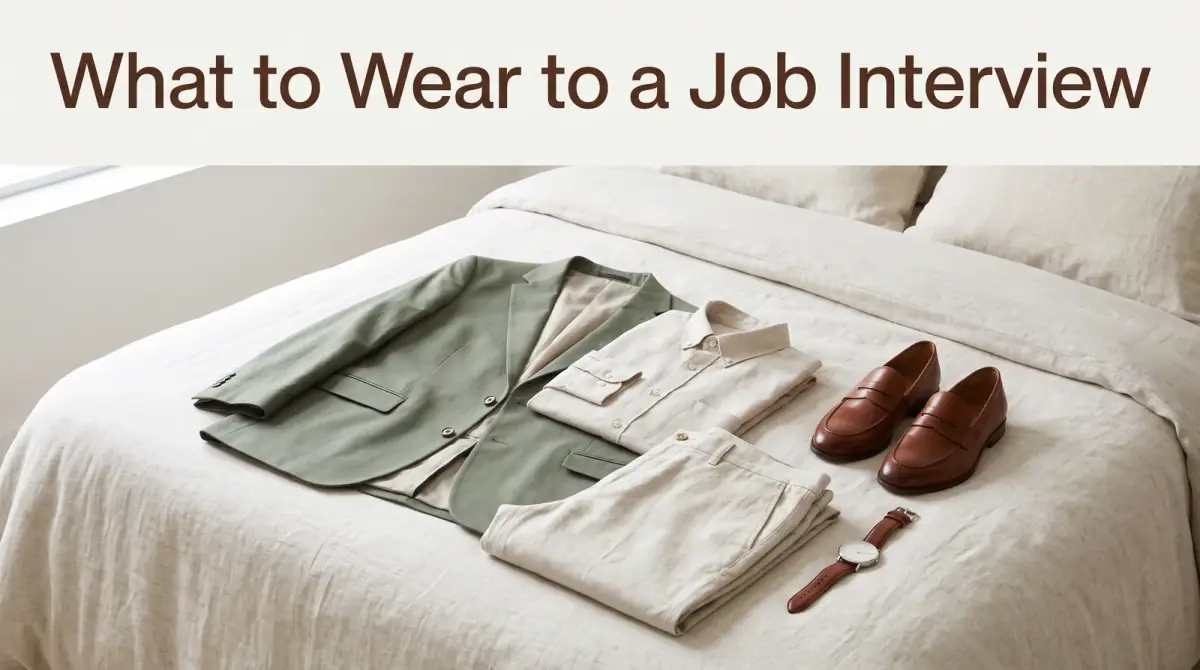
For most people this means a well-fitted suit or a tailored jacket in a neutral color, a crisp shirt, and clean, closed shoes. Keep colors muted and patterns simple. The goal is to look precise and dependable, not flashy. When in doubt in these settings, err on the side of more formal, because it is almost impossible to look too respectful of the occasion in a conservative field.
Business casual workplaces
Many modern offices sit in the broad middle ground of business casual, which can feel confusing because it means different things in different places. The trick is to look intentional rather than either stiff or sloppy.
Reliable options include tailored trousers or a smart skirt, a shirt or blouse, and a jacket or knit that pulls the look together. You can skip the full suit, but everything should still be neat, well-fitting, and clearly chosen with care. A useful test is to picture meeting a senior client that day; if the outfit would suit that meeting, it will suit the interview too.
Safe business casual pieces
- Chinos or tailored trousers in a neutral shade.
- A collared shirt, blouse, or fine-knit top.
- A blazer or a structured cardigan.
- Clean leather or smart flat shoes.
Creative and casual workplaces
In creative studios, startups, and casual environments, showing up in a stiff formal suit can actually work against you by signaling that you have misread the culture. Still, casual does not mean careless.
Aim for smart and current instead. A neat outfit that shows a little personality often lands well here, as long as it looks deliberate and clean. Think polished versions of everyday clothes rather than your weekend wear. You can also let one considered detail, such as a distinctive but tasteful accessory, hint at your personality without tipping into costume.
How to dress for an interview down to the details
Knowing how to dress for interview success is not only about the main pieces. The small details often decide whether an outfit reads as sharp or scruffy.
Make sure everything fits properly, because good fit lifts even inexpensive clothes. Check for loose threads, missing buttons, wrinkles, and scuffed shoes the night before. Keep jewelry, makeup, and fragrance restrained, and carry a bag or folder that looks tidy.
The night-before checklist
- Clothes pressed and free of stains.
- Shoes clean and in good repair.
- Hair and grooming neat and simple.
- Accessories minimal and understated.
Comfort and fit on the day itself
An outfit that looks sharp but feels wrong is a quiet distraction you do not need. If your collar is too tight, your shoes pinch, or your waistband digs in, part of your attention drains away from the conversation and into your discomfort. Comfort is not the opposite of professional; it is part of it.
So wear your chosen outfit for a short while before the day, and sit, stand, and move around in it. Make sure you can breathe, reach, and gesture naturally. Break in new shoes ahead of time, and always keep a simple backup outfit ready in case of a spill or a last-minute change of plan.
Weather and travel matter too. If you are commuting through heat, rain, or cold, plan layers you can adjust so you arrive looking composed rather than flustered. Give yourself enough time to cool down, straighten your clothes, and take a breath before you walk in, because arriving calm does as much for your appearance as the outfit itself.
What to avoid and how to handle video interviews
A few choices distract more than they help. Very bright patterns, strong scents, noisy jewelry, and anything too tight or too revealing can pull attention away from what you are saying.
For video interviews, dress fully as you would in person, not just from the waist up, because standing to grab something can expose the shortcut. Solid, muted colors tend to read best on camera, and a plain background keeps the focus on you.
The bottom line
Deciding what to wear to an interview comes down to reading the workplace and dressing one considerate step above its normal standard. Choose clothes that fit well, look clean, and suit the culture, then stop worrying about them so you can focus on the conversation. When your outfit feels right, you can forget about it entirely, which is exactly what a good interview outfit should let you do.
Comments
0 total