
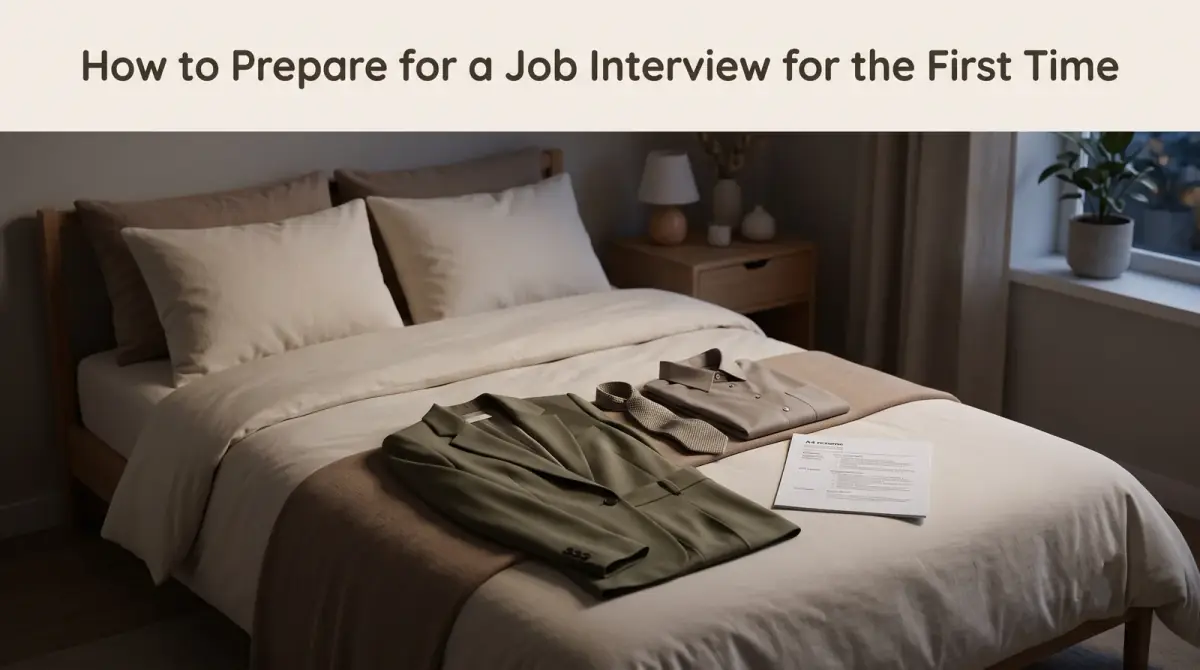
The short answer
A first interview is mostly nerves and unknowns. Learn how to prepare for a job interview for the first time so you walk in calm, ready, and clear.
- Research the company and re-read the job advert closely.
- Prepare short stories that show your skills in action.
- Practice common questions out loud, not just in your head.
- Sort out logistics, clothing, and timing the day before.
- Prepare a few questions of your own to ask at the end.
To prepare for a job interview for the first time, focus on three things: understand the role, plan how you will talk about yourself, and get the practical details sorted before the day. Most first-interview nerves come from the unknown, so the more you prepare for interview first time situations, the calmer and clearer you will feel. Good prepare for interview first time planning does not mean memorizing perfect answers; it means walking in ready to have a real conversation.
Nobody is a natural at their first interview. The people who do well are simply the ones who did a little homework and practiced saying their thoughts out loud.
Here is the short version before we dig in:
- Research the company and re-read the job advert closely.
- Prepare short stories that show your skills in action.
- Practice common questions out loud, not just in your head.
- Sort out logistics, clothing, and timing the day before.
- Prepare a few questions of your own to ask at the end.
Understand the role and the company first
The foundation of good interview preparation is knowing what you are walking into. Before anything else, read the job advert again and note the main skills and qualities it asks for. Those are the points the interviewer is most likely to explore.
Then learn a little about the company. You do not need deep research, just enough to speak about it with interest: what it does, who it serves, and anything recent or notable about it. Because interviewers can tell when someone has done zero homework, even a small effort here sets you apart.
This groundwork also helps you connect your answers to what the employer actually wants. When you know the role well, you can shape your responses to show you are a good fit rather than talking in general terms.
Prepare for interview first time nerves with real practice
Nerves are normal, and the best cure is rehearsal. When you prepare for interview first time meetings, practicing out loud makes a bigger difference than quietly reading notes, because speaking is a different skill from thinking.
Write down the questions you are likely to face and answer them aloud, ideally to a friend or family member. Hearing yourself speak reveals where you ramble or freeze, and it builds the muscle memory that keeps you steady on the day. A short mock interview, even a rough one, can transform how confident you feel.
Do not aim to memorize word-for-word scripts, though. Rehearse the key points you want to make so your answers sound natural rather than robotic. The goal is comfort with your own story, not a performance.
Common questions and how to approach them
Most first interviews cover a predictable set of questions, so a little preparation goes a long way. You will likely hear some version of these:
- Tell me about yourself: give a short, relevant summary, not your life story.
- Why do you want this job: connect the role to your interests and goals.
- What are your strengths: name a couple and back each with an example.
- Describe a challenge you handled: tell a short, honest story with a result.
- Where do you see yourself going: show ambition and a willingness to learn.
For each, prepare a brief example rather than a vague claim. A specific story about a school project, a team effort, or a part-time job is far more convincing than saying you are hard-working. These first interview tips matter most when you can point to something you actually did.
Use short stories to answer
A simple way to structure answers is to describe the situation, what you did, and how it turned out. This keeps your response focused and shows real evidence instead of empty adjectives. Keep each story to under a minute so you do not lose the listener.
Get the practical details sorted early
Half of feeling calm on the day comes from removing surprises. Sort out the logistics well ahead so you are not scrambling at the last minute.
The day before, take care of the basics:
- Confirm the time, date, and exact location or video link.
- Plan your route and add extra time for delays.
- Choose clean, tidy clothes suitable for the workplace.
- Prepare copies of your resume and any documents you might need.
- Test your camera, microphone, and connection if it is an online interview.
Arriving a few minutes early, rather than flustered and late, changes your whole state of mind. When the practical side is handled, you can put all your attention into the conversation itself.
Prepare questions of your own
Near the end, most interviewers ask whether you have any questions, and having a few ready shows genuine interest. A candidate who asks nothing can seem uninterested, even when they are not.
Keep your questions thoughtful and about the role or the workplace. You might ask what a typical day looks like, how success is measured, or what the team is like. These questions signal that you are picturing yourself in the job and thinking seriously about it.
Avoid leading with questions only about pay or time off at this stage. There is a place for those, but strong first questions focus on the work and how you would fit into it.
Manage nerves on the day
Some nervousness is not only normal, it can sharpen your focus. The aim is to keep it manageable, not to eliminate it completely, so treat mild nerves as a sign that you care.
Simple habits help a great deal. Slow your breathing before you go in, sit or stand with an open posture, and remember that the interviewer wants you to do well, since they are hoping to fill the role. If a question stumps you, it is fine to pause and think for a moment rather than rushing to fill the silence.
Because you have done the preparation, you can trust yourself to respond. Solid how to prepare for an interview habits give you something steady to lean on when the moment feels big.
The bottom line
Preparing for your first job interview comes down to understanding the role, practicing your answers out loud, and sorting the practical details before the day. Add a few thoughtful questions of your own and some simple ways to steady your nerves, and you turn an intimidating unknown into a manageable conversation. Every interview also teaches you something, so even a nervous first attempt makes the next one easier.
Comments
0 total