
The short answer
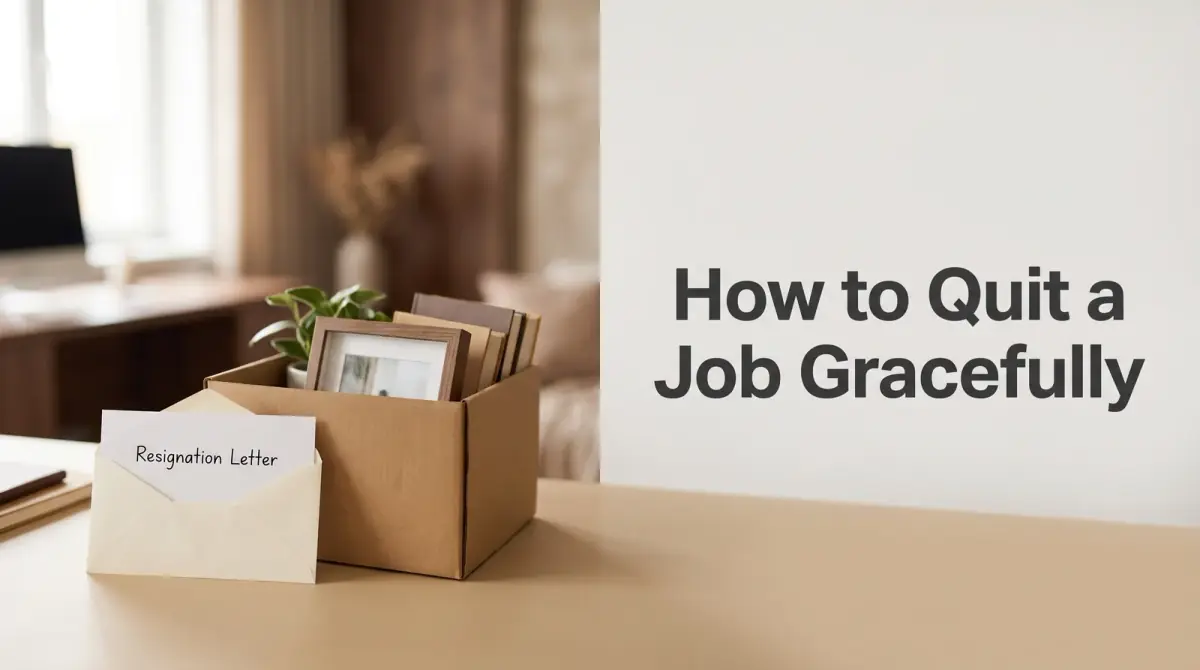
How you leave is remembered longer than how you arrived. Learn how to quit a job gracefully, from the resignation talk to a clean, professional exit.
- Tell your direct manager first, in person if you can.
- Give at least the standard notice for your role.
- Keep your resignation letter short and positive.
- Document your work and help with the handover.
- Stay steady and kind through your final weeks.
To quit a job gracefully, give proper notice, tell your manager before anyone else, and stay professional right through your final day. The heart of how to quit a job well is protecting the relationships you built, because the working world is smaller than it looks and reputations travel. A calm, respectful exit keeps doors open long after you walk out of this one.
How you leave is often remembered longer than how you arrived. A messy departure can follow you, while a gracious one earns references, goodwill, and contacts you may lean on for years.
Here is the short version before we dig in:
- Tell your direct manager first, in person if you can.
- Give at least the standard notice for your role.
- Keep your resignation letter short and positive.
- Document your work and help with the handover.
- Stay steady and kind through your final weeks.
Why a graceful exit is worth the effort
It can be tempting to coast out the door, especially if you are frustrated, but the way you leave carries real weight. Former managers and colleagues become references, and they move between companies, so today's teammate could be tomorrow's hiring manager.
A professional exit protects everything you built. It keeps your reputation intact, preserves relationships you may need later, and leaves people speaking well of you. Because goodwill costs so little to maintain and so much to lose, a graceful departure is simply good sense.
How to quit a job the right way, step by step
A smooth resignation follows a clear order, and getting that order right prevents most awkwardness. The key is to control the message and treat people with respect at each stage.
- Decide and commit: be sure before you say anything.
- Tell your manager first: never let them hear it secondhand.
- Give formal notice: follow up the conversation in writing.
- Plan the handover: make your departure easy on the team.
- Finish well: stay engaged until your last day.
Following this sequence keeps you in control of the story and shows a level of care that people remember warmly.
How to resign in the conversation with your manager
Learning how to resign gracefully starts with a direct, private conversation. Ask your manager for a short meeting, and share your decision clearly and calmly rather than burying it in hints.
Keep the tone warm and brief. Thank them for the opportunity, state that you have decided to move on, and give your intended last day. You do not owe a detailed explanation, and it is wise to avoid criticism in this moment. Something as simple as, "I have accepted a new opportunity, and my last day will be the fifteenth," is clear and respectful.
What to keep in mind during the talk
- Deliver the news in person or by call where possible.
- Stay positive, even if your reasons are not.
- Have your proposed last day ready.
Give notice and put it in writing
After the conversation, follow up with a formal resignation letter. Standard notice is often two weeks, though your contract, role, or local norms may call for more, so check what applies to you before you commit to a date.
Keep the letter short and gracious. State that you are resigning, give your last day, and thank the company for the experience. There is no need to explain your reasons or air grievances. A brief, positive letter becomes part of your record, so it is worth keeping it clean and kind. This is general information rather than legal advice, so review your own contract or a relevant authority if you are unsure of your obligations.
Quitting a job professionally through the handover
Much of quitting a job professionally happens in the weeks after you give notice. A thoughtful handover is one of the most generous and memorable things you can do on the way out.
Aim to leave your work in good order:
- Document your key tasks, logins, and ongoing projects.
- Write clear notes for whoever takes over your role.
- Offer to help train a replacement if time allows.
- Tie off loose ends rather than leaving them dangling.
Because a clean handover shows respect for the team you are leaving, it is often what earns you the warmest references later on.
Resignation tips for your final weeks
The last stretch matters more than people expect. A few simple resignation tips help you finish on a high note rather than fading out.
Keep working at your normal standard, stay positive in front of colleagues, and resist the urge to vent, even if an exit interview invites candor. Say proper goodbyes to the people who supported you, and consider staying in touch through your professional network. Because your final impression lingers, steady effort and warmth in these weeks pay off well beyond your last day.
Mistakes that can undo a good exit
Even a well-planned departure can go sideways at the end. Steering clear of these common slips protects the goodwill you have built:
- Badmouthing the company: it follows you and helps no one.
- Checking out early: coasting undoes years of good work.
- Oversharing your reasons: keep explanations brief and kind.
- Skipping the handover: a messy exit is what people recall.
Avoiding these keeps your reputation intact, so the relationship ends on a note that helps you rather than haunts you.
Leaving on good terms when the job was hard
Not every job ends on a happy note. You may be leaving because of burnout, a difficult manager, or a role that never quite fit, and in those cases staying gracious takes real discipline. It is worth the effort anyway, because a calm exit serves your future far better than a satisfying outburst ever could.
Keep your reasons for leaving simple and neutral, even if the truth is more complicated. A line like "I am ready for a new challenge" lets you move on without opening old wounds or creating an awkward record. You can be honest in an exit interview if you choose, but frame any feedback constructively rather than as a list of complaints.
Remember that people rarely recall the fine details of why you left, but they do remember how you made them feel on the way out. Leaving with composure, even when it is hard, is a quiet investment in every reference and reconnection still to come.
The bottom line
Knowing how to quit a job gracefully is about respect, timing, and follow-through. Tell your manager first, give proper notice, keep your letter positive, and help with a clean handover. Circumstances vary from job to job, yet a calm, professional exit almost always protects the relationships and reputation you worked hard to build.



Comments
0 total