
The short answer
Your first resume has one job: get the interview. Learn how to build a resume for a first job that reads clean, honest, and worth a call back.
- Keep it to one page and easy to scan.
- Open with a short summary that says who you are and what you offer.
- Lead with skills, education, and activities rather than empty job history.
- Show results with specific examples, not vague claims.
- Match the wording to each job advert you respond to.
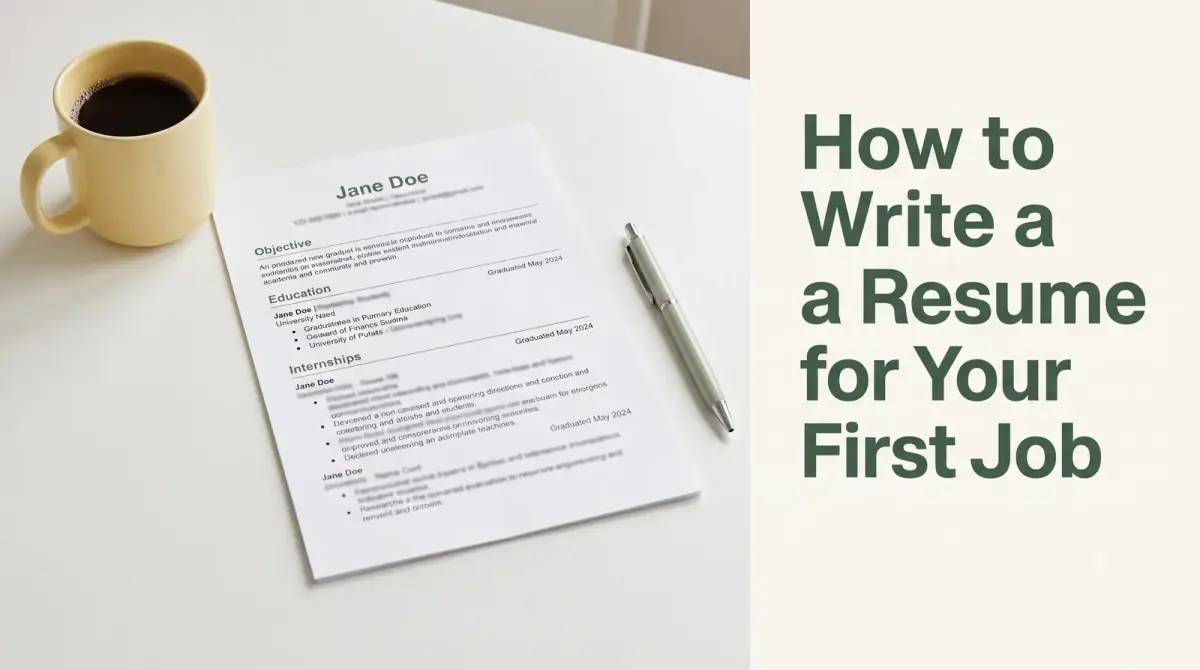
A resume for your first job has one clear purpose: to earn you an interview. It does not need to impress with a long career or fancy titles. A good resume for first job applications simply shows an employer that you are capable, reliable, and worth a short conversation, using the skills and experiences you already have.
At this stage, clean and honest beats clever every time. A page that is easy to read and clearly matched to the role will almost always outperform one crammed with buzzwords.
Here is the quick version before we dig in:
- Keep it to one page and easy to scan.
- Open with a short summary that says who you are and what you offer.
- Lead with skills, education, and activities rather than empty job history.
- Show results with specific examples, not vague claims.
- Match the wording to each job advert you respond to.
What an employer really wants from a first-time applicant
When someone hires for an entry-level role, they are not expecting a seasoned professional. They are looking for signs that you will turn up, learn the job, and be easy to work with. Those three things carry more weight than any single line on the page.
Because of that, your resume should quietly answer the questions running through a manager's mind. Can this person communicate clearly? Have they followed through on anything before? Do they seem genuinely interested in the work? When your resume speaks to those worries, it does its job.
So a resume for first job hunting is less about proving you have done the exact role and more about proving you can be trusted to grow into it.
How to structure a resume for first job success
The layout matters because it decides what gets read first. With little or no paid work behind you, you want your strongest material near the top rather than buried under an empty experience heading.
A dependable order looks like this:
- Contact details: name, phone, email, and city.
- Summary: two or three lines introducing yourself.
- Skills: abilities that match the role.
- Education: your studies and any standout achievements.
- Experience and activities: jobs, volunteering, projects, and clubs.
- Extras: certificates, languages, or interests that add value.
This structure keeps the reader focused on what you can do. By the time they reach the experience section, they already have a positive picture of you, so a shorter history feels less like a gap.
Write a summary that opens the door
The summary sits at the top and sets the tone. In two or three lines, it should say who you are, what you are good at, and what kind of role you want. Think of it as a short, confident introduction rather than a life story.
Keep it specific and grounded. Something like, "Reliable and organized recent school leaver with strong communication skills, looking to start a career in retail and eager to learn on the job," tells an employer more than a string of adjectives ever could. Because it names a real strength and a clear goal, it feels honest.
Avoid empty phrases such as "hard-working team player" on their own. If you use them, back them up somewhere on the page with a concrete example so they carry real weight.
Turn activities into experience that counts
When your paid work history is thin, the rest of your life fills the gap. A student resume can draw on school, volunteering, hobbies, and clubs, and these count as genuine experience when you describe them properly.
The key is detail. Instead of "member of the debate club," write "debated in regional competitions and helped younger students prepare their arguments." The second version shows communication, teamwork, and initiative, which are exactly the traits an employer wants.
Consider drawing on:
- School projects that required research or presentation.
- Volunteering or community work of any kind.
- Part-time help at a family business or for neighbours.
- Sports, music, or clubs where you showed commitment.
- Personal projects such as a blog, channel, or small side hustle.
Each of these tells a small story about your character, and character is what a first employer is really buying.
Show results, not just duties
One habit separates a forgettable resume from a strong one: showing what happened because of your effort. Duties describe a role; results describe your impact.
For every point, try to name an outcome. "Helped organize a school fundraiser" becomes stronger as "helped organize a school fundraiser that drew a large turnout and raised money for a local cause." You are not exaggerating, you are simply finishing the thought and showing the effect of your work.
Start each line with an action verb such as organized, led, built, researched, or improved. This small choice makes your entry level resume feel active and confident rather than passive.
Tailor each first job application
Sending the same resume everywhere is tempting, but a little tailoring goes a long way. Employers can tell when a document was written for them versus fired off to everyone.
Before each first job application, read the advert closely and note the skills and qualities it names. Then make sure those appear on your resume, supported by real examples. If a role emphasizes customer service, your summary and skills should reflect that, even if only by adjusting a few words.
You do not need to rewrite the whole page each time. Adjusting the summary, reordering your skills, and swapping in the most relevant examples is usually enough to make a resume feel purpose-built.
Polish and proofread before you send
Presentation is the final gate. A clean, well-formatted page signals that you take the opportunity seriously, while a messy one raises doubts before a word is read.
Stick to one simple font, clear headings, and consistent spacing. Keep bullet points short and aligned, and save the file as a PDF so it looks the same everywhere. Give the file a sensible name that includes your own, since a file called "document1" is easy to lose.
Then proofread carefully, because typos undermine trust. Read it aloud, check names and dates, and ask someone else to look it over too. A second reader almost always spots something you missed.
The bottom line
A resume for your first job succeeds when it is clear, honest, and clearly aimed at the role. Lead with a confident summary, turn your activities into real experience, show results rather than duties, and tailor each application to the advert. Outcomes differ from person to person, yet a well-built first resume gives you a fair chance of hearing those words that matter most: can you come in for a chat.
Comments
0 total