
The short answer
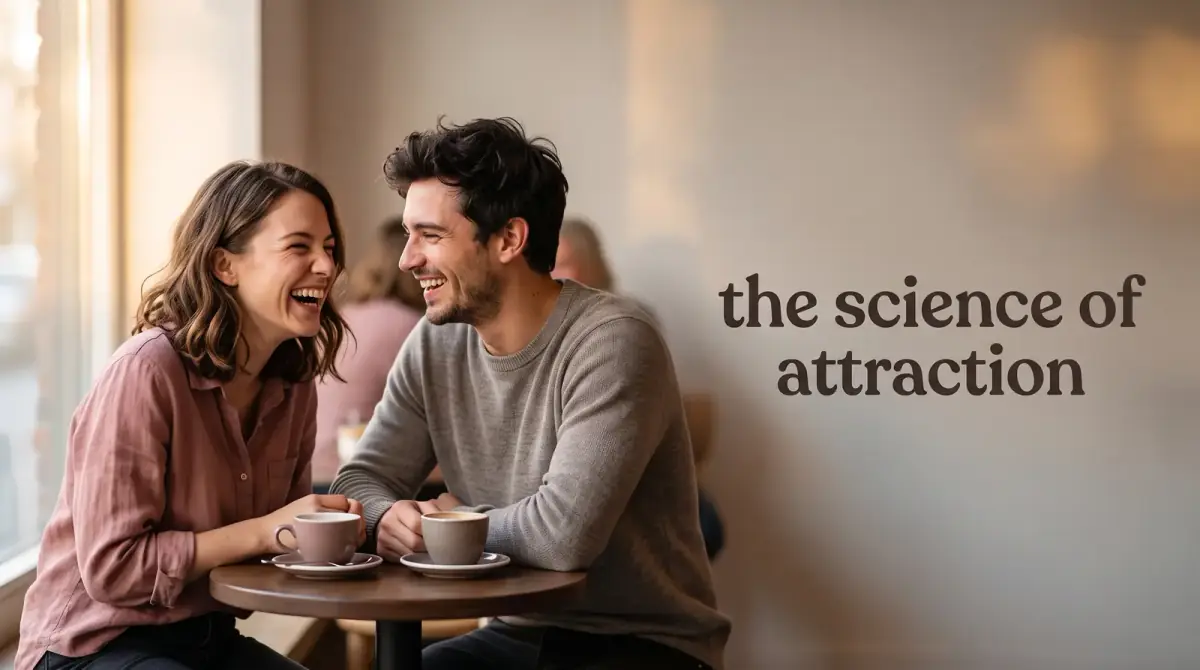
The science of attraction explained: how looks, personality, timing, and shared values quietly shape who we're drawn to and why.
- Physical attraction — the immediate visual and sensory response.
- Emotional attraction — feeling safe, understood, and at ease.
- Intellectual attraction — enjoying how someone thinks and talks.
- Situational attraction — sparked by shared moments, proximity, or timing.
The science of attraction is really the study of why we lean toward certain people and drift past others, often before we can explain it. Attraction is not one thing. It's a blend of biology, psychology, and circumstance that nudges us toward connection. Understanding it won't turn dating into a formula, but it can make your own reactions far less mysterious.
Researchers who study human relationships generally agree on a comforting truth: while men and women show some average differences in what they say they value, the overlap is enormous. Most of what draws people together is shared by everyone.
What is attraction, really?
Attraction is the pull that makes you want to be near someone, learn more about them, or build something together. Psychologists usually separate it into a few strands that often work at once.
- Physical attraction — the immediate visual and sensory response.
- Emotional attraction — feeling safe, understood, and at ease.
- Intellectual attraction — enjoying how someone thinks and talks.
- Situational attraction — sparked by shared moments, proximity, or timing.
Lasting bonds usually draw on all four. A strong first glance may open the door, but the other strands decide whether anyone stays.
Why do we find some people physically attractive?
Physical appeal tends to follow a few broad patterns that show up across cultures. Signs of health and vitality are consistently appealing, likely because they once signaled a capable partner. Clear skin, good grooming, an easy posture, and a genuine smile all read as healthy.
Two ideas come up often in the research. One is symmetry: faces and bodies that are roughly balanced tend to be rated as more attractive on average. The other is averageness, which sounds insulting but isn't. Faces close to the mathematical average of a population are often seen as pleasant and trustworthy.
That said, individual taste varies wildly. What one person finds magnetic, another barely notices. Culture, upbringing, and personal history all shape the eye of the beholder.
Do men and women want different things?
When surveyed, people do report some average differences in stated preferences. Studies suggest men, on average, place slightly more weight on physical appearance early on, while women, on average, place slightly more weight on signals of stability, kindness, and status. These are tendencies across large groups, not rules about any individual.
It's easy to overstate these gaps. When you look at what people actually choose in real life, rather than what they check on a survey, the differences shrink. Both men and women rank the same traits near the top.
- Kindness and warmth.
- Intelligence and a sense of humor.
- Reliability and emotional maturity.
- Shared values and life goals.
In other words, the deepest preferences are remarkably human and shared. The stereotypes make for catchy headlines, but the everyday reality is more generous.
The psychology that quietly does the work
Beyond looks, several well-studied psychological forces shape who we fall for. These operate below awareness, which is why attraction can feel like it happens to us.
Proximity and familiarity
We tend to like people we see often. Repeated, pleasant exposure breeds comfort, sometimes called the mere exposure effect. This is why so many couples meet at work, school, or through the same friend group.
Similarity
Despite the saying that opposites attract, research leans the other way. We're generally drawn to people who share our values, humor, and outlook. Similarity feels validating and reduces friction.
Reciprocity
Learning that someone likes us makes us more likely to like them back. Interest is contagious, and feeling wanted is one of the most reliable sparks of attraction.
Arousal and context
Shared excitement can heighten attraction. Doing something novel or a little thrilling together, from a first roller coaster to a lively debate, can make a companion seem more appealing because the body's arousal gets linked to the person.
What turns a spark into something lasting?
Initial attraction and long-term love are related but not identical. The chemistry that pulls two people together is fueled partly by novelty, which naturally fades. What replaces it, when a relationship works, is a calmer, sturdier bond built on trust and companionship.
Experts who study couples that stay happy point to a handful of habits far more than any physical trait.
- Responsiveness — noticing your partner's needs and turning toward them.
- Kind conflict — disagreeing without contempt or stonewalling.
- Shared meaning — building routines, jokes, and goals that are yours together.
- Consistent appreciation — small, frequent expressions of gratitude.
Attraction, in the long run, is less about the first glance and more about how safe and seen someone helps you feel over years.
Can you become more attractive?
Yes, though probably not in the way the beauty industry implies. The most reliable improvements are the ones within your control, and they tend to boost every strand of attraction at once.
- Look after your health. Sleep, movement, and hydration change how you look and how you carry yourself.
- Be genuinely curious about others. Attentive listening is quietly magnetic.
- Cultivate warmth. A relaxed, friendly manner draws people in more than perfect features.
- Develop your own life. Passions and competence signal confidence without any performance.
Confidence here doesn't mean bravado. It means being comfortable enough in yourself that others feel comfortable around you too.
The takeaway
The science of attraction reveals something reassuring: while looks open doors, kindness, similarity, and responsiveness are what keep people together. The differences between what men and women want are smaller than the stereotypes suggest, and the traits that matter most are ones anyone can grow. Focus on being healthy, warm, and genuinely interested in others, and attraction will take care of far more than you'd expect.



Comments
0 total