
The short answer
Router placement quietly decides your whole home speed. Learn the best place to put a router, plus the common spots that secretly wreck your Wi-Fi coverage.
- Put the router central, high, and out in the open for the best coverage.
- Walls, floors, metal, and water all weaken the signal as it passes through.
- Keep it away from microwaves, cordless phones, and large appliances.
- Cupboards, floors, and basements are among the worst places to hide it.
- If placement is not enough, a mesh system or extender can fill the gaps.
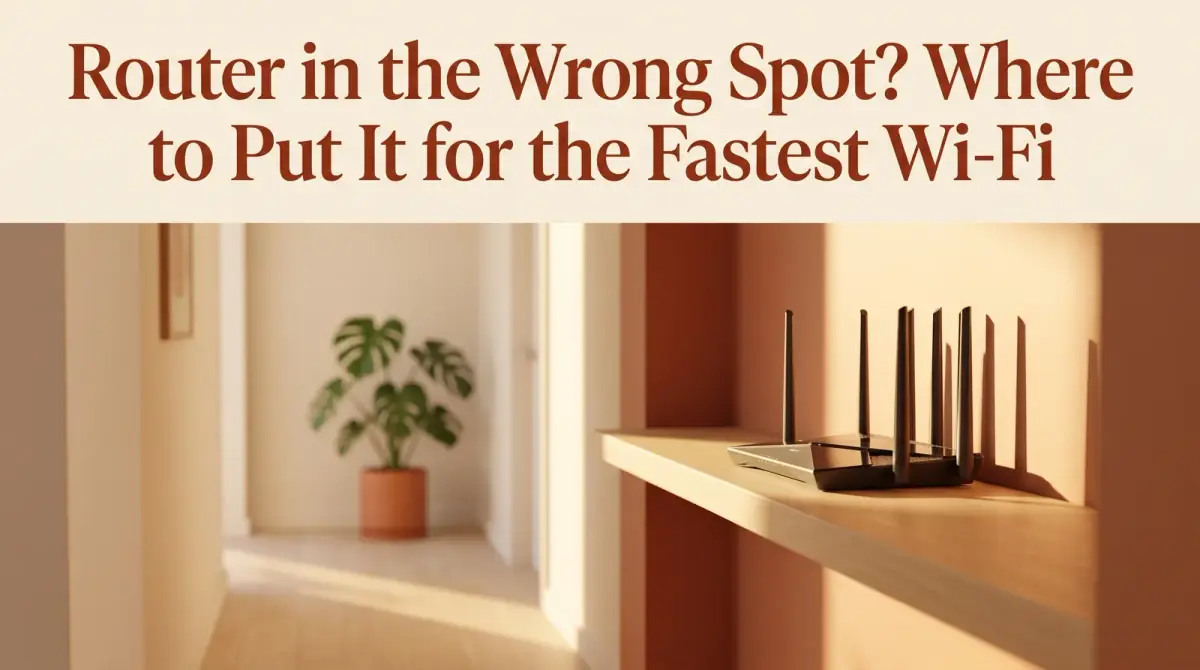
The best place to put a router is high up, out in the open, and as close to the centre of your home as you can manage. Wi-Fi signal spreads outward in every direction and weakens each time it passes through walls, floors, and furniture, so a router hidden away in a corner cupboard leaves half your home in the slow lane. Move it somewhere better and you can often boost both speed and coverage without spending a penny.
Most people set their router down wherever the cable happens to reach and never think about it again. Yet a few minutes of thought about placement can turn a patchy connection into a reliable one.
Key takeaways
- Put the router central, high, and out in the open for the best coverage.
- Walls, floors, metal, and water all weaken the signal as it passes through.
- Keep it away from microwaves, cordless phones, and large appliances.
- Cupboards, floors, and basements are among the worst places to hide it.
- If placement is not enough, a mesh system or extender can fill the gaps.
Why router placement matters so much
A router broadcasts a radio signal, and like any radio signal it fades with distance and obstacles. Every wall, floor, and bulky piece of furniture between the router and your device chips away at the strength and speed you actually receive.
That is why two homes with identical internet plans can have wildly different Wi-Fi. Good router placement means the signal reaches your key rooms with plenty of strength to spare, while poor placement wastes half of it warming up a cupboard wall. Because the signal weakens fastest close to the source, the first metre or two around the router matters more than you might think.
The best place to put a router
The best place to put a router balances three things: it should be central, elevated, and unobstructed. Aim for a spot near the middle of your home so the signal has the shortest possible distance to travel to every room.
Height helps because Wi-Fi tends to spread slightly downward and outward, so a router on a shelf or mounted on a wall covers more ground than one sitting on the floor. Keep it in open air rather than boxed in, since an enclosed router is fighting through extra material before its signal even reaches the room. If you can, place it in or near the room where you use the internet most.
Go central, high, and open
Picture the signal as light from a bare bulb. A bulb in the centre of the house lights every room fairly evenly, while a bulb jammed in a corner leaves the far side dim.
The same logic guides where to put a wifi router. A central, raised, open position gives the most even coverage across the whole space. If your home has more than one floor, placing the router on an upper level or high on a wall can help it reach both upstairs and down, since the signal travels through the ceiling to the rooms above.
What to keep your router away from
Certain materials and devices are especially hard on Wi-Fi. Keeping the router clear of them protects your signal.
- Metal and mirrors, which reflect and block the signal.
- Water, including fish tanks and even large stacks of full bottles, because water absorbs the signal.
- Thick concrete or brick walls, which are far harder to pass through than plasterboard.
- Microwaves and cordless phones, which can interfere on the same frequencies.
- Large appliances such as fridges and washing machines, which are dense and full of metal.
A little distance from these troublemakers can noticeably improve wifi coverage in the rooms that matter most.
The worst spots people always choose
Some of the most convenient places for a router are the very worst for performance. If your Wi-Fi is weak, there is a good chance it lives in one of these.
Inside a cupboard or cabinet
Tucking the router out of sight looks tidy, but the enclosure smothers the signal before it ever reaches you.
On the floor
Sitting on the floor, especially in a corner, sends much of the signal straight into the ground and the walls beside it.
In the basement or a far corner
A router in the basement or at one end of the house has to push its signal through the whole building, leaving the far rooms starved.
Simply lifting the router off the floor and out of its hiding place is often the biggest single improvement you can make.
Fine-tuning the antennas
If your router has external antennas, their angle changes how the signal spreads. A common approach is to point one antenna straight up and another out sideways, so the router covers both the floor you are on and the ones above or below.
For a single-storey home, keeping the antennas mostly vertical spreads the signal outward across the level. It is worth experimenting, since even small adjustments can shift coverage toward the rooms you care about most.
When placement alone is not enough
Sometimes a home is simply too large or too solidly built for one router to cover, no matter how cleverly you position it. Thick stone walls, long layouts, and multiple floors can defeat even the best spot.
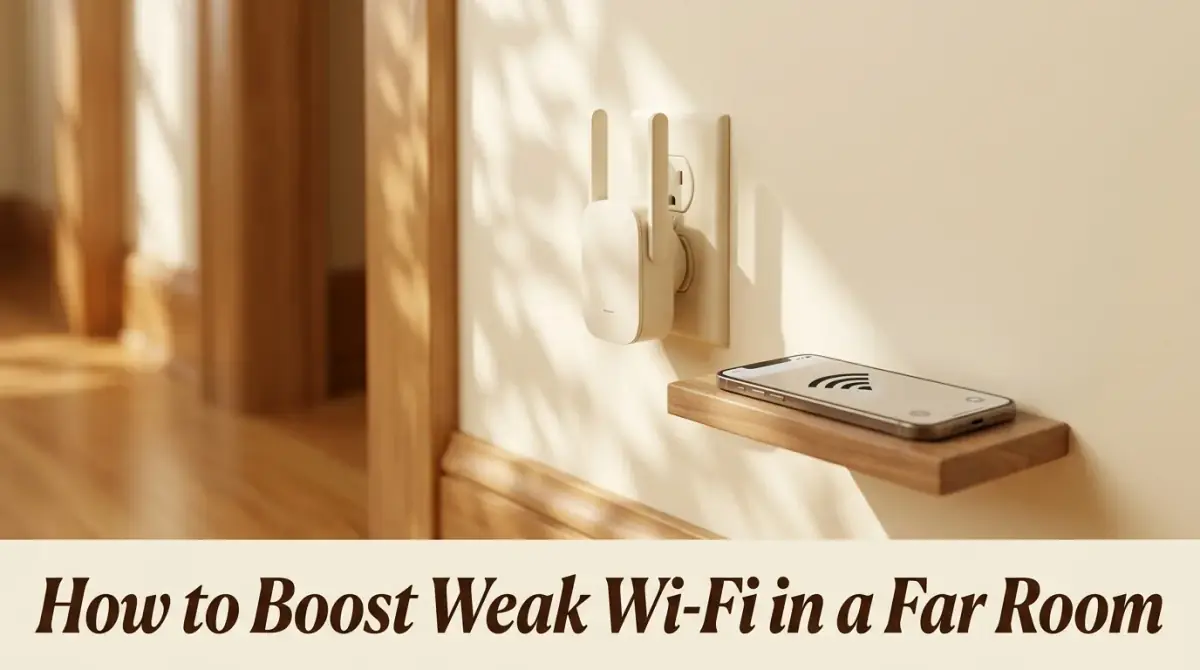
In those cases, a mesh Wi-Fi system spreads several units around the home so coverage hands off smoothly as you move from room to room. A single range extender can also fill one stubborn dead zone. These are worth considering only after you have optimised placement, though, because the right position often solves the problem for free.
A quick placement checklist
Before you settle on a final spot, run through a short mental list to make sure you have given your router the best chance.
- Is it near the centre of your home?
- Is it raised on a shelf or mounted on a wall rather than on the floor?
- Is it out in the open instead of inside a cupboard?
- Is it clear of metal, water, and large appliances?
- Is it close to the rooms where you use the internet most?
Tick off those points and you will have given your network the strong, even foundation it needs. From there, any remaining gaps are easy to spot and easy to fill.


Comments
0 total