
The short answer
From the 10% brain myth to sugar and hyper kids, here are common myths people still believe, debunked with what the evidence actually shows.
- Repetition — The more we hear something, the more true it feels, a tendency known as the illusory truth effect.
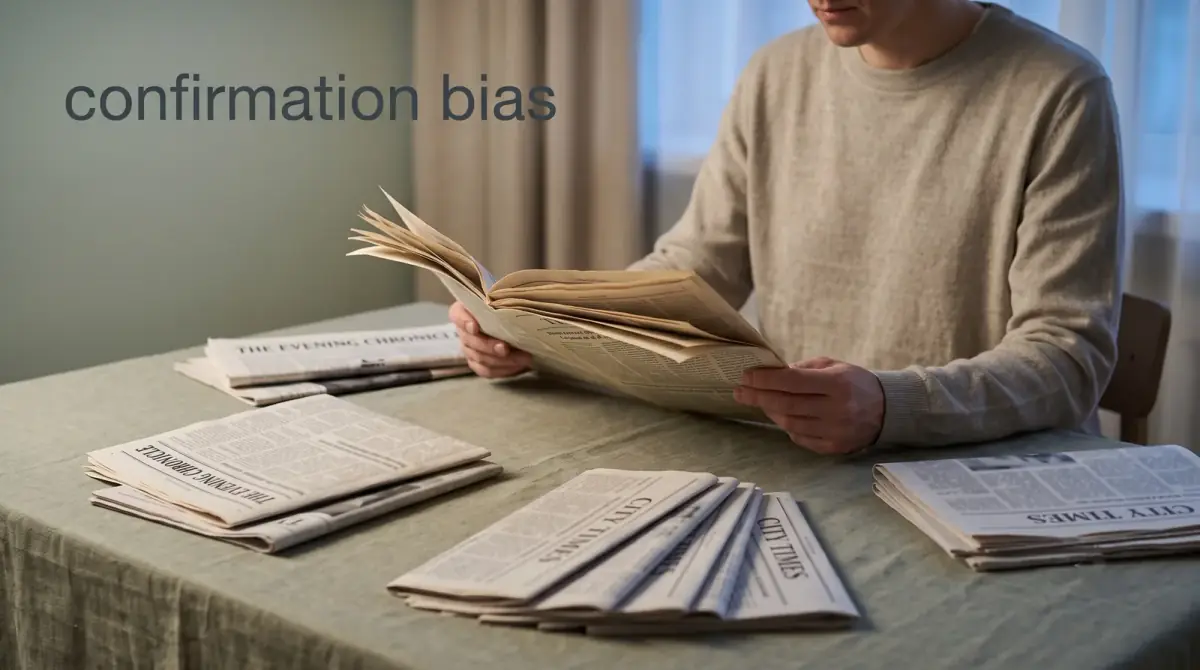
- Confirmation bias — We notice evidence that supports what we already believe and overlook what contradicts it.
- Good stories — Myths are often more vivid, tidy, and memorable than the messier truth.
- Social proof — If everyone around us believes it, questioning it feels unnecessary.
Some common myths people still believe feel so obviously true that we rarely stop to question them. But many of these "facts" are simply repeated so often that they harden into common knowledge, even when the evidence doesn't back them up. Understanding why we cling to false beliefs is just as fascinating as the myths themselves.
Let's walk through a handful of widespread misconceptions and what's actually going on beneath them.
Do we really use only 10% of our brains?
No. This is one of the most stubborn myths around, and it's simply not true. Brain imaging shows that we use virtually all of our brain, just not every region at full intensity at the same time.
Different tasks light up different areas, and even during rest your brain stays remarkably active. The idea that 90% sits dormant, waiting to be unlocked, makes for a great movie plot but poor neuroscience.
Does sugar make children hyperactive?
Many parents swear it does, yet controlled studies have repeatedly failed to find a reliable link between sugar and hyperactivity in kids. So why does the belief persist?
Part of it is context. Sugar often appears at birthday parties, holidays, and celebrations, situations that are exciting on their own. Parents expect wild behavior, notice it, and connect it to the cake. This is a classic case of expectation shaping perception.
Do people have fixed "learning styles"?
The idea that you're a "visual learner" or an "auditory learner" and should be taught accordingly is enormously popular. Unfortunately, research has struggled to show that matching instruction to a supposed style actually improves learning.
What does help is engaging with material in multiple ways and matching the method to the content. Learning to read music is inherently visual and auditory, no matter your preference. Variety beats labels.
Is human memory like a video recording?
It feels like our memories replay events exactly as they happened, but memory is reconstructive, not reproductive. Every time you recall something, your brain rebuilds it, and details can quietly shift.
This is why eyewitness accounts can be unreliable and why two people remember the same event differently. Our confidence in a memory doesn't guarantee its accuracy, which is a humbling thing to sit with.
Does lightning never strike the same place twice?
It absolutely can, and often does. Tall structures like skyscrapers and towers get struck repeatedly, sometimes many times in a single year. The saying is a comforting metaphor, not a physical rule.
Will you catch a cold from being cold?
Colds are caused by viruses, not by chilly weather itself. We do tend to get sick more in colder months, but that's largely because we spend more time indoors and close together, making it easier for viruses to spread.
So bundling up is smart for comfort, but a scarf alone won't shield you from a sneezing coworker.
Do we swallow spiders in our sleep?
This creepy claim gets passed around constantly, yet there's no good evidence for it. Spiders have little reason to crawl into a warm, breathing, occasionally snoring human mouth. You can sleep easy.
Does cracking your knuckles cause arthritis?
Plenty of people have been warned that this habit will wreck their joints, but the evidence doesn't support it. The popping sound comes from gas bubbles in the fluid around your joints, not from damage.
Cracking your knuckles may annoy those around you, but current understanding suggests it doesn't cause arthritis. That said, if cracking is ever painful, that's worth mentioning to a doctor.
Do bulls really hate the color red?
The dramatic image of a bull charging a red cape is misleading. Bulls, like most cattle, are actually colorblind to red. What provokes them in a bullfight is the movement of the cape, not its color.
The red is largely for the crowd's benefit and tradition. Wave a cape of any color the same way, and you'd likely get the same reaction.
Does shaving make hair grow back thicker?
This one feels true because regrowth can look and feel different, but shaving doesn't change the thickness, color, or rate of your hair. Cutting hair at the surface leaves a blunt tip that can feel coarser as it grows out.
That stubbly feeling fools our senses, but the follicle beneath the skin is completely unchanged.
Why do these myths survive?
The persistence of false beliefs isn't about intelligence. It's about how our minds work. A few mental habits keep myths alive:
- Repetition — The more we hear something, the more true it feels, a tendency known as the illusory truth effect.
- Confirmation bias — We notice evidence that supports what we already believe and overlook what contradicts it.
- Good stories — Myths are often more vivid, tidy, and memorable than the messier truth.
- Social proof — If everyone around us believes it, questioning it feels unnecessary.
How can you spot a myth before you fall for it?
You don't need to be a scientist to think more critically. A few simple habits go a long way:
- Ask where the claim comes from. Is there real evidence, or just repetition?
- Notice absolutes. Words like "never" and "always" are often red flags.
- Check whether it's testable. Reliable claims can be examined; myths often resist scrutiny.
- Stay comfortable with uncertainty. "I'm not sure" is a perfectly good answer.
Being wrong isn't a character flaw. Updating your beliefs when the evidence changes is a sign of a healthy, curious mind.
The takeaway
These common myths stick around because our brains crave simple, satisfying stories. That's not something to be ashamed of, it's part of being human. The good news is that a little curiosity and a willingness to ask "is that really true?" can free you from a surprising number of them.
Question gently, verify kindly, and enjoy the strange pleasure of learning you were wrong.


Comments
0 total