
The short answer
The most common cognitive bias is confirmation bias, and nearly everyone falls for it. See how this everyday mental habit works, why it fools you, and how to push back.
- Confirmation bias means favoring evidence that supports your existing view.
- It is near-universal because it saves effort and protects your ego.
- It hides in plain sight, since being wrong rarely feels like being wrong.
- It fuels arguments, weak decisions, and stubborn beliefs.
- You can reduce it, though you can never switch it off completely.
The most common cognitive bias is confirmation bias, the habit of noticing and trusting information that fits what you already believe while brushing aside anything that does not. Almost everyone does it, usually without realizing. It quietly shapes how you read the news, judge people, shop, vote, and even remember your own past.
The tricky part is that this bias feels like clear, careful thinking from the inside. You are simply not aware of the evidence you skipped, so your conclusion feels obvious and fair.
Here is the quick version before we dig in:
- Confirmation bias means favoring evidence that supports your existing view.
- It is near-universal because it saves effort and protects your ego.
- It hides in plain sight, since being wrong rarely feels like being wrong.
- It fuels arguments, weak decisions, and stubborn beliefs.
- You can reduce it, though you can never switch it off completely.
What is the most common cognitive bias?
Ask people who study the mind to name the most common cognitive bias, and confirmation bias comes up again and again. It is the tendency to search for, favor, and remember information that confirms what you already think.
A cognitive bias is just a mental shortcut that can lead your thinking astray. Your brain takes shortcuts all day because it cannot weigh every detail from scratch. Most of the time these shortcuts help you move fast and get on with life. Now and then they steer you wrong.
Confirmation bias earns the top spot because it touches nearly every belief you hold. Politics, health, money, relationships, and even your opinion of yourself all pass through the same filter. That reach is what makes it so worth understanding.
Why this bias fools nearly everyone
Confirmation bias is so common because it does two comfortable-feeling jobs at once. It saves mental effort, and it protects your sense of being right.
Thinking hard is tiring. It is far easier to accept an idea that matches your view than to question it and rebuild your opinion from scratch. Your brain likes the cheaper option, so it takes it.
Being wrong also stings. When new facts clash with your beliefs, you feel a small jolt of discomfort. Waving those facts away makes the discomfort disappear, so you do it almost on reflex, long before you have thought it through.
Being smart offers little protection here. In fact, clever people are often better at building a convincing case for whatever they already wanted to believe.
How this bias feels from the inside
This is what makes confirmation bias so slippery. It does not feel like bias. It feels like being reasonable.
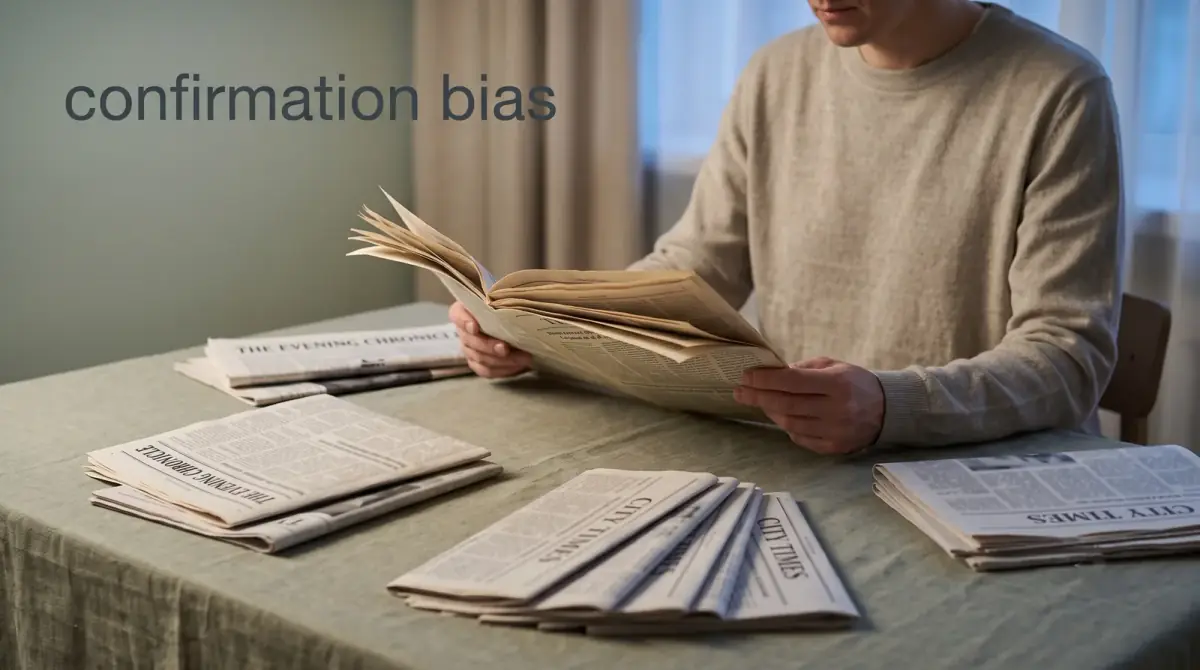
When you read a headline you agree with, you nod and move on. When you read one you disagree with, you slow down and pick it apart. Same effort, very different scrutiny, and you rarely notice the gap.
You also remember selectively. The one time your hunch was right stays vivid. The three times it was wrong quietly fade. Over months and years, your memory builds a case that you were correct all along, even when the record says otherwise.
Try a quick test. The next time you feel instantly sure about something, ask whether you actually weighed the other side, or just recognized a view you already held.
Everyday examples you will recognize
Confirmation bias is not just an idea from a textbook. It shows up in ordinary moments.
- You decide a coworker is careless, then notice every mistake and overlook their good work.
- You research a product you already want and skim right past the negative reviews.
- You follow accounts that echo your views, so your feed starts to feel like proof.
- You "just know" your team will win, and you count the wins far more than the losses.
- You take a health tip you like at face value, then dismiss any source that disagrees.
None of these feel like errors in the moment. That is exactly why the bias is so hard to catch in yourself, even after you learn its name.
Why confirmation bias actually matters
This is not a harmless quirk. Over time, confirmation bias can lead you into decisions you later regret.
It can keep you in a bad investment because you only read the rosy forecasts. It can strain a friendship because you collect proof that someone let you down. It can even affect your health when you trust one comforting source and ignore the rest.
Groups fall for it too. When everyone shares the same view, agreeable ideas grow louder and doubts grow quieter. That is how confident teams talk themselves into poor calls that later look obvious.
Other top cognitive biases worth knowing
Confirmation bias may be the most common, but it has plenty of company. Learning a few of the other top cognitive biases helps you spot the pattern in your own head.
Anchoring is leaning too heavily on the first number or fact you hear. Hindsight bias is feeling an outcome was obvious once you already know how it turned out. Availability bias is judging how likely something is by how easily examples spring to mind. The sunk cost trap is sticking with something just because you already put time or money into it.
Notice how these overlap. Many biases share the same root: your brain choosing the quick, comfortable answer over the accurate one.
How to push back against your own bias
You cannot delete confirmation bias, but you can loosen its grip with a few habits.
- Ask what would change your mind. If nothing could, that is a warning sign.
- Go looking for the strongest argument against your view, not the weakest one.
- Follow a few thoughtful people you often disagree with.
- Slow down on the ideas you like as much as the ones you dislike.
- Say "I might be wrong" now and then, and actually mean it.
These steps feel uncomfortable at first, and that discomfort is the point. You are training your brain to sit with doubt instead of rushing to feel right.
You will not get it perfect, and that is fine. Even catching yourself once in a while can save you from a costly mistake or a needless argument.
The bottom line
The most common cognitive bias, confirmation bias, is a normal feature of how your mind works, not a personal flaw. It saves energy and soothes the ego, but it can lock you into beliefs that no longer match the facts. You will never remove it fully. Still, the simple habit of asking "what if I am wrong?" goes a long way toward clearer, fairer thinking.


Comments
0 total