
The short answer
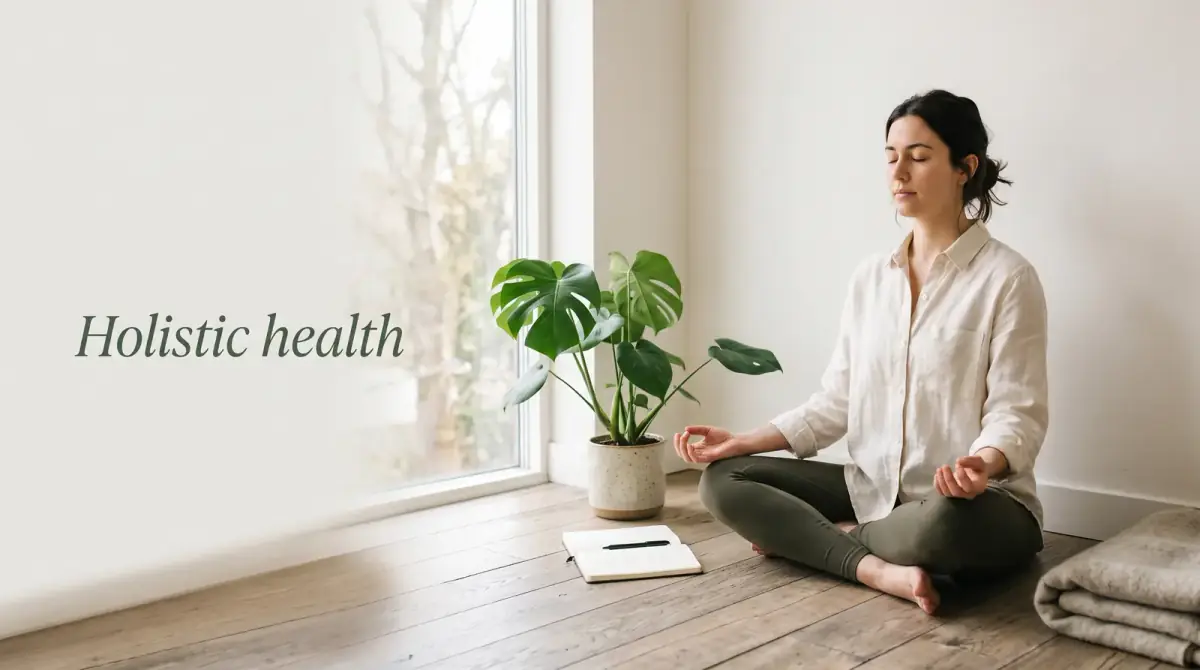
Holistic health means caring for body, mind, and connection together. Learn simple, practical ways to feel more whole in modern life.
- Physical — movement, nutrition, sleep, and rest.
- Mental and emotional — mood, stress, and how you handle feelings.
- Social — the quality of your relationships and community.
- Spiritual — meaning, values, and a sense of purpose (religious or not).
Holistic health is the idea that your wellbeing depends on the whole of you, not just one part. Instead of treating the body like a machine with separate parts, a holistic approach looks at how your physical health, mental state, relationships, and sense of purpose all shape one another. In a fast, fragmented modern world, that wider view can be genuinely grounding.
You don't need to abandon modern medicine or adopt anything mystical. At its best, holistic health simply means caring for yourself as a complete person and noticing how the pieces connect.
What does holistic health actually mean?
Holistic health is an approach to wellbeing that considers the whole person rather than isolated symptoms. The word comes from the idea of wholeness. When one area suffers, others often follow, and when one improves, others tend to lift too.
Most frameworks describe several interconnected dimensions of health.
- Physical — movement, nutrition, sleep, and rest.
- Mental and emotional — mood, stress, and how you handle feelings.
- Social — the quality of your relationships and community.
- Spiritual — meaning, values, and a sense of purpose (religious or not).
None of these stands alone. Poor sleep frays your mood; loneliness raises stress; a strong sense of purpose helps you stick to healthy habits.
Why wholeness feels harder in modern life
Modern living tends to slice life into pieces. We sit for work, scroll during rest, eat on the run, and squeeze relationships into leftover minutes. Convenience is wonderful, but it can quietly disconnect us from our bodies, from nature, and from each other.
Holistic health is partly a response to that fragmentation. It's an invitation to stitch the pieces back together, so that how you eat, move, think, and connect all support the same goal: feeling well.
The pillars of holistic wellbeing
Nourish your body
Food is fuel, but it's also information for your body. A whole-person approach favors mostly whole, minimally processed foods: plenty of vegetables, fruits, whole grains, legumes, and quality proteins. Rather than chasing perfection, aim for consistency and variety.
Hydration and mindful eating matter too. Slowing down at meals helps digestion and helps you notice when you're actually full.
Move in ways you enjoy
Movement supports nearly every system in the body and lifts mood almost immediately. The best exercise is the kind you'll actually repeat, whether that's walking, dancing, cycling, or lifting weights. Regular daily movement often beats occasional intense workouts.
Protect your sleep
Sleep is when your body repairs and your brain consolidates memory. It's arguably the most underrated pillar of health. A consistent bedtime, a dark cool room, and less screen time before bed can transform how you feel by day.
Tend your mind
Mental health is health. Practices like mindfulness, journaling, or simply naming your feelings build emotional awareness. Managing chronic stress isn't a luxury; unchecked stress affects the heart, digestion, sleep, and immunity.
Nurture connection
Strong relationships are among the most powerful predictors of a long, happy life. Make time for people who matter, and don't underestimate small daily contact, a shared meal, a real conversation, a walk with a friend.
Find your sense of meaning
Purpose gives structure to everything else. It might come from work, faith, creativity, family, or service. Feeling that your days matter tends to make healthy choices easier and setbacks more bearable.
How to start living more holistically
You don't need a total life overhaul. Holistic health grows through small, connected changes that reinforce one another. Try this simple approach.
- Pick one pillar to improve first. Maybe it's sleep or daily movement. Start where you feel the most strain.
- Choose one tiny, repeatable habit. A ten-minute walk after dinner beats an ambitious plan you'll drop in a week.
- Notice the ripple effects. Better sleep often improves mood and appetite; more movement often improves sleep.
- Add the next piece gradually. Once a habit feels automatic, layer in another.
- Be kind to yourself. Wholeness includes self-compassion, not another standard to fail against.
Holistic health and modern medicine work together
A crucial point: holistic health is not a replacement for medical care. It works best alongside it. Vaccines, screenings, medications, and professional treatment save lives, and lifestyle habits help you get the most from them.
Caring for the whole person doesn't mean rejecting science. It means using every good tool, from a doctor's guidance to a good night's sleep, in service of feeling well.
If you're managing a health condition, talk to a qualified professional before making major changes to diet, exercise, or supplements.
Small daily rituals that support the whole you
Holistic living often shows up in tiny, repeatable moments rather than grand gestures. These are simple rituals that touch several pillars at once, which is exactly why they're so effective.
- Step outside in the morning. A few minutes of daylight helps regulate your sleep rhythm, lifts your mood, and gets you moving.
- Eat one meal without a screen. You'll digest better, eat more mindfully, and often connect with the people around you.
- Take a short breathing pause. A minute of slow breathing between tasks calms the nervous system and clears your head.
- Send one message of gratitude. A quick note to someone you appreciate strengthens connection for both of you.
Notice how none of these require extra time or money. Holistic health is less about adding more to your day and more about doing ordinary things with a little more awareness.
How do you know it's working?
Progress in holistic health is rarely a single number on a scale. Instead, watch for quieter signals that your whole system is settling into balance.
You might notice steadier energy through the day, fewer sharp mood swings, deeper sleep, or a sense that stressful moments pass more easily. These subtle wins are meaningful, because they reflect the connected nature of wellbeing rather than one isolated metric.
Keep a simple check-in with yourself each week. Ask how your body feels, how your mind is doing, and whether you feel connected to others. Honest reflection is a powerful, free diagnostic tool.
The takeaway
Holistic health reminds us that we are whole people, not collections of separate problems. Care for your body, mind, relationships, and sense of purpose together, and each part strengthens the rest. Start small, stay curious, and let one healthy choice make the next one easier. In a scattered modern world, reclaiming that sense of wholeness may be the most nourishing thing you do.


Comments
0 total