
The short answer
Learn how to improve gut health naturally with fiber, fermented foods, better sleep, and stress habits that support a balanced microbiome.
- Aim for many different plants each week, including vegetables, fruits, beans, nuts, seeds, and whole grains.
- Rotate your choices rather than eating the same three vegetables on repeat.
- Include colorful produce, since different colors often signal different beneficial compounds.
If you want to improve gut health naturally, the most effective path is surprisingly simple: feed the trillions of helpful microbes living in your digestive system with the right foods and habits. Your gut does far more than digest lunch. It influences your immune system, mood, energy, and how well you absorb nutrients. The good news is that a healthier gut is often just a few sustainable changes away, no expensive products required.
What does "gut health" actually mean?
Your gut is home to a vast community of bacteria and other microbes known as the gut microbiome. A healthy gut generally has a diverse, balanced mix of these microbes working in your favor.
When that balance is off, you may notice bloating, irregular digestion, low energy, or frequent stomach discomfort. Because the gut communicates constantly with the brain and immune system, keeping it healthy tends to pay off far beyond digestion alone.
How can I improve gut health naturally?
The core answer is to eat more plants and fiber, add fermented foods, stay hydrated, sleep well, and manage stress. Let's break down each one so you know exactly what to do.
Eat a wide variety of plant foods
Diversity is the single most important principle. Different microbes thrive on different plant fibers, so the more variety you eat, the more balanced your microbiome tends to be.
- Aim for many different plants each week, including vegetables, fruits, beans, nuts, seeds, and whole grains.
- Rotate your choices rather than eating the same three vegetables on repeat.
- Include colorful produce, since different colors often signal different beneficial compounds.
Prioritize fiber and prebiotic foods
Fiber is the main fuel for your good bacteria. Certain fibers, called prebiotics, are especially nourishing for them.
- Great prebiotic sources include onions, garlic, leeks, asparagus, bananas, oats, and legumes.
- Increase fiber gradually. Adding too much too fast can cause temporary bloating.
- Whole foods beat supplements for most people, since they deliver fiber alongside other nutrients.
Add fermented foods for probiotics
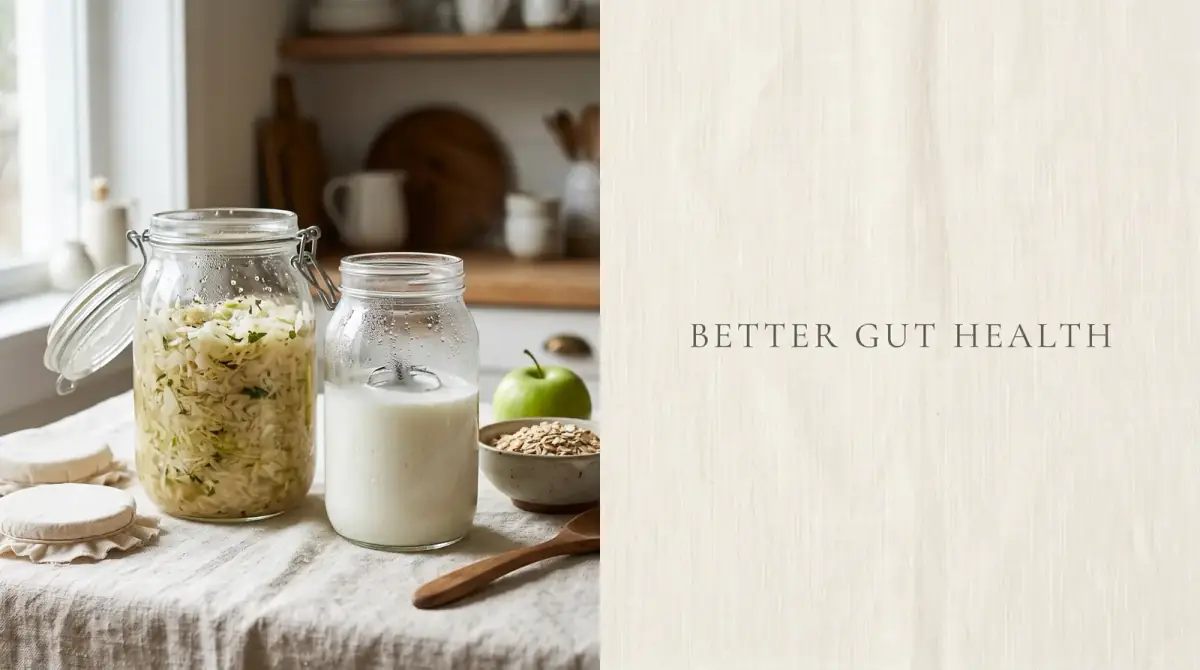
Fermented foods naturally contain live beneficial bacteria, known as probiotics, that can support a healthy gut community.
- Try yogurt with live cultures, kefir, sauerkraut, kimchi, miso, or tempeh.
- Choose options without excessive added sugar, and look for "live and active cultures" where relevant.
- Start small and let your gut adjust, especially if fermented foods are new to you.
Which habits harm your gut?
Improving gut health is as much about what you reduce as what you add.
- Highly processed foods and excess added sugar can encourage less helpful microbes and crowd out fiber.
- Chronic stress disrupts the gut-brain connection and can worsen digestion.
- Poor sleep is linked to a less favorable microbiome balance.
- Unnecessary antibiotic use can wipe out good bacteria along with the bad, so use them only when a doctor prescribes them.
Lifestyle habits that support a healthy gut
Diet is central, but your daily routine matters just as much.
Stay well hydrated
Water supports digestion and helps fiber do its job. Make water your default drink and adjust for heat and activity.
Protect your sleep
Your gut follows a daily rhythm, and consistent, quality sleep helps keep it in sync. Aim for a regular bedtime and enough hours to wake up genuinely rested.
Manage stress intentionally
Because the gut and brain are deeply connected, calming your nervous system can ease digestive symptoms. Simple tools help:
- Daily movement like walking, which also supports healthy digestion.
- Deep breathing or meditation, even a few minutes a day.
- Time outdoors and regular breaks from screens and pressure.
Move your body regularly
Regular physical activity is associated with a more diverse microbiome and smoother digestion. You don't need intense workouts; consistent, moderate movement is enough for most people.
Slow down at mealtimes
How you eat matters, not just what you eat. Chewing thoroughly and eating without rushing gives your digestive system a head start and can reduce bloating and discomfort. Try to step away from screens and stress while you eat, so your body can focus on digestion rather than firing up the stress response mid-meal.
Do I need probiotic supplements?
For many healthy people, a food-first approach works well and is more affordable. Supplements can help in specific situations, but products vary widely in quality and strain.
If you're considering a supplement, especially for a particular concern, it's wise to talk with a healthcare professional who can guide you toward something appropriate rather than guessing.
Your gut rewards consistency, not perfection. Small daily choices matter more than any single "superfood" or trend.
When should you see a doctor?
Natural strategies help general wellness, but some symptoms deserve professional attention. See a healthcare provider if you experience persistent or severe digestive issues, unexplained weight changes, ongoing pain, or any symptoms that worry you. Gut problems can occasionally signal an underlying condition that needs proper diagnosis.
A simple starter plan
If it all feels like a lot, begin with a few easy wins this week.
- Add one new vegetable or plant food to your meals each day.
- Include one fermented food most days, starting with a small serving.
- Swap one processed snack for a fiber-rich whole food.
- Set a consistent bedtime and drink more water.
The takeaway is encouraging: you don't need a drastic overhaul to improve gut health naturally. Feed your good bacteria with diverse plants and fiber, add fermented foods, hydrate, sleep well, and keep stress in check. Stick with these habits, and your gut, and likely your whole body, will thank you for it.



Comments
0 total