

The short answer
Your gut and skin are more connected than they look. Here is how digestion can drive breakouts and redness, plus simple, food-first ways to support clearer skin.
- Inflammation. An unhappy gut can raise low-level inflammation in the body, and inflammation is a common thread in skin issues like acne, eczema, and redness.
- Nutrient absorption. Your skin needs vitamins and minerals to repair itself. If your gut struggles to absorb them, your skin can look dull, dry, or slow to heal.
- The gut lining. When the intestinal wall is irritated, it may let more unwanted particles into the bloodstream, which can trigger immune reactions that surface on the skin.
- The microbiome balance. The mix of microbes in your gut appears to influence the mix on your skin. When one is out of balance, the other can follow.
Your gut and your skin are more connected than they look. When digestion is off, that imbalance can show up on your face as breakouts, redness, dryness, or dull skin. Understanding how gut health affects your skin can explain stubborn complaints that creams alone never seem to fix.
This link even has a name. Researchers often call it the gut-skin axis, a two-way line of communication between what happens in your digestive system and what shows up on your outer layer. You do not need to be a scientist to use the idea. You just need to know where to look.
What gut health actually means
When people say gut health, they are mostly talking about the trillions of microbes living in your digestive tract. This community is sometimes called the gut microbiome, and gut health meaning comes down to keeping that community balanced and your digestion running smoothly.
A healthy gut helps you break down food, absorb nutrients, and keep the lining of your intestines strong. When that system is thrown off by poor diet, stress, illness, or certain medications, the effects do not stay in your belly. They can ripple outward, including to your skin.
How gut health affects your skin
The connection works through a few overlapping paths. None of these is the whole story on its own, but together they explain a lot.
- Inflammation. An unhappy gut can raise low-level inflammation in the body, and inflammation is a common thread in skin issues like acne, eczema, and redness.
- Nutrient absorption. Your skin needs vitamins and minerals to repair itself. If your gut struggles to absorb them, your skin can look dull, dry, or slow to heal.
- The gut lining. When the intestinal wall is irritated, it may let more unwanted particles into the bloodstream, which can trigger immune reactions that surface on the skin.
- The microbiome balance. The mix of microbes in your gut appears to influence the mix on your skin. When one is out of balance, the other can follow.
This is why some people notice their skin flares up alongside digestive trouble like bloating, constipation, or an upset stomach. The two systems tend to move together.
Common skin signs linked to digestion
You cannot diagnose a gut problem by looking in the mirror, and skin issues have many causes. Still, a few patterns are worth paying attention to.
Breakouts and acne
Persistent acne, especially in adults, sometimes travels with digestive complaints. Diets high in sugar and heavily processed food can feed inflammation and disrupt the gut, and that combination may make breakouts worse for some people.
Redness and sensitivity
Flushing, rosacea-like redness, and easily irritated skin have been tied to gut imbalances in some research. If your skin reacts to everything, it can be worth looking at your digestion as well as your skincare.
Dryness and dullness
When your body is not absorbing nutrients well, skin can lose its glow and feel rough or tight. Hydration and diet often matter here as much as any moisturizer.
Keep in mind that experts do not agree on every detail of these links, and results vary from person to person. Skin is complex, and the gut is only one piece.
Best gut health foods for clearer skin
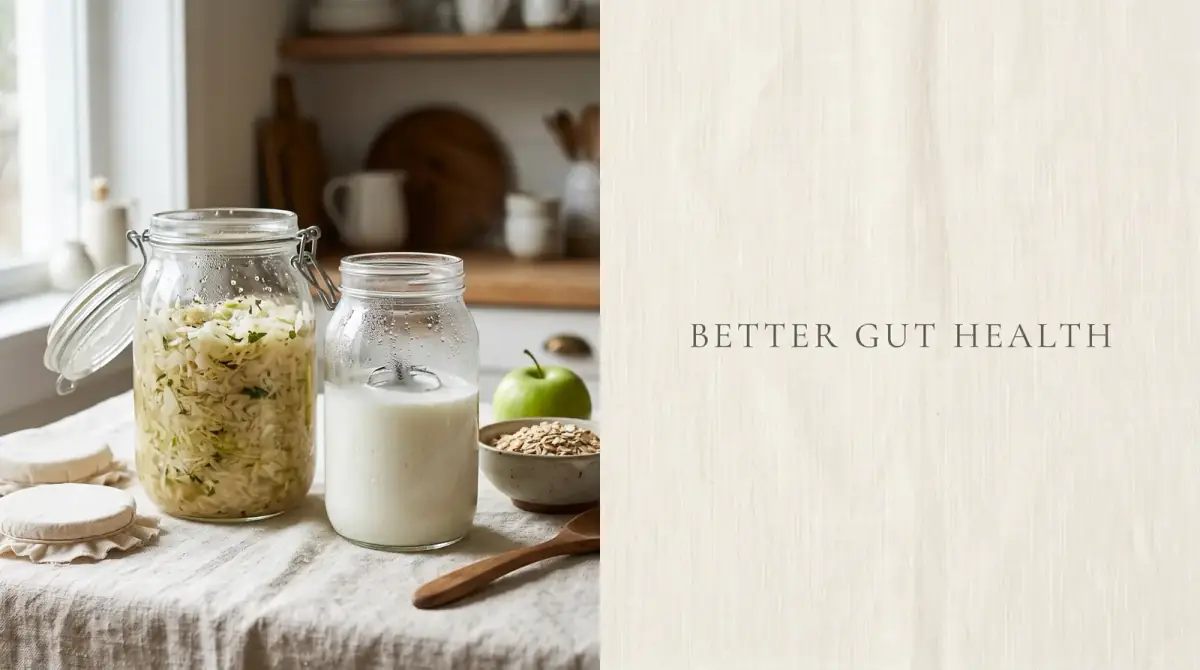
The good news is that supporting your gut is mostly about everyday eating, not expensive products. A food-first approach tends to help both your digestion and your skin at once. Some of the best gut health foods are simple and easy to find.
- Fiber-rich plants: vegetables, fruit, beans, lentils, oats, and whole grains feed the helpful microbes in your gut.
- Fermented foods: yogurt with live cultures, kefir, sauerkraut, kimchi, and miso add beneficial bacteria.
- Prebiotic foods: garlic, onions, leeks, bananas, and asparagus give your gut microbes something to eat.
- Healthy fats: olive oil, nuts, seeds, and oily fish support both gut lining and skin.
- Plenty of water: hydration keeps digestion moving and skin supple.
Variety matters more than any single superfood. A wide range of plants tends to support a wider, healthier mix of gut microbes, which is part of why gut health is important for the whole body, not just the skin.
Habits that support the gut-skin connection
Food is the foundation, but a few daily habits help the gut-skin axis just as much.
- Cut back on ultra-processed food and added sugar. These tend to feed inflammation and crowd out gut-friendly foods.
- Manage stress. Stress affects digestion directly, and many people notice both their gut and their skin worsen during hard stretches.
- Sleep well. Rest supports repair in both systems.
- Move your body. Regular activity supports healthy digestion and circulation.
- Go easy on unnecessary antibiotics. They can disrupt gut bacteria, so use them only when a doctor advises.
None of this promises perfect skin. It simply removes some of the common pressures that push the gut and skin out of balance.
How long before you see a change
Be patient. The gut and skin both change slowly, and neither responds to a single good meal. When people improve their eating and habits, they often notice a difference over weeks rather than days.
Give any change a fair trial before deciding it did not work. Sudden overhauls are hard to keep, and consistency matters more than intensity. A steady week of good food beats one perfect day followed by giving up.
It also helps to change one thing at a time. If you overhaul everything at once and your skin improves, you will not know what actually helped. Add more vegetables for a couple of weeks, then a fermented food, and watch how your skin and digestion respond.
When to see a professional
Home changes help many people, but they are not a cure for everything. If your skin problems are severe, painful, spreading, or affecting your confidence, it is worth seeing a doctor or dermatologist. Persistent digestive symptoms like ongoing pain, blood, sudden changes, or unexplained weight loss also deserve medical attention.
A qualified professional can rule out conditions that need proper treatment and help you avoid guesswork. This article is general educational information, not medical advice, and everyone is different.
The takeaway
- The gut and skin communicate through what experts call the gut-skin axis.
- Inflammation, nutrient absorption, and microbiome balance are the main ways how gut health affects your skin.
- Fiber, fermented foods, healthy fats, and water are among the best gut health foods for a clearer complexion.
- Stress, sleep, and cutting processed food all support the connection.
- See a professional for severe or lasting symptoms.
If your skin has been fighting you for a while, it may be worth looking a little deeper than the surface. Feed your gut well, and your skin often follows.



Comments
0 total