
The short answer
Learn how to build self-discipline with practical, science-friendly habits that reduce reliance on willpower and help you follow through.
- Keep tempting snacks out of the house instead of trying to resist them.
- Put your phone in another room when you need to focus.
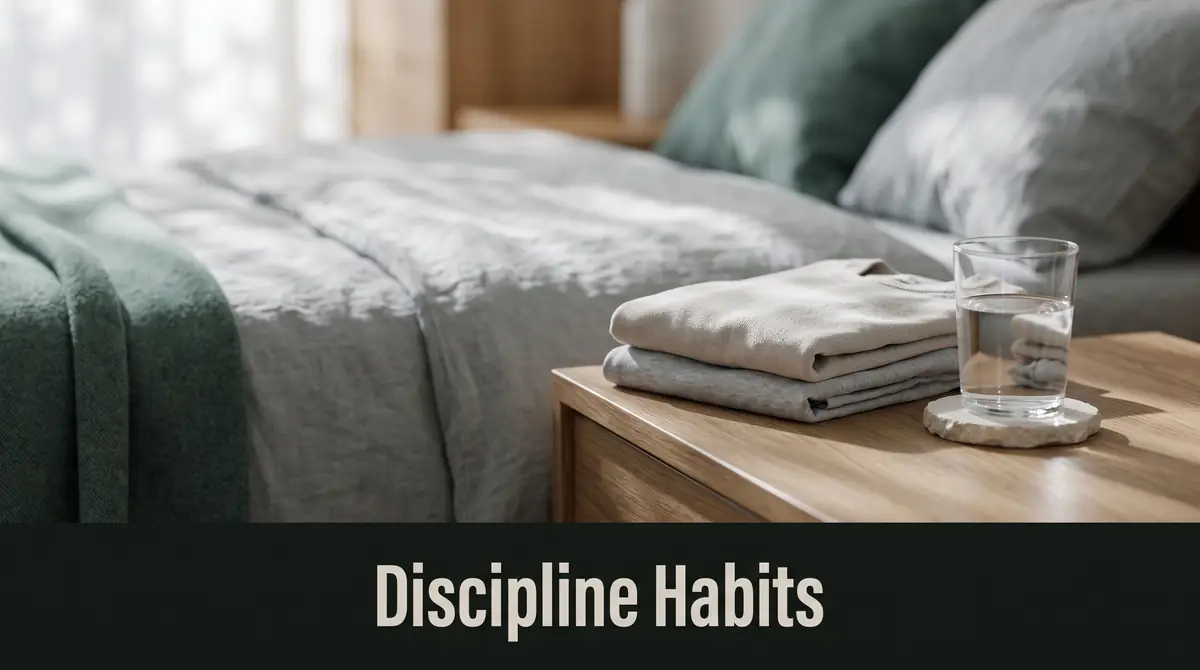
- Lay out your workout clothes the night before.
- Delete the apps that swallow your time.
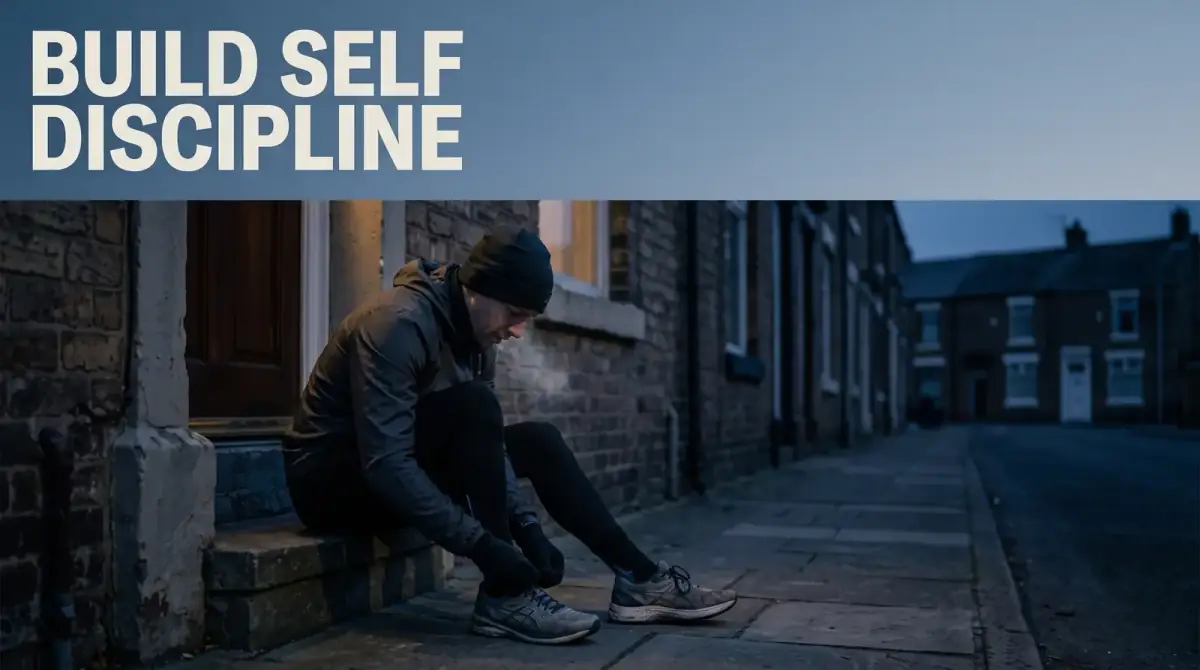
Learning how to build self-discipline starts with a freeing truth: discipline is a skill you develop, not a gift you're born with. The people who seem effortlessly disciplined usually aren't relying on raw willpower. They've built habits, routines, and environments that make the right choice the easy choice.
That means you can train self-discipline the same way you train a muscle, with small, consistent reps that grow stronger over time.
What is self-discipline, really?
Self-discipline is the ability to do what you know matters, even when you don't feel like it. It's the bridge between your intentions and your actions. Motivation gets you started; discipline keeps you going after the excitement fades.
Importantly, discipline isn't about being harsh with yourself. The most disciplined people tend to be self-compassionate, because shame and self-criticism usually lead to giving up, not pushing through.
Why willpower alone doesn't work
Relying purely on willpower is like trying to hold your breath: it works for a while, then it doesn't. Willpower is limited and tends to drain as the day goes on, which is why good intentions often collapse by evening.
The solution is to depend on willpower as little as possible. Instead of forcing yourself to resist temptation all day, you design your life so temptation rarely shows up, and good habits happen almost automatically.
Discipline isn't about winning a daily battle with yourself. It's about arranging life so the battle rarely needs to be fought.
How to build self-discipline step by step
These strategies work together. Start with one or two and add more as they become second nature.
Start absurdly small
The fastest way to build discipline is to lower the bar so far you can't fail. Want to exercise? Commit to two minutes. Want to read more? One page a night. Tiny habits build the identity of someone who follows through, and that identity is what fuels bigger action later.
Use clear rules instead of decisions
Every decision costs mental energy and creates an opening to negotiate with yourself. Replace decisions with rules: "I don't check my phone before noon" or "I always work out on Monday, Wednesday, and Friday." A firm rule removes the daily debate.
Design your environment
Your surroundings shape your behavior more than motivation ever will. Make good choices easy and bad ones inconvenient.
- Keep tempting snacks out of the house instead of trying to resist them.
- Put your phone in another room when you need to focus.
- Lay out your workout clothes the night before.
- Delete the apps that swallow your time.
Build routines and habit stacks
A habit tied to a fixed time or an existing routine requires far less discipline. Attach the new behavior to something you already do: "After I brush my teeth, I meditate for two minutes." Once it's automatic, it no longer drains your willpower.
Manage your energy, not just your time
Self-control is much harder when you're exhausted, hungry, or stressed. Protect your sleep, eat regularly, and tackle your hardest tasks when your energy is highest. Discipline is easier to summon when your basic needs are met.
How to beat procrastination
Procrastination is usually about avoiding an uncomfortable feeling, not laziness. These tactics help you get moving.
- Shrink the first step. Don't "write the report," just "open the document and write one sentence." Starting is the hardest part.
- Use a timer. Work in short focused blocks, such as 25 minutes, followed by a short break. A ticking clock makes starting feel manageable.
- Remove friction. Have everything you need ready so there's no excuse to delay.
- Forgive past procrastination. Beating yourself up makes it worse. Acknowledge it, then take one small action now.
Expect setbacks and recover fast
Even the most disciplined people slip. The difference is how quickly they bounce back. A single missed workout or off day means nothing; two or three in a row start to form a new pattern. The rule that protects discipline is simple: never miss twice in a row.
When you stumble, skip the guilt spiral. Treat the slip as information, adjust your plan, and get back on track at the next opportunity.
Track progress to stay motivated
Seeing your streak grow is quietly powerful. A simple habit tracker or checklist turns invisible effort into visible progress, and progress builds the confidence that keeps you going. Reward yourself for consistency, not just for big outcomes.
Use temptation to your advantage
You don't always have to fight temptation head-on; sometimes you can harness it. A useful technique is pairing something you need to do with something you enjoy, so the reward and the task travel together.
For example, only listen to your favorite podcast while you exercise, or save a show you love for when you're folding laundry. Linking a pleasant activity to a less appealing one makes the difficult behavior something you actually look forward to, which is far easier than relying on grit alone.
Practice discomfort on purpose
Discipline strengthens when you deliberately do small hard things. Taking the stairs, sitting with boredom instead of grabbing your phone, or finishing a task you'd rather quit all train your tolerance for discomfort.
These little challenges act like reps at the gym. Each one teaches your brain that discomfort is survivable and temporary, so when a genuinely important moment demands willpower, you've already built the capacity to handle it.
Connect discipline to something meaningful
Discipline is much easier to sustain when it serves a purpose you care about. "I should eat better" is weak fuel. "I want the energy to keep up with my kids" is powerful because it connects the daily grind to a reason that genuinely moves you.
Take a moment to write down why your goal matters. When motivation dips, and it will, that clear, personal reason is what carries you through the tough stretches where willpower alone would give out.
The takeaway
Building self-discipline isn't about becoming a stricter version of yourself. It's about designing your habits, rules, and environment so doing the right thing takes less effort over time. Start with one tiny habit today, protect it fiercely, connect it to a reason that matters, and let each small win compound. Discipline grows every time you show up.
Comments
0 total