
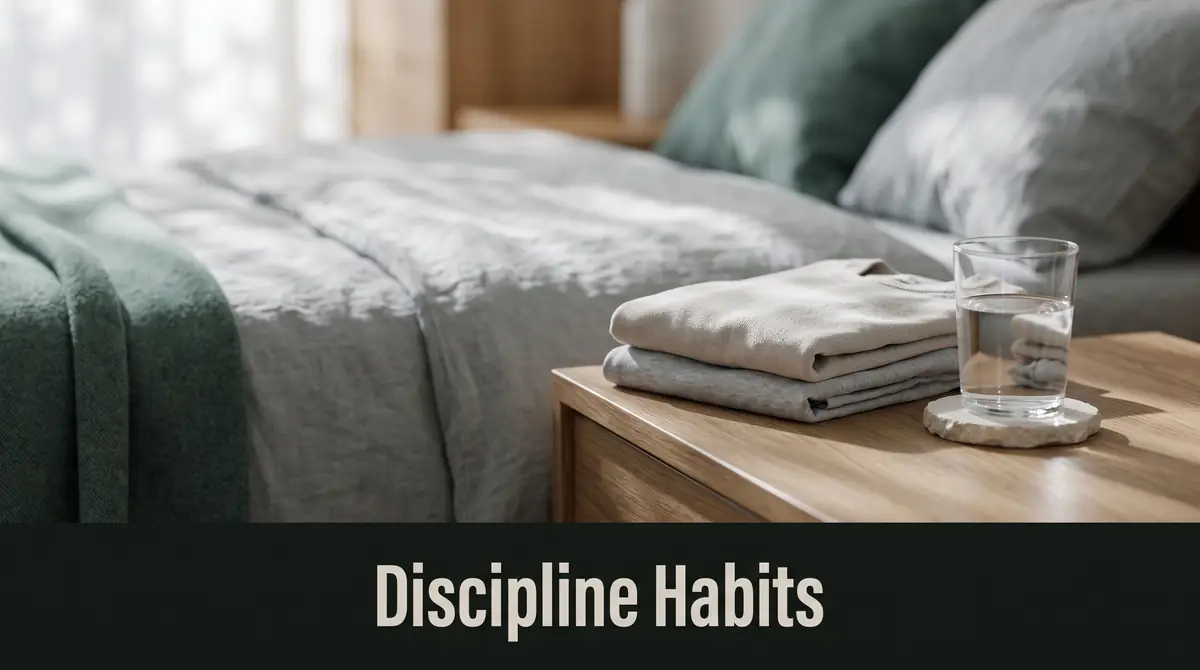
The short answer
Discipline is not about willpower. These small daily habits that build discipline, from planning to follow-through, make staying consistent feel almost automatic.
- Discipline is a skill you build through repetition, not a personality trait.
- Plan tomorrow tonight so you never start the day guessing.
- Keep small promises to yourself to build self-trust.
- Tidy as you go, so your surroundings support good choices.
- Make the first step tiny, and consistency does the rest.
Self-discipline is built by habits that build discipline, not by raw willpower. The most useful ones are small and repeatable: planning your day, keeping your space in order, and finishing what you start. Do them often enough and staying consistent starts to feel almost automatic.
The trick is to stop treating discipline as a mood you have to summon. Treat it as a set of quiet routines that carry you when motivation runs out.
Here is the short version:
- Discipline is a skill you build through repetition, not a personality trait.
- Plan tomorrow tonight so you never start the day guessing.
- Keep small promises to yourself to build self-trust.
- Tidy as you go, so your surroundings support good choices.
- Make the first step tiny, and consistency does the rest.
Why discipline is a habit, not a feeling
Most people wait to feel disciplined before they act. That order is backwards. Discipline is the result of repeated action, not the thing that comes first.
When you do the same helpful thing at the same time each day, your brain stops asking whether you feel like it. The choice fades into the background and becomes routine.
This is why willpower alone fails. Willpower is a limited resource that drains as the day wears on. A habit, once set, runs on far less energy. So the goal is to build good habits that make discipline the default, not the exception.
Think of it like a path worn through tall grass. The first few times, you have to push through the resistance. But each trip flattens the route a little more, until walking it becomes the obvious choice. Habits carve those paths into your daily life.
Habits that build discipline you can start today
If you are wondering what habits build discipline, the answer is not complicated or dramatic. The strongest ones are ordinary actions repeated on purpose.
A few reliable habits that build discipline:
- Making your bed within a few minutes of waking.
- Writing down your top task for the day.
- Doing the hardest task before you check your phone.
- Putting things back where they belong straight away.
- Ending each work session by tidying your desk.
None of these will change your life on their own. Stacked together and repeated, they train you to act without negotiating with yourself every single time.
Focus on one keystone habit first
Some habits quietly pull others along with them. These are often called keystone habits. Making your bed can lead to a tidier room. A morning walk can nudge you toward better food and earlier nights.
Rather than chasing ten changes at once, pick a single keystone habit and let it do the work in the background. As it takes hold, the habits around it tend to fall into place with far less effort from you.
Plan tomorrow the night before
A short evening plan removes the morning fog. When you decide tonight what tomorrow looks like, you wake up with a direction instead of a blank slate.
Keep it simple. Write down two or three things that would make the day a win. Note the first thing you will do after you get up.
This habit works because deciding in advance protects you from your future, tired self. You are far more likely to follow a plan you already made than one you have to invent while half awake.
Keep small promises to yourself
Discipline grows from self-trust, and self-trust is built one kept promise at a time. Every time you say you will do something small and then do it, you prove to yourself that your word counts.
Start with promises so small they feel almost silly. Drink a glass of water after waking. Walk for five minutes after lunch. Read one page before bed.
The size does not matter at first. What matters is the streak of following through. Break the promise repeatedly and you teach yourself that your intentions are just suggestions. Keep it and you build a quiet, steady confidence in yourself.
Tidy as you go
Your surroundings shape your behavior more than you might expect. A cluttered space nudges you toward distraction. A clear one makes focused work feel natural.
You do not need a big cleaning session. Just tidy in small doses as you move through the day. Rinse the cup when you finish. Close the tabs you no longer need. Put the tool back after you use it.
This habit does double duty. It keeps your space calm, and it trains you to finish the last five percent of a task instead of leaving loose ends everywhere.
Follow through on the boring last step
Most people start well. Fewer finish cleanly. The habit of follow-through, doing the unglamorous final step, is where real discipline shows.
That means sending the email you drafted, not just writing it. Filing the receipt, not leaving it on the counter. Actually putting the laundry away instead of living out of the basket.
Practice finishing on purpose. When you notice a task is ninety percent done, treat the last step as the most important part. Over time this turns into an instinct, and unfinished tasks stop piling up around you.
Make the first step tiny
The hardest moment is almost always the start. Once you begin, momentum usually takes over. So shrink the first step until it is too small to avoid.
Do not plan to clean the whole kitchen. Plan to clear one plate. Do not aim for an hour of study. Open the book and read one line.
This removes the mental resistance that fuels procrastination. A tiny start beats a perfect plan you never begin. And because you succeed so often, each small win reinforces the habit instead of draining it.
Keep a short mental list of two-minute versions of your key tasks. When resistance shows up, reach for the tiny version first. You can always scale up once you are moving, but you can never build a habit you refuse to begin.
What self-discipline quotes get right and wrong
You will find plenty of self discipline quotes promising that pain now means gain later. Some of them capture a real truth: comfort chased in the moment often costs you more down the line.
But a quote is not a system. Reading an inspiring line gives you a short burst of feeling, and feelings fade fast. If you rely on that spark, you are back to leaning on willpower.
Use quotes as a nudge, not a plan. Let a good line remind you why you started, then return to the small habits that actually carry you. Motivation lights the match, but habits keep the fire going.
The bottom line
If you remember one thing about the habits that build discipline, make it this: discipline is not a trait you are born with. It is the quiet result of small actions repeated until they run on their own.
Pick one habit from this list today. Keep it tiny, do it daily, and let consistency slowly build the discipline you have been waiting to feel.

Comments
0 total