
The short answer
Most new habits fade within a week. Learn how to make habits stick with tiny starts, clear cues, habit stacking, and a simple system that survives your busiest days.
- Start smaller than feels serious, so the habit survives bad days.
- Attach each new habit to a clear cue you already see or do.
- Stack new habits onto routines you never skip.
- Track your streak, but never quit over a single miss.
- A steady system beats bursts of motivation every time.
If you want to know how to make habits stick, keep them small, obvious, and tied to something you already do every day. Most new habits fail because they start too big and lean on motivation that does not last. Build a simple system instead, and the habit keeps running even on your worst days.
Learning how to build habits that last is less about willpower and more about smart design. The goal is to make the right action almost automatic.
The short version:
- Start smaller than feels serious, so the habit survives bad days.
- Attach each new habit to a clear cue you already see or do.
- Stack new habits onto routines you never skip.
- Track your streak, but never quit over a single miss.
- A steady system beats bursts of motivation every time.
Why new habits fade in a week
Most people start a new habit on a wave of energy. They go all in, promise big, and feel great for a few days. Then real life shows up, the energy drops, and the habit quietly disappears.
The problem is rarely a lack of discipline. It is usually a plan built for your best day, not your average one. If a habit only works when you feel motivated, it will break the first time you feel tired, busy, or low.
To build good habits that last, design for the hard days from the very start. Assume you will be tired sometimes, and make the habit easy enough to survive that.
How to make habits stick by starting tiny
The fastest way to work out how to make habits stick is to shrink the habit until it feels almost too easy. Want to read more? Start with one page. Want to exercise? Do two minutes.
A tiny habit removes the excuse. You can always find two minutes, even on a chaotic day. Once you show up, you often do more, but the small version is the real target.
This works because consistency beats intensity. Ten small sessions do far more for a habit than one heroic effort followed by a week off. Keep the bar low and keep showing up.
Give every habit a clear cue
Every habit needs a trigger, a moment that tells your brain it is time to act. Without a cue, you rely on memory and mood, and both are unreliable.
Pick a cue that already exists in your day. After you pour your morning coffee, after you brush your teeth, or the moment you sit down at your desk. The cue should be specific and hard to miss.
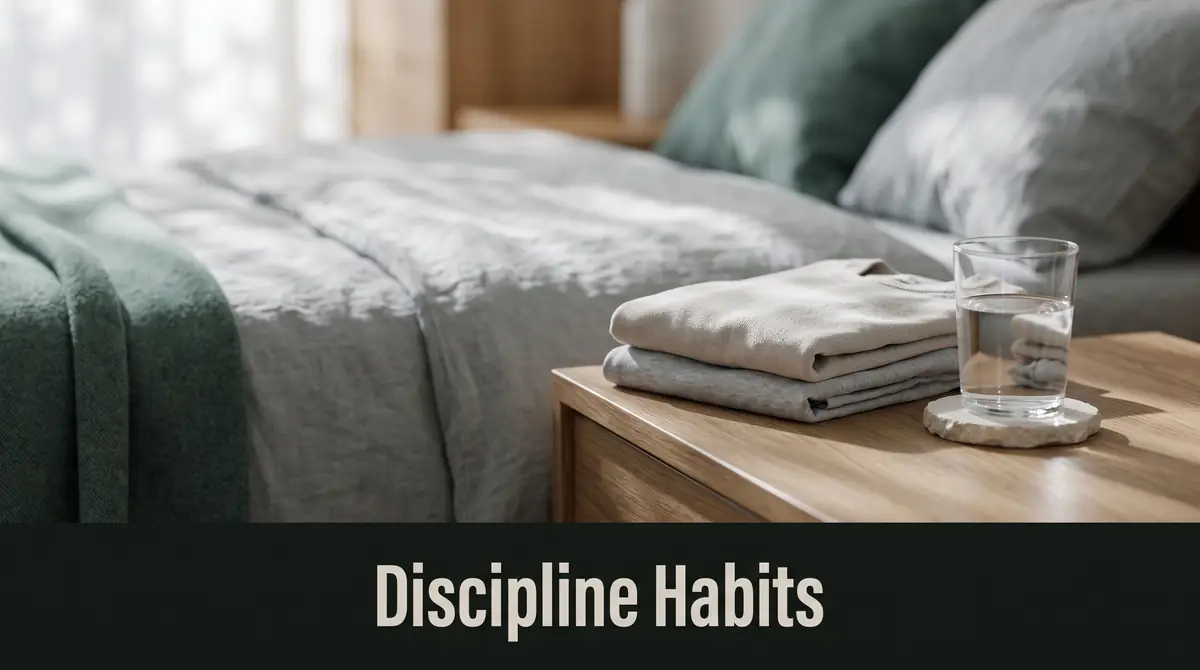
You can also use your surroundings as a cue. Leave the book on your pillow or your shoes by the door. When the reminder is visible, the habit is much easier to remember.
Stack new habits onto old ones
One of the most reliable ways to build habits is habit stacking. You attach the new habit to something you already do without thinking.
The formula is simple: after I do my current habit, I will do the new one. For example, after I make my morning coffee, I will write down one task for the day.
Your existing routine does the remembering for you. Because you never skip the coffee, the new habit gets pulled along with it. This is one of the easiest ways to build habits that stick.
Make good habits easy and bad ones hard
Your surroundings shape your behavior more than you might think. To make a good habit stick, remove the friction around it. To break a bad one, add friction.
Want to drink more water? Keep a full bottle on your desk. Want to scroll less? Log out of the app or leave your phone in another room.
Each barrier you remove makes the good habit a little more likely. Each barrier you add gives you a moment to choose differently. Set up your space so the easy choice is the right one.
Track progress without chasing perfection
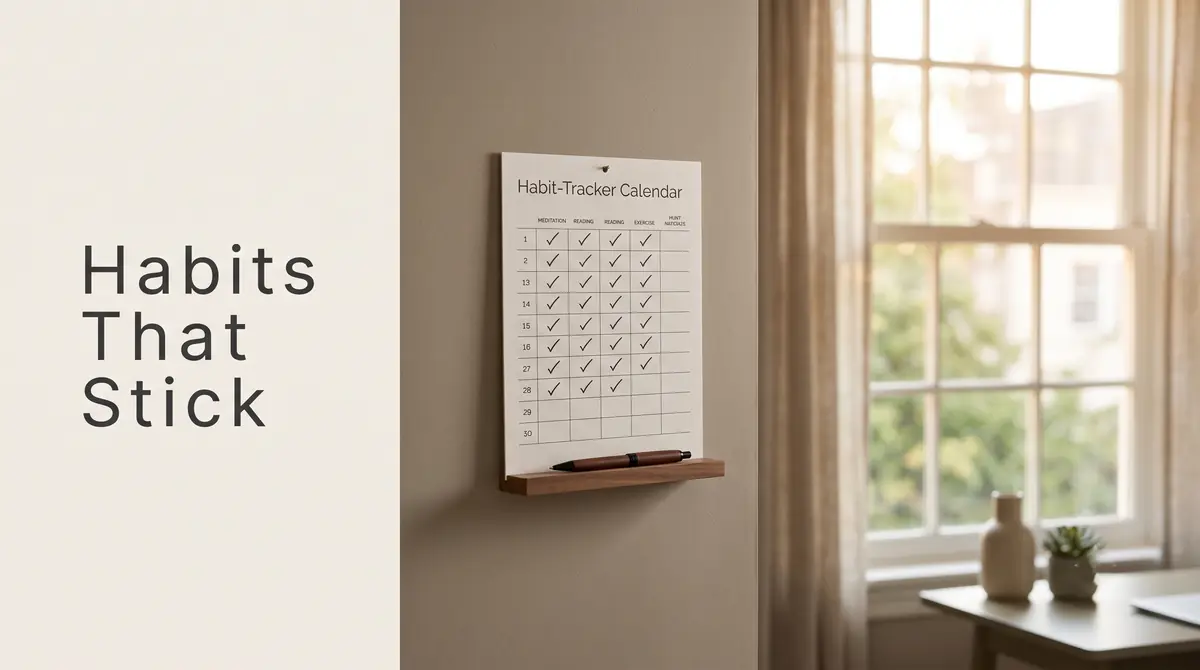
Tracking a habit gives you quick proof that it is working. A simple mark on a calendar or a box you check off can be surprisingly motivating.
The goal is a chain of good days you do not want to break. Seeing five days in a row makes you want a sixth.
But do not let the tracker become a source of guilt. Missing one day means almost nothing. Missing it and then quitting is the real risk. Aim for progress, not a perfect record.
Make each habit feel rewarding
Habits stick faster when they feel good. Your brain repeats actions that end on a positive note, so give each rep a small reward.
The reward can be tiny. Tick the box and enjoy the little hit of progress. Say a quiet "nice work" to yourself. Or pair the habit with something you like, such as a favorite playlist during a walk.
Over time, the habit itself becomes the reward. The morning walk stops feeling like a chore and starts feeling like the best part of your day. That shift is when a habit truly locks in.
Plan for the day you miss
You will miss a day. Everyone does. What matters is what happens next, not the slip itself.
Use a simple rule: never miss twice. One missed day is an accident. Two in a row is the start of a new pattern, so get back on track at the very next chance.
Learning how to build habits that last means expecting slips and planning your comeback in advance. The people who succeed are not the ones who never fall off. They are the ones who climb back on quickly.
The bottom line
If you remember one thing about how to make habits stick, make it this: shrink the habit, anchor it to a clear cue, and forgive the misses. A good system carries you when motivation clocks out.
Pick one small habit today. Tie it to something you already do, keep it tiny, and let quiet consistency do the slow work of building good habits that last.


Comments
0 total