
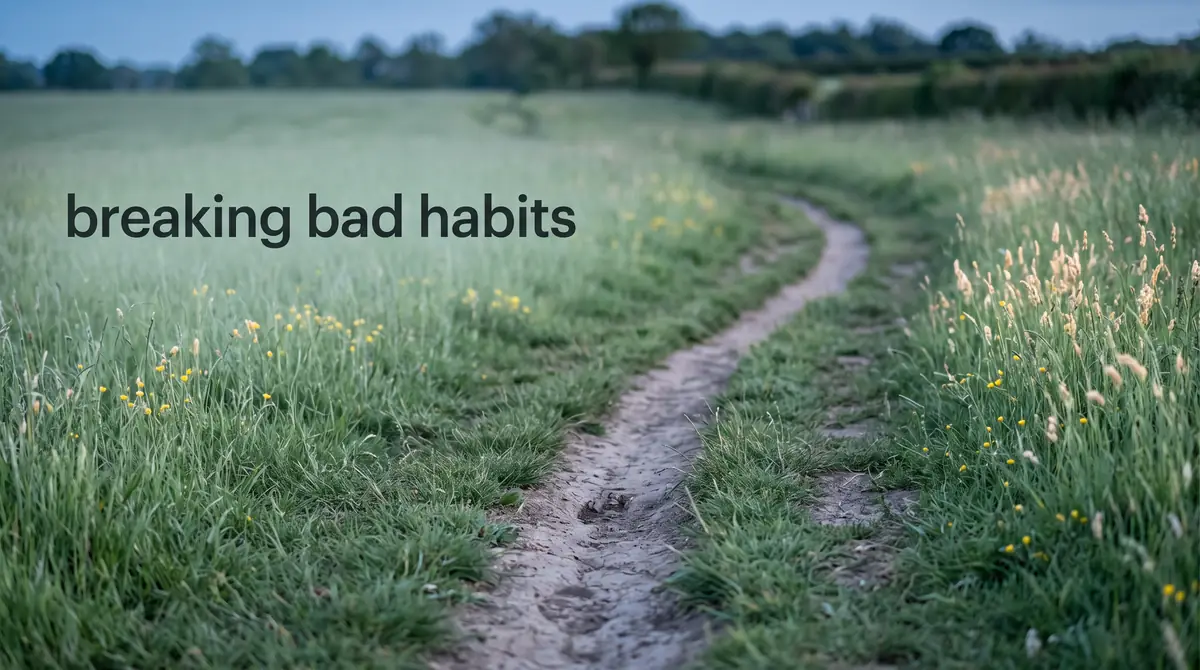
The short answer
Ever wonder why bad habits are hard to break? Learn how habit loops, dopamine, and hidden triggers keep you stuck, and what finally makes lasting change possible.
- Habits run automatically, with almost no conscious thought.
- Every habit loops through a cue, a routine, and a reward.
- The reward comes fast; the cost arrives slowly.
- Stress and hidden triggers restart the habit for you.
- Willpower alone rarely wins against all of that.
Bad habits are hard to break because your brain runs them on autopilot and rewards them fast, long before the downsides ever catch up. A cue-and-reward loop, a small hit of dopamine, and hidden stress triggers all keep pulling you back. Understanding why bad habits are hard to break is often the thing that finally makes change possible.
If you have tried to quit something and failed, you are not weak. You are up against wiring that was built to keep the habit running.
The short version:
- Habits run automatically, with almost no conscious thought.
- Every habit loops through a cue, a routine, and a reward.
- The reward comes fast; the cost arrives slowly.
- Stress and hidden triggers restart the habit for you.
- Willpower alone rarely wins against all of that.
Habits are automatic by design
Your brain loves shortcuts. When you repeat a behavior enough, it moves the routine to autopilot so you can stop thinking about it. That is a feature, not a flaw.
It is why you can drive a familiar route while lost in thought, or reach for your phone without deciding to. The action fires before you notice the urge.
The trouble is that your brain does not sort good habits from bad ones. It automates whatever you repeat, which is why an unwanted habit can feel like it runs itself.
The habit loop: cue, routine, reward
Every habit follows a simple loop. A cue triggers it, a routine is the behavior, and a reward is the payoff that makes it stick.
Say you check your phone the second you feel bored. The cue is boredom, the routine is scrolling, and the reward is a quick jolt of novelty. Repeat that a few hundred times and the loop runs on its own.
The loop is powerful because your brain starts craving the reward as soon as the cue appears. By the time you notice, you are already halfway into the routine.
Why bad habits are hard to break: the dopamine pull
A big reason why bad habits are hard to break is dopamine, the brain chemical tied to reward and craving. It spikes not just when you get the payoff, but when you expect it.
That is the catch. Many bad habits, like sugary snacks, cigarettes, or endless scrolling, deliver a quick, reliable hit. Your brain learns the shortcut to feeling good and pushes you to repeat it.
The reward is immediate, but the harm is slow and distant. Your brain is wired to value a fast payoff now over a vague cost later, which stacks the deck against quitting.
Hidden triggers and stress keep it going
Often the real fuel behind a habit is a trigger you have not noticed. Habits latch onto emotions, times of day, places, and people.
Stress is one of the strongest triggers of all. When life gets hard, your brain reaches for the familiar comfort of the old routine, precisely when your defenses are lowest.
- An emotion, like boredom, anxiety, or loneliness.
- A time or place, like the couch at night or a work break.
- A social cue, like a friend who shares the habit.
If you do not spot the trigger, it keeps restarting the habit for you, no matter how much you want to stop.
Why willpower alone rarely wins
Most people try to quit by sheer force of will, and most run out of steam. Willpower is a limited resource that drains as the day wears on.
By evening, when you are tired and stressed, your control is at its lowest, and that is exactly when cravings tend to peak. It is an unfair fight.
Willpower also does nothing about the cue or the reward. You are gritting your teeth against a loop that is still fully loaded, so one hard day is usually all it takes to slip.
How bad habits affect your life over time
It is worth being honest about how bad habits affect your life, because the cost hides in plain sight. One instance barely registers, so it feels harmless.
But habits compound. The same small choice, repeated daily for a year, quietly reshapes your health, your money, your time, or your mood. The bill arrives slowly, then all at once.
People sometimes joke about their "best bad habits," the ones that feel harmless or even fun. That is fine, as long as you stay honest about which habits are truly low-stakes and which are quietly costing you a lot.
What actually makes change possible
Here is the good news. Once you see how the loop works, you can work with it instead of against it. That is the heart of how to change bad habits for good.
- Name the cue, routine, and reward so the habit stops being invisible.
- Replace the routine with something that meets the same need.
- Add friction so the old behavior is harder to start.
- Reduce the stress and triggers that keep firing it.
You are not erasing a habit by force. You are redesigning the loop so the pull weakens and a better choice becomes the easy one.
When to get extra help
Some habits go beyond ordinary self-control, and that is important to name. This is general information, not medical advice.
If a habit involves alcohol, drugs, gambling, or anything that feels genuinely compulsive, please treat it seriously. A doctor or qualified counselor can offer real support, and reaching out is a sign of strength, not failure.
The bottom line
Bad habits are hard to break because they run on autopilot, pay off instantly through dopamine, and restart whenever a hidden trigger fires. Willpower alone is no match for all of that. Once you understand the loop, though, you can change it: spot the trigger, swap the routine, and make the better choice the easy one. Results vary and change takes time, so start with one habit and be patient with yourself.

Comments
0 total