
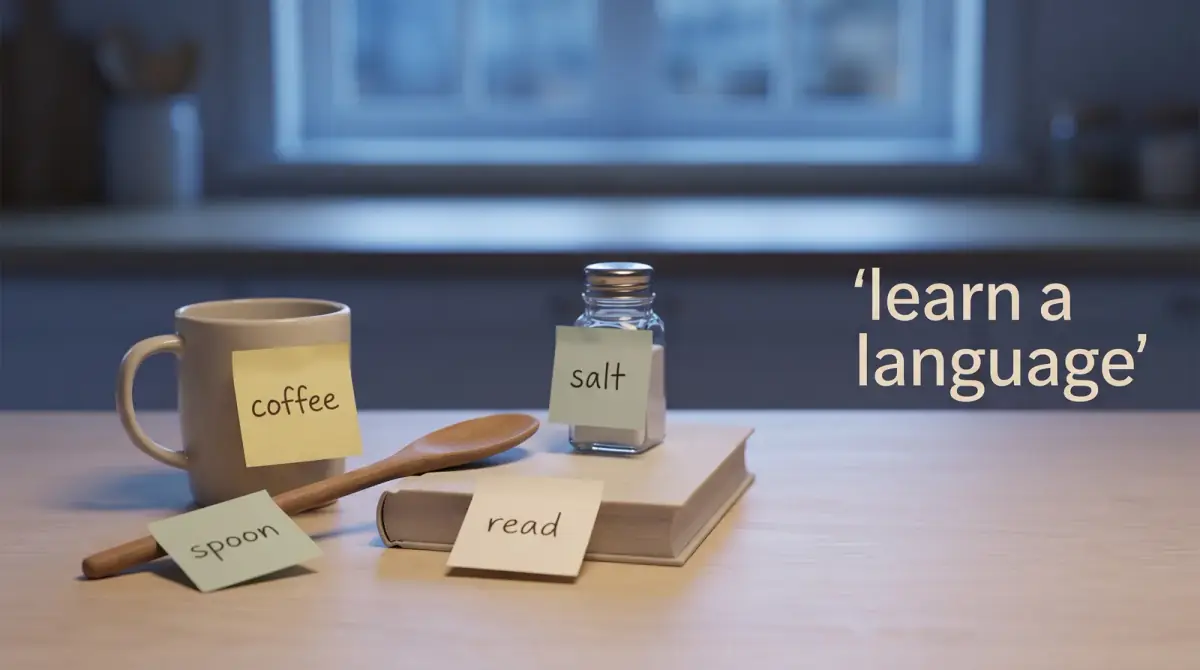
The short answer
You do not need a pricey app to learn a language for free. Use libraries, media, and communities, plus a simple daily plan that keeps your progress sticking.
- Free resources are everywhere: libraries, media, apps, and communities.
- Consistency matters far more than any single tool.
- Real conversation, even a little, speeds things up.
- Short daily sessions beat rare long ones.
- Progress is uneven, and that is completely normal.
You can learn a language for free using your local library, everyday media, free apps, and conversation partners, all held together by a simple daily habit. The secret to how you learn a language for free is not finding hidden resources. It is using the good free ones consistently instead of hopping around and burning out.
A paid app can be handy, but it is not required. People have picked up new languages for generations without spending a cent, and you can too.
Quick overview before the plan:
- Free resources are everywhere: libraries, media, apps, and communities.
- Consistency matters far more than any single tool.
- Real conversation, even a little, speeds things up.
- Short daily sessions beat rare long ones.
- Progress is uneven, and that is completely normal.
Can you really learn a language for free?
Yes, and often better than people expect. The paid apps you see advertised are convenient, not magic. The core of learning a language is exposure, practice, and repetition, none of which require a subscription.
What free learning asks of you instead is a bit more effort to organize your own path. You become the planner. The payoff is that you learn from real material, the kind native speakers actually use, from day one. You also build the self-reliance to keep going long after a single app would have lost your interest.
Free resources that actually work
Start by gathering a small set of free tools. You do not need all of them, just a few you will return to often.
- Your local library. Many lend language courses, workbooks, and audio, plus free access to learning platforms with a library card.
- Free apps and websites. Several well-known apps have solid free tiers, and many governments and universities post free courses online.
- Media you enjoy. Music, podcasts, video channels, and shows with subtitles turn entertainment into practice.
- Community help. Free forums and social groups are full of learners and native speakers happy to answer questions.
If you are searching for the best learn a language program, remember the best one is the one you will actually open every day, not the one with the flashiest features.
Build a simple daily plan
A plan keeps free learning from turning into random dabbling. Keep it small enough that you never dread it.
Try something like this: fifteen to twenty minutes a day, split into a little vocabulary, a little listening, and a little practice out loud. The exact split matters less than showing up.
Tie the session to an existing habit so it sticks. Study during your commute, over morning coffee, or right before bed. A fixed time removes the daily "should I?" debate. When the habit runs on autopilot, you stop relying on motivation, which comes and goes.
How to learn a language effectively
Knowing how to learn a language effectively saves you months of wasted effort. A few principles do most of the heavy lifting.
Focus first on the most common words. A small core of frequent words covers a surprising share of everyday speech, so you can understand a lot with less. Learn short phrases, not just single words, so you can actually say something useful early on.
Use active recall. Instead of rereading a list, cover it and try to remember. Free flashcard apps with spaced repetition are excellent for this, and they cost nothing.
Do not fear mistakes. Errors are how you learn, and every fluent speaker made thousands of them along the way.
Find speaking practice for free
Speaking is where many learners freeze, yet it is the fastest way to improve. The good news is that practice partners are free to find.
Language-exchange apps and sites pair you with someone learning your language. You help them, they help you, and nobody pays. Local meetup groups and community centers sometimes host free conversation nights as well.
If a live partner feels scary at first, talk to yourself. Describe your day out loud, or narrate what you are doing. It sounds silly, but it builds the habit of forming sentences quickly. Recording those little monologues also lets you hear your own progress over the weeks.
How to learn a language quickly and stay realistic
Everyone wants to know how to learn a language quickly, so here is the honest version. You can make fast early progress, but fluency takes time and steady contact with the language.
To speed things up, increase your daily exposure. Change a phone setting, listen during chores, or think in simple sentences in the new language. More contact means faster learning.
Set small, clear goals, like holding a two-minute conversation or understanding one song. Small wins keep you going, and momentum is what free learning lives or dies on. Progress will feel uneven, with good days and stuck days, and that is completely normal. On the stuck days, show up for five minutes anyway, because the streak matters more than the length.
Stay consistent for the long run
Consistency is the whole game. A short session every day beats a long one every couple of weeks, because languages fade fast without regular contact. Ten minutes a day, every day, quietly beats an hour crammed in once a week.
Track your streak in a notebook or a free app so you can see the days add up. Missing a day is fine; just start again the next day rather than quitting. Pair the language with something you love, whether that is cooking, gaming, or football, and it stops feeling like a chore.
Common mistakes that stall free learners
Free learning fails in a few predictable ways. Knowing the traps helps you dodge them before they cost you weeks of slow progress.
The most common mistake is collecting resources instead of using them. Ten apps you never open lose to one app you actually use daily. Another trap is studying passively, watching and reading without ever speaking or writing, so the language never becomes active in your mind.
Many learners also chase perfection and freeze, too afraid to speak until they feel "ready." You are never quite ready, so start messy and improve as you go. Jumping between languages or methods every week is another momentum killer, because you keep resetting to the start. Pick one path and give it a fair run before you judge it.
Finally, do not skip listening early on. Some learners drill grammar for months yet cannot follow a normal conversation, because their ears never got trained. Mix in plenty of listening from the start so the language sounds familiar when you finally use it.
The bottom line
To learn a language for free, gather a few solid free resources, build a short daily habit, and get real practice through media and conversation. The tools cost nothing, so the only real investment is your consistency. Pick one language, open one free resource today, and let small daily steps carry you the rest of the way.

Comments
0 total