
The short answer
Kids seem to soak up languages and skills effortlessly. Here's why children learn faster than adults, the brain science behind it, and what grown-ups can copy.
- Kids' brains are highly adaptable, especially for language.
- Lifestyle helps too: more practice, less fear of failure.
- Adults are not doomed. You learn differently, not always slower.
- You can borrow kids' habits, like daily practice and playfulness.
- Consistency beats talent for learning faster at any age.
Ever wondered why children learn faster than adults? Part of it is biology: young brains are wired to soak up new information, especially language. But a big part is lifestyle. Kids get hours of practice, low pressure, and permission to make mistakes. The encouraging news is that adults keep much of their learning power, and you can copy several of the advantages kids enjoy.
Key takeaways
- Kids' brains are highly adaptable, especially for language.
- Lifestyle helps too: more practice, less fear of failure.
- Adults are not doomed. You learn differently, not always slower.
- You can borrow kids' habits, like daily practice and playfulness.
- Consistency beats talent for learning faster at any age.
Do children really learn faster than adults?
It is not as clear-cut as it looks. Kids clearly have an edge in some areas, like picking up a new language or an accent. In others, adults can actually learn faster.
Adults bring experience, background knowledge, and better study strategies. A grown-up learning history can connect new facts to things they already know, which a child cannot do as easily.
So the honest picture is mixed. Children win at some kinds of learning; adults win at others.
Why children learn faster than adults: the brain
A major reason children learn faster than adults comes down to how young brains develop. Early in life, the brain forms connections at a remarkable pace and stays highly flexible.
This flexibility, often called plasticity, makes it easier to absorb new sounds, patterns, and skills. It is a big reason kids pick up languages so naturally.
As we age, the brain becomes more efficient but less springy. It trims connections it does not use and locks in the ones it does. That is great for keeping skills, but it can make brand-new learning feel harder.
The language window
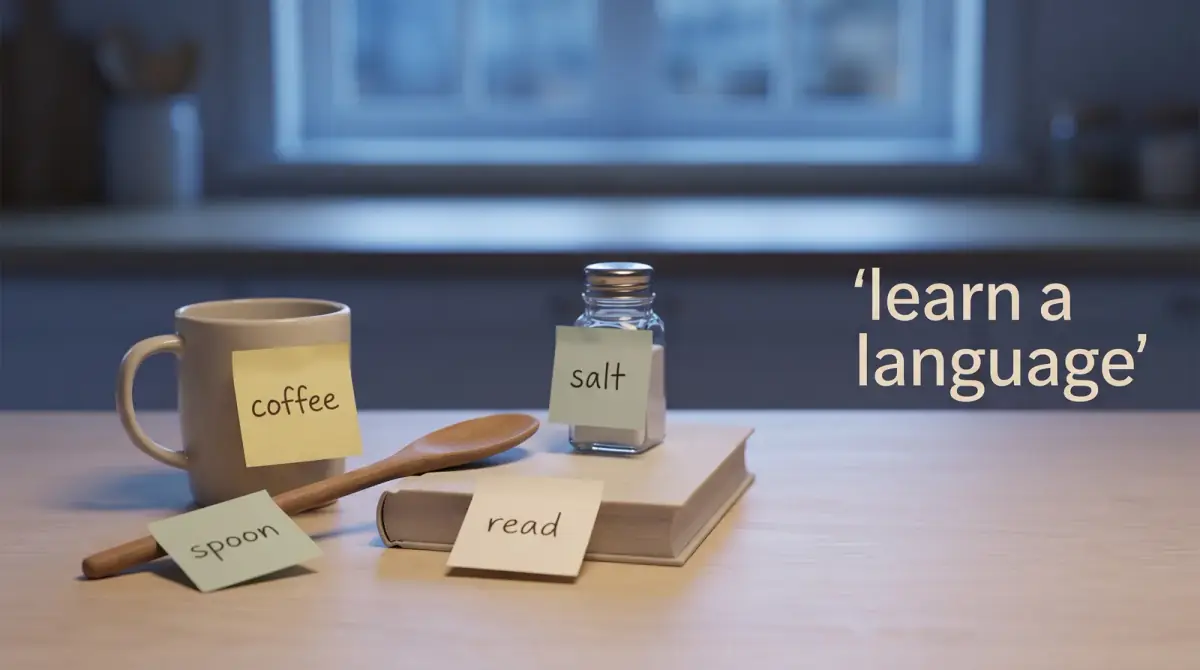
Language is the clearest example. Young children can learn to speak without an accent almost effortlessly. Adults can absolutely learn new languages, but usually with more conscious effort and often a lingering accent.
Why do I learn faster on some days?
Ever notice a skill clicks one day and feels impossible the next? Sleep, mood, and stress all shape how well your brain absorbs new information.
That is why rest and consistency matter so much. A well-rested brain simply learns faster than a tired, frazzled one.
The lifestyle advantages kids have
Brain wiring is not the whole story. Children also live in near-perfect learning conditions, and we often overlook that.
- Tons of practice time. A child's main job is learning, hour after hour.
- Low fear of failure. Kids are not embarrassed to sound silly or get it wrong.
- Constant immersion. They are surrounded by the thing they are learning.
- Play and curiosity. Learning feels like a game, not a chore.
Notice something? Most of these are not about age at all. They are about how you spend your time and how you feel while learning.
Where adults actually have the edge
If you have ever wondered "why do I learn faster" than a child at certain things, this is why. Adults come loaded with advantages kids lack.
- Existing knowledge to hook new ideas onto.
- Better focus and self-control, at least in theory.
- Smart strategies, like breaking tasks down and testing yourself.
- Clear motivation, since you often choose what to learn.
Used well, these can help you learn certain subjects faster than any child could.
How to learn faster as an adult
Here is the practical part. You can recreate a lot of what makes kids such quick learners. If you want to know how to learn faster, borrow their habits.
- Practice a little every day. Short daily reps beat rare long sessions.
- Lower the stakes. Let yourself be bad at first, like a kid would.
- Immerse yourself. Surround your day with the thing you are learning.
- Make it playful. Games and curiosity keep your brain engaged.
- Test yourself instead of only rereading, which builds stronger memory.
You do not have to do all five at once. Pick one, make it a steady habit, then add another when it sticks.
The best way to learn faster at any age
If there is a single best way to learn faster, it is consistency mixed with active practice. Show up often, actually do the skill, and get feedback.
Passive learning, like watching or rereading, feels productive but sticks poorly. Active learning, like recalling, doing, and making mistakes, is where real progress lives.
Children do not learn fast because they are smarter. They learn fast because they practice constantly and are not afraid to fail.
The role of repetition
Children repeat things endlessly without complaint. They will read the same book or practice the same word again and again.
Adults often skip that, expecting to get it after one try. But repetition is how memories move from fragile to solid, no matter your age.
Spacing that repetition out over days works even better than cramming it into one sitting. Little and often wins.
Common myths about learning and age
A few beliefs make adults give up too soon. They are worth clearing up.
- "You cannot teach an old dog new tricks." Adults learn new skills all the time; it just takes practice.
- "I have missed my window." The language window helps kids, but adults still learn languages every day.
- "Some people just are not wired for it." Method and effort usually matter more than raw talent.
Believing you cannot learn becomes a quiet self-fulfilling prophecy. Expecting to improve, slowly and steadily, sets you up to actually do it.
The bottom line
So, why children learn faster than adults comes down to two things: a flexible young brain, and a lifestyle built around fearless daily practice. The brain advantage is real, especially for language, but it is only half the story.
As an adult, you cannot turn back your brain's clock. You can, though, copy the habits: practice often, stay curious, drop the fear of looking foolish, and learn by doing. Do that, and the gap shrinks more than you would expect.
Comments
0 total