
The short answer
Staying productive as a student is not about doing more every hour. Learn the routines, weekly planning, and focus habits that keep you steady from week one to finals.
- A repeatable weekly routine beats motivation you have to summon each day.
- Plan the week first, then plan each day the night before.
- Protect one or two blocks of deep focus with your phone out of reach.
- Study by testing yourself, not by rereading.
- Sleep and rest are part of the system, not a reward for finishing.
To stay productive as a student, you need a simple routine you can repeat, a few hours of real focus each day, and enough rest that you do not burn out by midterms. That is the honest version of how to stay productive as a student. It is less about squeezing more into every hour and more about doing steady, useful work and then stopping.
Most students crash in the middle of the term because they treat energy like it is unlimited. It is not. Let's look at how to spend it well.
Key takeaways
- A repeatable weekly routine beats motivation you have to summon each day.
- Plan the week first, then plan each day the night before.
- Protect one or two blocks of deep focus with your phone out of reach.
- Study by testing yourself, not by rereading.
- Sleep and rest are part of the system, not a reward for finishing.
Start with a routine, not a rush
Motivation is a bad boss. Some days it shows up, most days it does not, and if your plan depends on feeling inspired you will fall behind fast. A routine solves this because it removes the daily negotiation. You already know what you do after your morning class.
Pick anchors that repeat every week. Same study block after lunch, same review on Sunday evening, same wind-down before bed. When the time comes, you just start. That removal of choice is where a lot of your energy gets saved.
Keep it realistic. A routine you follow at seventy percent beats a perfect one you abandon in week three.
Plan the week before you plan the day
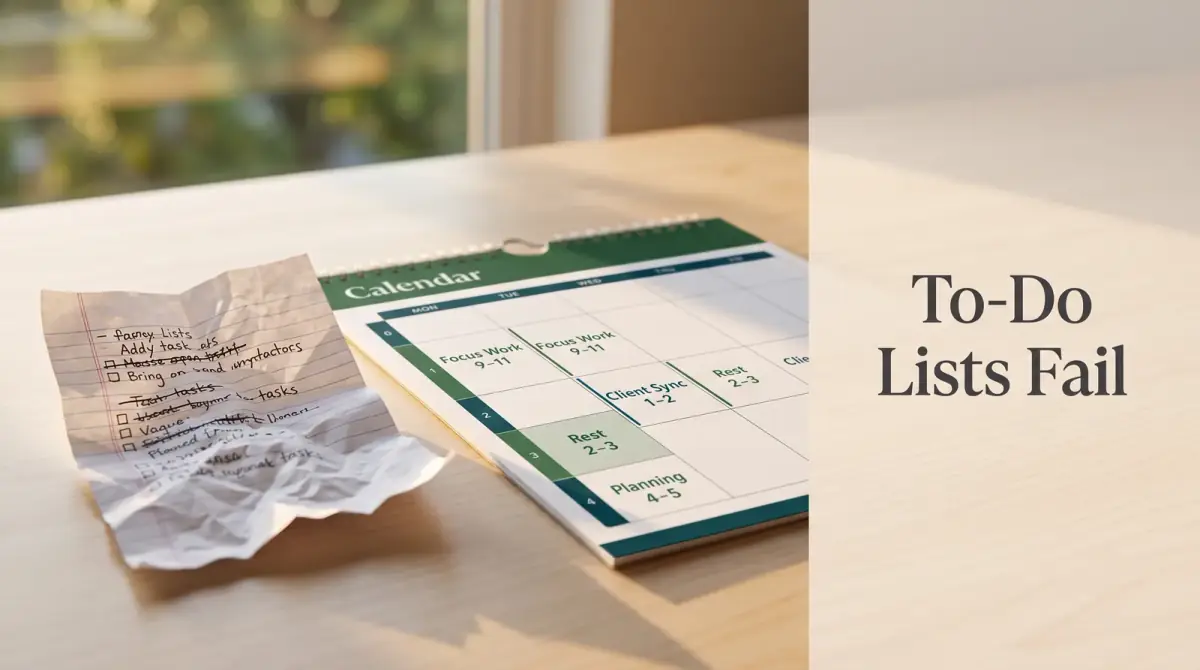
Open your calendar on Sunday and look at the whole week at once. Note deadlines, classes, work shifts, and anything social. Now you can see where the pressure points are before they arrive, which is the difference between planning and reacting.
Then, each evening, write down the two or three things that must happen tomorrow. Not ten things. Two or three that genuinely matter. A short list you finish feels far better than a long one that shames you.
One of the best ways to stay productive is to decide the night before. You skip the morning fog of what should I even do first, and you start moving while your mind is fresh.
Protect your focus
Real work happens in focused blocks, not in scattered minutes between notifications. Your goal is to protect one or two of these blocks a day, and to defend them like an appointment.
A few things that help:
- Put your phone in another room, not just face down. Distance beats willpower.
- Work in stretches of about 25 to 50 minutes, then take a real break.
- Close every tab that is not part of the task in front of you.
- Tell friends when your focus block ends so they know when you are free.
You do not need to focus all day. Trying to figure out how to stay productive all day usually backfires, because nobody has eight hours of deep concentration in them. Two or three good hours, done daily, will carry you through a semester.
Study in ways that actually stick
Time at your desk is not the same as learning. You can reread a chapter four times, feel like you know it, and blank in the exam. The fix is to test yourself instead of just reviewing.
Close the book and try to recall the main points from memory. Write them on a blank page, then check what you missed. Those gaps are your study plan. This feels harder than rereading, and that difficulty is exactly why it works.
Spread it out, too. Thirty minutes on four days beats two hours the night before. Your brain holds onto material better when you revisit it across time rather than cramming it into one sitting.
Guard your rest and sleep
Rest is not the reward you get after the work. It is part of the work. A tired brain reads slower, forgets more, and makes worse decisions, so cutting sleep to study longer usually costs you more than it buys.
Protect a consistent sleep window as if it were a class. Aim to wind down at a similar time most nights, screens dimmed, tomorrow already planned. You will get more from a rested ninety minutes than from three groggy ones.
Build in breaks during the day as well. A short walk, a proper meal away from your desk, ten minutes doing nothing. These are not lost time. They are what let you focus again afterward.
Handle the busy weeks without burning out
Some weeks pile up. Three deadlines, a shift, and a test all land together. This is where a lot of students spiral, so it helps to have a plan for the crunch before it comes.
- List everything due, with its real deadline and rough size.
- Start with the task that is both important and closest, not the easiest one.
- Break big tasks into small first steps you can finish in one sitting.
- Drop or delay the truly optional things without guilt.
- Protect at least some sleep, even in the worst week.
Busy weeks are survived, not optimized. Aim to get through them steady rather than perfect, then reset once the pressure lifts.
How to stay productive as a student all term
You do not need a dramatic system. A few small habits, repeated, do most of the work over a full term. Start the day with your hardest task while your mind is clearest. Keep one place, a notebook or an app, where every deadline lives, so nothing sneaks up on you. Review your week each Sunday, and say no to a few things so you can do the important ones well.
None of this is flashy, and that is the point. The best ways to stay productive are usually quiet and repeatable, not intense and short-lived. That, in the end, is how to stay productive as a student without wrecking yourself: small steady moves, not heroic all-nighters.
A new routine feels awkward for a week or two before it feels normal, so do not judge the system by day three. Judge it by how you feel in week six, when the people around you are running on fumes and you are still steady. Results vary from person to person, and you will need to adjust the details to your own classes, energy, and life. Keep what works, drop what does not, and let the routine carry you when motivation goes quiet.
Comments
0 total