
The short answer
Keep putting off studying? Learn how to stop procrastinating and start studying with a two-minute start, a distraction-free block, and a setup that makes beginning feel easy.
- The start is the hard part, so make it tiny.
- Distractions give you an easy exit, so remove them first.
- A blank page freezes you, so lower the bar for the first line.
- Your setup can pull you in or push you away.
- Small, repeated wins beat one heroic all-nighter.
To stop procrastinating and start studying, shrink the first step until it feels almost too easy, then clear away the distractions that hand your brain an excuse to escape. Learning how to stop procrastinating and start studying is less about raw willpower and more about lowering the effort it takes to begin.
The hardest part is almost never the studying itself. It is the moment right before, when opening the book feels heavier than it should. Fix that moment and the rest tends to follow.
Here is the short version before the details:
- The start is the hard part, so make it tiny.
- Distractions give you an easy exit, so remove them first.
- A blank page freezes you, so lower the bar for the first line.
- Your setup can pull you in or push you away.
- Small, repeated wins beat one heroic all-nighter.
Why you procrastinate before studying
Procrastination is not laziness. It is usually your brain dodging a task that feels boring, hard, or unclear. Studying often hits all three, so avoiding it feels like relief in the moment.
That relief is the trap. Every time you scroll instead of study, your brain learns that dodging feels better than starting. The habit gets stronger, not because you are weak, but because avoidance keeps paying off.
The fix is to make starting feel less threatening. When the first step is small and the payoff is quick, your brain has less reason to run.
How to stop procrastinating and start studying with a two-minute start
The single best trick is to shrink the task until it is almost silly. Do not plan to study for three hours. Plan to study for two minutes.
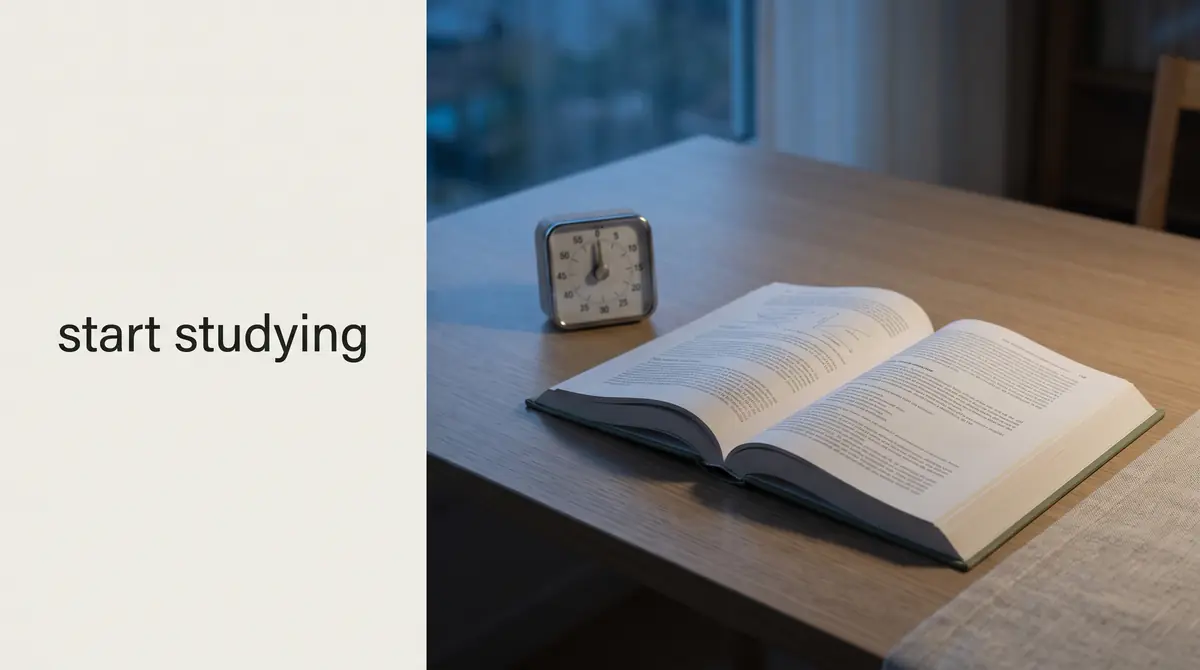
Tell yourself you only have to open the notebook and read one paragraph. That is it. Two minutes is short enough that your brain stops fighting it.
Here is why it works: starting is the real hurdle, not continuing. Once you are two minutes in, momentum usually carries you forward. If it does not, you still did more than nothing, and that counts.
- Pick one tiny action, like opening the book to the right page.
- Promise yourself just two minutes of it.
- When the two minutes pass, decide whether to keep going.
- Most of the time, you will keep going.
Build a distraction-free study block
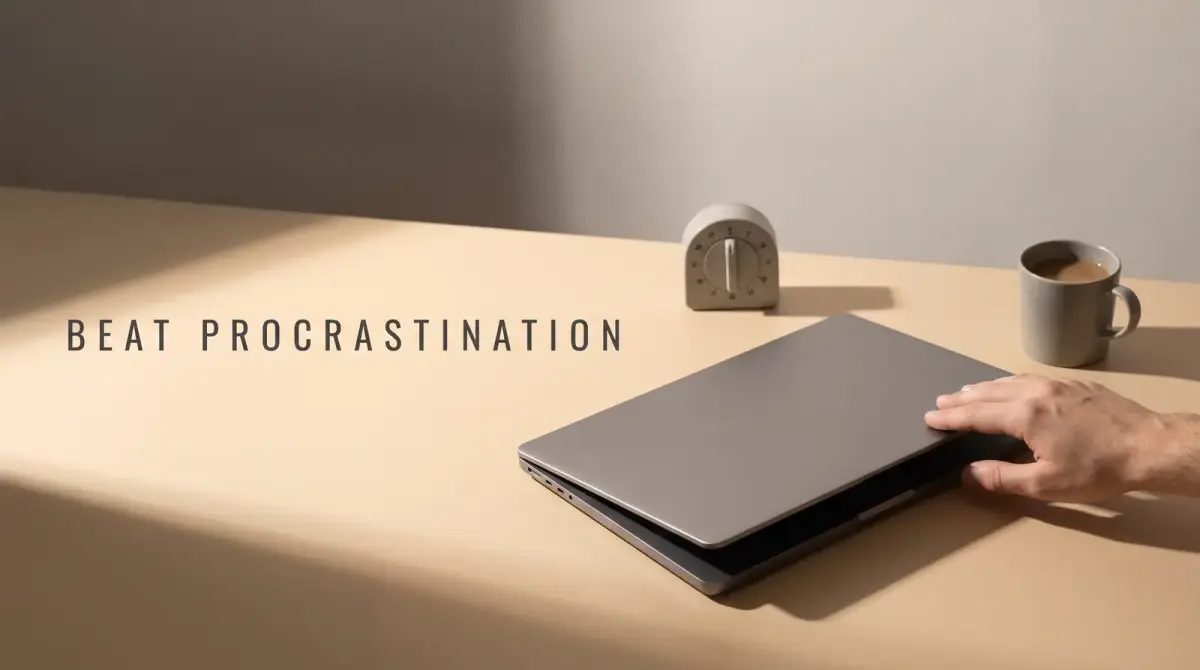
You cannot start studying if your phone keeps pulling you back out. Distractions are the escape hatch procrastination uses, so close it before you sit down.
- Put your phone in another room, not face-down beside you.
- Close every tab that is not part of the task.
- Tell people around you that you are heads-down for a set time.
- Keep water and supplies nearby so you have no reason to wander.
Set a clear start and end time for the block. Knowing the session ends soon makes it far easier to begin. A focused 40 minutes with a real finish line beats an open-ended slog you keep avoiding.
Beat the blank-page freeze
Sometimes you sit down ready, and then the empty page freezes you. You do not know where to begin, so you begin nowhere. This is common, and it has simple fixes.
Lower the bar for the first line. Write a messy heading, copy the question you are answering, or jot one rough sentence you can fix later. Bad first words are easier to improve than no words.
If a task feels huge, break it into pieces small enough to feel doable. Instead of study biology, try read page one and list three key terms. Vague tasks invite delay, and specific ones invite action.
Design a study setup that pulls you in
Your environment quietly decides how easy it is to start. A cluttered, noisy space adds friction, while a simple, ready one lowers it.
Set up the night before if you can. Leave the book open to the right page and your notes stacked and waiting. When starting takes zero setup, you remove the most common excuse.
Try to keep one spot mainly for studying. Over time your brain links that spot with focus, so sitting down there flips you into work mode faster. Even a consistent corner of a table can do the job.
Fix the mindset that keeps you stuck
How you think about studying shapes whether you start. A healthy study mindset treats the work as something you can chip away at, not a wall you must clear in one leap.
Drop the idea that you need the perfect mood or the perfect plan. Motivation usually shows up after you start, not before. Waiting to feel ready is just procrastination wearing a polite mask.
Be kind to yourself when you slip. Guilt makes the next start harder, not easier. Notice the delay, shrink the next step, and begin again without the lecture.
Simple wins for students who keep putting it off
If you are a student trying to stop procrastinating, stack the deck in your favor with small, repeatable habits. These matter more than any single burst of effort.
- Study at the same time each day so it becomes automatic.
- Start with the easiest task to build early momentum.
- Use a short reward after a block, like a walk or a snack.
- Track your streak so skipping feels like breaking a chain.
None of this requires a personality change. It just makes starting the default instead of the exception. Results vary, so test a few and keep what actually gets you into the chair and getting things done.
When it might be more than procrastination
Occasional delay is normal. But if you consistently cannot start no matter what you try, and it is hurting your grades or your wellbeing, it may be worth talking with a teacher, counselor, or doctor. Ongoing focus struggles sometimes have causes worth checking, and asking for help is a smart move, not a failure.
The bottom line
Knowing how to stop procrastinating and start studying comes down to making the start tiny, cutting the distractions that tempt you to bail, and setting up a space that pulls you in. Momentum does the rest. Pick one small step for your next session, promise yourself only two minutes, and let starting be the whole goal.

Comments
0 total