
The short answer
Rereading and highlighting feel productive but fade fast. Learn how to study effectively with active recall and spacing so you understand more and remember it.
- Studying effectively means learning in a way that lasts, not just feeling busy.
- Active recall, pulling answers from memory, beats rereading every time.
- Spacing your sessions across days locks material in for the long term.
- Highlighting and rereading feel productive but fade fast.
- Short, focused blocks with real breaks work better than long marathons.
To study effectively, test yourself instead of rereading, and spread your sessions out over days instead of cramming them into one. Those two habits, active recall and spacing, do more for memory than any highlighter ever will. This guide shows you how to study effectively so the material sticks long after the session ends.
The methods below work for exams, courses, and skills you want to keep. They take a little more effort in the moment, which is exactly why they work.
Key takeaways
- Studying effectively means learning in a way that lasts, not just feeling busy.
- Active recall, pulling answers from memory, beats rereading every time.
- Spacing your sessions across days locks material in for the long term.
- Highlighting and rereading feel productive but fade fast.
- Short, focused blocks with real breaks work better than long marathons.
What is studying effectively?
Studying effectively is learning in a way that you can actually use later, under pressure, without notes in front of you. It is the difference between recognizing an answer and being able to produce it on your own.
Here is the catch. The methods that feel the most productive are often the weakest. Rereading a chapter feels smooth and familiar, so your brain assumes you know it. That feeling of ease is a trap. Real learning usually feels a bit harder, because effort is the signal that your memory is being strengthened.
So a better test of a study session is not how much you covered or how smooth it felt. It is how much you could recall afterward with the book closed. Judge your studying by output, not by time spent or pages turned.
Why rereading and highlighting let you down
Most students default to two habits: reading the material again and again, and coating pages in highlighter. Both feel like work. Neither does much.
The problem is that they are passive. Your eyes move, but your brain is only recognizing words it has seen before. Recognition is not the same as recall. On exam day you do not get to reread the page; you have to retrieve the answer from memory, and that is a different skill.
Highlighting has a second trap. It often marks almost everything as important, which means nothing stands out. It also delays real thinking to later, a later that rarely comes.
How to study effectively with active recall
Active recall is the single most powerful study method, and it is simple. Instead of putting information back in front of your eyes, you try to pull it out of your head from memory.
Try these approaches:
- Close the book and write. After reading a section, shut it and write down everything you remember. Then check what you missed.
- Use questions, not summaries. Turn your notes into questions and answer them without looking.
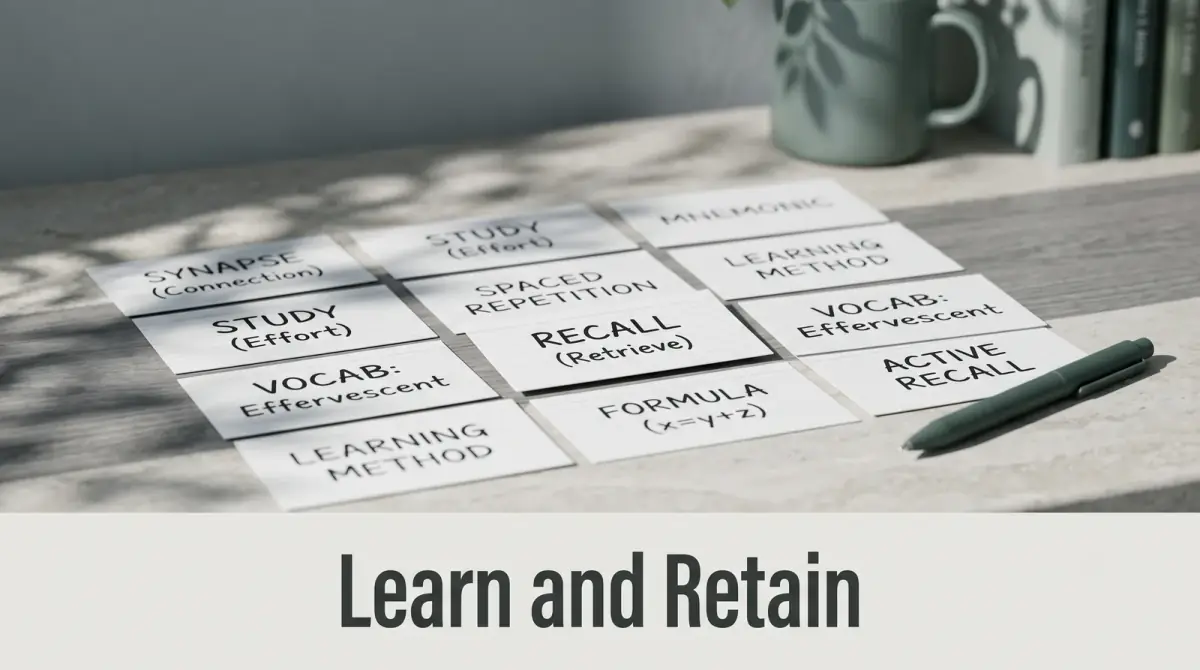
- Make flashcards for facts. Put a prompt on one side, the answer on the other, and test yourself.
- Explain it out loud. Teach the idea to an empty room or a friend. Gaps show up instantly.
Each time you struggle to recall something and then get it, that struggle strengthens the memory. Easy review does not do that.
Learning the right approach really starts here, because recall is a skill you build by using it. The first few attempts will feel slow and frustrating. That discomfort is not a sign you are failing; it is the exact moment your memory is getting stronger.
Spacing: the second half of the system
The other proven method is spaced practice. Instead of one long cram, you review the same material several times across days or weeks.
The logic is that memories fade, and each well-timed review resets the clock and makes the memory more durable. Reviewing on day one, day three, and day seven beats three back-to-back reviews on the same afternoon.
You do not need a fancy schedule. A simple loop works: learn something today, quiz yourself tomorrow, then again a few days later. Space the reviews out and let a little forgetting happen in between. That gap is what makes the next recall count.
Spacing also fits real life better than cramming. Three short sessions across a week are easier to slot around work or classes than one exhausting block, and they leave you far less burned out. You study less in total and remember more.
Best ways to study effectively, step by step
Here is a practical routine that pulls the best ways to study effectively into one flow.
- Preview first. Skim headings and summaries to build a mental map before diving in.
- Read a chunk, then close it. Take one section at a time, then recall it from memory.
- Turn notes into questions. Write prompts you must answer without looking.
- Quiz, do not reread. Spend most of your time testing yourself, not reviewing.
- Space it out. Return to the material over several days, not in one sitting.
- Mix topics. Alternate related subjects in a session so you practice choosing the right approach.
Notice how little time goes to passive reading. That is intentional.
How to study effectively at home
Home is full of distractions, so a bit of structure helps. If you want to know how to study effectively at home, focus on protecting your attention more than perfecting your notes.
- Pick one spot. Use a consistent place for studying so your brain links it with focus.
- Silence the phone. Put it in another room. A phone nearby drains attention even when face down.
- Work in blocks. Try a focused stretch of study, then a short break, and repeat. Long marathons fade fast.
- Tell people your hours. A quick heads-up cuts interruptions before they start.
A few study effectively tips that matter
These smaller study effectively tips round out the system:
- Sleep before an exam beats one more late-night cram. Memory consolidates while you rest.
- Write by hand when you can; it forces you to process, not just copy.
- Do old exams or practice problems under real conditions, timed and closed-book.
- Take breaks that truly rest your mind, not just a scroll through a feed.
Two more habits help. First, study the hardest material when your energy is highest, not at the tail end of a tired day. Second, review your mistakes on purpose; the questions you got wrong teach you more than the ones you already knew.
Results will vary from person to person and subject to subject, so adjust the timing to fit you. The core stays the same though.
Putting it together
Effective studying is not about more hours. It is about the right kind of effort. Swap rereading for self-testing, swap cramming for spacing, and protect your focus while you work.
Start with one change this week: after every reading, close the book and write what you remember. That single habit, done regularly, will teach you more than a stack of highlighters ever could.

Comments
0 total