
The short answer
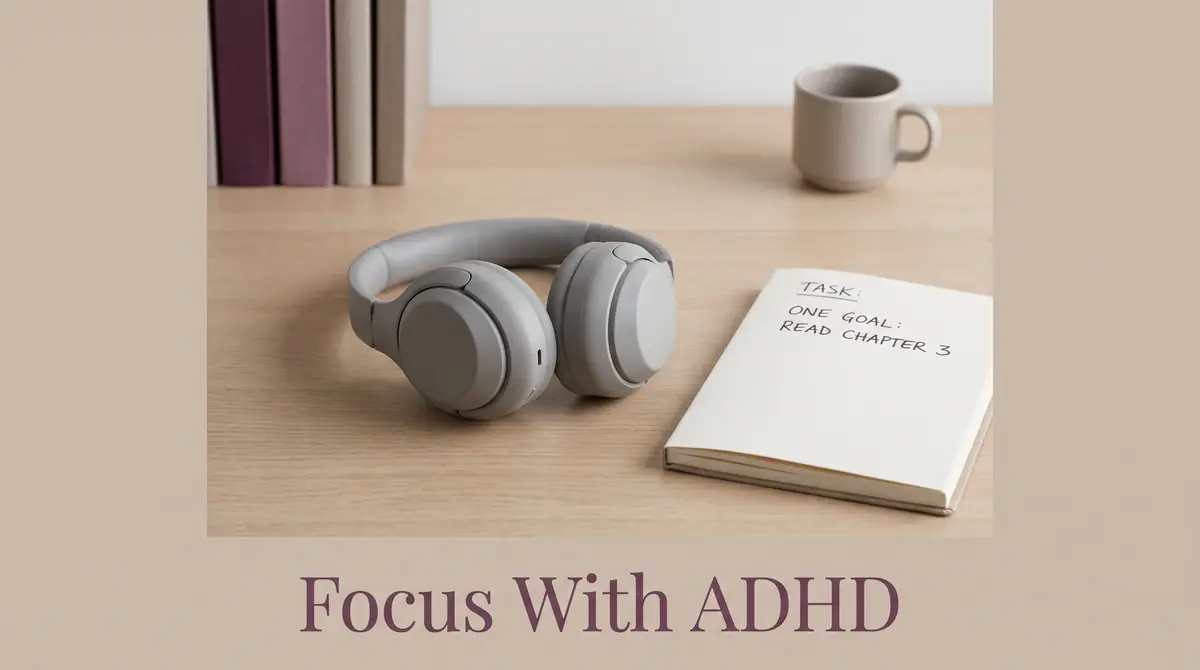
Focus feels impossible some days? Learn how to focus better with ADHD using outside structure, tiny steps, and accountability that work with your brain, not against it.
- Willpower is unreliable, but outside structure is not.
- Get tasks out of your head and into plain sight.
- Shrink any task until starting feels easy.
- Accountability and body doubling make focus stick.
- Medication is one tool, not the only one.
To focus better with ADHD, stop leaning on willpower and build supports around your brain instead. Make tasks visible, break them into tiny steps, and borrow structure and accountability from the outside world. Learning how to focus better with ADHD is less about trying harder and more about designing a setup that does some of the work for you.
An ADHD brain is not broken. It just runs on interest, urgency, and novelty more than on plain importance. A boring task can feel almost impossible to start, while something exciting pulls you in with no effort at all. Once you understand that, you can stop blaming yourself and start using strategies that fit how your attention really works.
Here is the short version before the details:
- Willpower is unreliable, but outside structure is not.
- Get tasks out of your head and into plain sight.
- Shrink any task until starting feels easy.
- Accountability and body doubling make focus stick.
- Medication is one tool, not the only one.
Why focus feels so hard with ADHD
With ADHD, the challenge is rarely a lack of attention. It is trouble steering attention toward the thing that matters right now. Your mind can hyperfocus for hours on something interesting, then stall on a boring email for days.
This happens because the ADHD brain leans heavily on interest and urgency to get going. A dull but important task offers neither, so it quietly slides down the list while more stimulating things jump the queue. Knowing this helps you stop treating focus as a character flaw.
The fix is not to force interest through guilt. It is to change the task or the setting so focus comes more naturally, which is what the rest of this guide walks through.
Externalize everything to free up your head
Trying to hold plans, reminders, and to-dos in your head is a losing game with ADHD. Working memory fills up fast, and things you meant to do simply vanish the moment something else grabs your attention.
So externalize. Put everything where your eyes can catch it.
- Write tasks on a whiteboard or sticky notes in your line of sight.
- Set phone alarms and timers for anything time-based.
- Keep one simple capture spot for every stray idea or task.
- Use visual cues, like leaving the gym bag by the door.
Out of sight really is out of mind here. When a task lives on a wall or a screen instead of in your head, you free up mental space and stop losing track. A reminder you can see will always beat one you are straining to remember.
How to focus better with ADHD by shrinking the task
Big tasks feel like a wall. Your brain sees clean the whole kitchen and quietly refuses to start. The trick is to shrink the task until the first step feels almost too small to skip.
Instead of write the report, the step becomes open the document and type one sentence. Instead of do the dishes, it is rinse three plates. Each small step is a door your brain will actually walk through.
- Pick the very next physical action, not the whole goal.
- Make it so small it feels almost silly.
- Do only that step, then decide whether to keep going.
Momentum does the rest. Starting is the hardest part with ADHD, so make starting tiny. Once you are moving, continuing is far easier than beginning, and you can often ride that first push much further than you expected.
Use body doubling and accountability
Body doubling means working alongside another person, in the room or on a video call, while you each do your own task. Their quiet presence keeps you anchored to what you are doing.
You are not asking for help. You just focus better when someone else is there. Many people with ADHD find this one of the most reliable focus tools they have, and it costs nothing to try.
Accountability works the same way. Tell a friend you will finish something by a certain time, or join a coworking session. The outside expectation supplies the urgency your brain craves. Even a simple check-in message at the end of the day can be enough to keep you on task.
How to focus better with ADHD without medication
Plenty of people want to know how to focus better with ADHD without medication, whether by choice or while waiting to see a doctor. The strategies here work with or without meds, but a few habits matter even more when you are med-free.
- Protect your sleep, since a tired ADHD brain struggles far more.
- Move your body daily, as exercise can steady focus and mood.
- Cut background noise, or add steady sound that blocks distractions.
- Eat regular meals so low blood sugar does not wreck your attention.
None of these replace medical care, and results vary a lot from person to person. Think of them as a foundation that makes every other strategy work better. On the days the basics slip, expect focus to be harder, and go easier on yourself.
How to get organized with ADHD
Learning how to get organized with ADHD means building systems you can actually keep up, not perfect ones. A flawless method you abandon in a week helps no one.
Keep it visible and keep it simple. Clear bins beat labeled drawers, because you can see what is inside. A single calendar beats three half-used apps that each hold part of the picture.
- Give every important item one obvious home.
- Use fewer categories, not more, so putting things away is quick.
- Do a short reset each day instead of one giant cleanup.
The goal is a system so easy that a distracted, tired version of you can still follow it. If a method only works on your best days, it is not the right method for you.
Work with your energy and interest
Match hard tasks to the hours when your focus is best, and save easy tasks for your low-energy stretches. Fighting your natural rhythm just wastes effort you do not have to spare.
You can also borrow interest. Pair a boring task with music, a favorite drink, or a timer challenge to add novelty. Turning a chore into a small game or a race against the clock can be enough to get you moving.
And forgive the off days. ADHD focus is uneven by nature, so a bad day is not a failure. It is just part of the pattern, and pushing harder through it usually backfires.
When to talk to a professional
If focus problems are seriously affecting your work, school, relationships, or safety, it is worth talking with a doctor or a mental health professional. This article is general information, not medical advice.
A professional can confirm what is going on, discuss whether medication or therapy fits you, and help you build a plan that suits your life. Reaching out is a smart move, not a last resort, and getting the right support early can save you a lot of struggle.
The bottom line
Figuring out how to focus better with ADHD comes down to supporting your brain instead of scolding it. Externalize your tasks, shrink them until starting is easy, add accountability, and protect the basics like sleep and movement. Try one or two of these this week, keep what helps, and drop what does not.


Comments
0 total