
The short answer
Willpower alone rarely wins against distraction. Build a layered defense with focus habits, a cleaner environment, and the right blocking apps to protect your attention.
- Willpower fades, so change your environment instead of relying on it.
- Distractions are both internal, like restless thoughts, and external, like alerts.
- Remove temptations before you start, not in the middle of a task.
- Blocking apps help most people, but they are one layer, not the whole fix.
- Focus is a habit that strengthens with regular practice.
The most reliable way to beat distractions is to stop relying on willpower and start changing your environment. You cannot out-muscle a buzzing phone all day, but you can put it in another room. Learning how to beat distractions means building a layered defense: internal focus habits, a cleaner workspace, and tools that block the biggest temptations for you.
This guide walks through each layer. You will see how to train your attention, how to design a space that protects focus, and which distraction blocking apps actually help when self-control runs low.
Key takeaways
- Willpower fades, so change your environment instead of relying on it.
- Distractions are both internal, like restless thoughts, and external, like alerts.
- Remove temptations before you start, not in the middle of a task.
- Blocking apps help most people, but they are one layer, not the whole fix.
- Focus is a habit that strengthens with regular practice.
Why willpower alone does not work
Most focus advice tells you to try harder. That fails because attention is a limited resource. Every time you resist a notification, you spend a little of it, and by afternoon the tank is empty.
Distractions are also designed to win. Apps and feeds are built to grab your attention and hold it. Expecting raw discipline to beat that, all day, every day, is a losing bet.
The smarter approach is to make distraction harder to reach in the first place. When temptation takes effort to access, your natural focus has room to work.
Know your two types of distraction
Before you can beat distractions, it helps to know what you are fighting. They come in two forms, and each needs a different response.
External distractions come from outside you: notifications, noise, people, and a cluttered desk. These are the easiest to control because you can physically change them.
Internal distractions come from inside: boredom, anxiety, a wandering mind, or the urge to check something. These are harder because you cannot simply move them out of the room.
Most focus problems are a mix of both. A boring task, an internal trigger, makes you reach for your phone, an external one. Handling both layers is what makes the difference.
How to beat distractions with better focus habits
Habits are your first layer of defense. They train your brain to settle into work more easily. Here is how to beat distractions from the inside out.
- Work in focused blocks. Pick a set stretch of time, work on one task, then rest. Knowing a break is coming makes it easier to resist wandering.
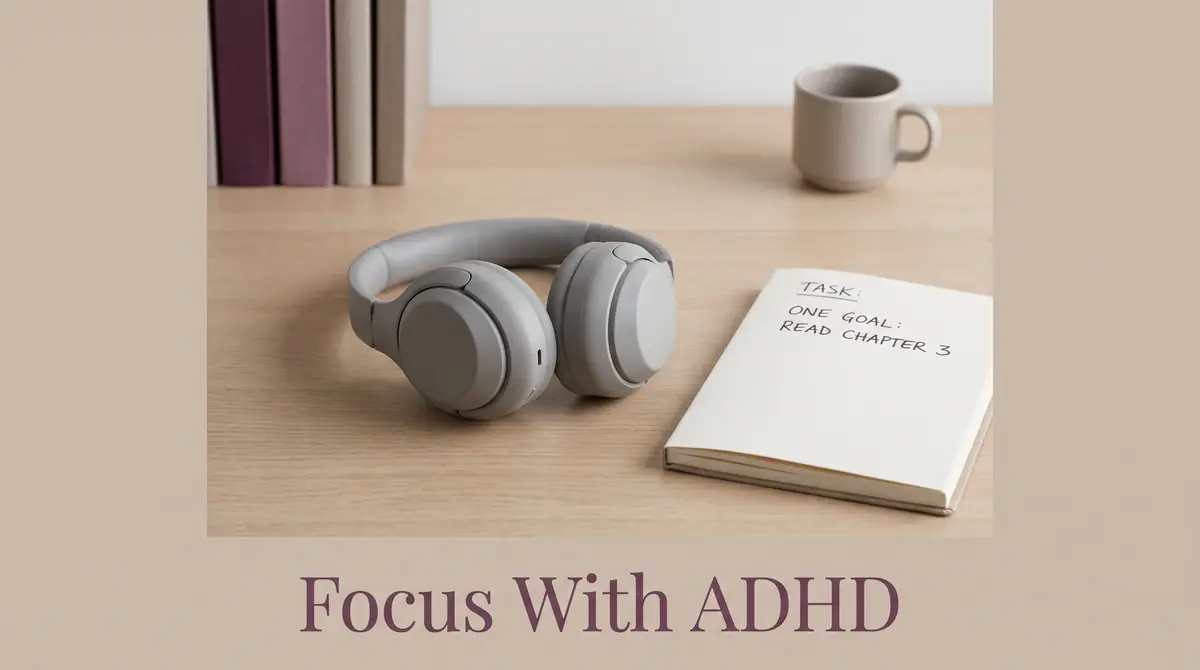
- Set one clear goal per session. A vague plan invites drift. Decide exactly what done looks like before you start.
- Park stray thoughts. When an unrelated idea pops up, jot it on a notepad and return to work. This clears internal distraction without acting on it.
- Start smaller than feels necessary. If focusing is hard, commit to just five minutes. Starting is usually the hardest part, and momentum follows.
- Build a start ritual. A small cue, like clearing your desk or making tea, tells your brain it is time to focus.
These habits grow stronger with repetition. The first week feels effortful; after a few weeks, focus comes more naturally.
Design an environment that protects focus
Your surroundings quietly decide how focused you can be. A few changes to your space do more than hours of trying harder.
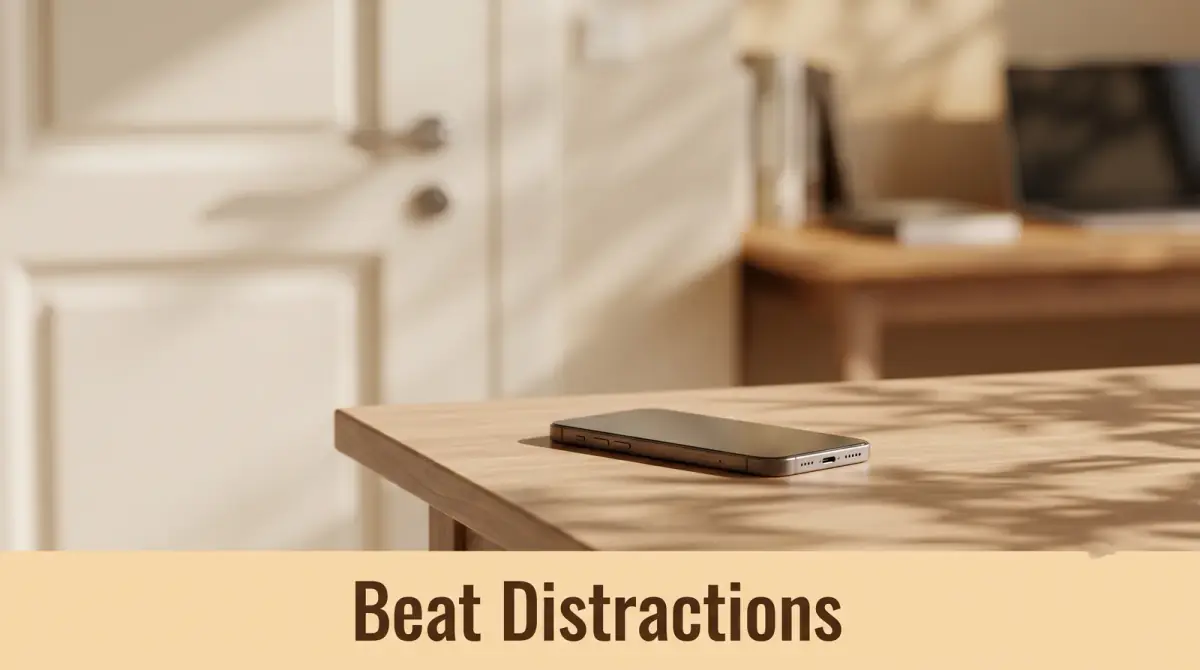
- Put your phone out of reach. Not face down on the desk. In another room or a drawer. Distance is what matters.
- Clear your workspace. A tidy desk gives your eyes fewer things to snag on. Remove anything unrelated to the task.
- Close extra tabs and apps. Each open window is an invitation to switch. Keep only what the task needs.
- Handle noise. Use headphones, quiet background sound, or a quieter room if voices pull your attention.
- Signal to others. Let people around you know when you need uninterrupted time.
The principle is simple: make focus the path of least resistance and distraction the harder choice.
The best distraction blocking apps
When temptation is too easy to reach, software can enforce the rules for you. The best distraction blocking apps share a few useful features, so look for those rather than any single brand.
- Website and app blockers that let you ban specific sites or apps during set hours.
- Focus timers that combine work blocks with automatic blocking during each session.
- Built-in focus modes on your phone and computer that silence notifications and hide tempting apps.
- Screen-time trackers that show where your attention actually goes, which is often eye-opening.
A tip that makes these far more effective: turn the blocker on before you start working, not once you are already tempted. Deciding in advance removes the in-the-moment negotiation you usually lose.
Remember, apps are one layer. They stop the easy slips, but they cannot fix a task you are avoiding for deeper reasons.
What beats distraction long term
If you are wondering what beats distraction for good, the honest answer is a mix of the layers above, plus a few deeper factors people often ignore.
Rest matters more than most focus tips admit. A tired brain drifts easily, so protecting your sleep does as much for focus as any app. Interest matters too. We rarely get distracted from work we find meaningful, so connecting a task to why it matters can quiet the urge to escape it.
Finally, self-kindness helps. When you slip, and you will, do not spiral into guilt. Just notice it and return to the task. Beating yourself up only adds another internal distraction.
A quick reset when you drift
Even with good habits, your mind will wander. What matters is how fast you notice and come back. A short reset routine makes that recovery almost automatic.
When you catch yourself off task, try this:
- Pause and name it. Simply notice, without judgment, that you drifted. Awareness is the first step back.
- Take one breath. A single slow breath breaks the pull of the distraction and settles your attention.
- Restate your goal. Remind yourself of the one thing you set out to do this session.
- Do the next tiny step. Not the whole task. Just the very next small action, which is usually easy to start.
This takes about ten seconds. The point is not to never drift. It is to shorten the gap between drifting and returning, so a moment of distraction does not swallow the whole hour.
When distraction signals something bigger
Occasional distraction is normal. But if focusing feels nearly impossible across every part of your life, and it is causing real problems at work, school, or home, it may be worth talking to a professional.
Persistent trouble with attention can have many causes, including stress, poor sleep, or health conditions that deserve proper support. General focus tips help most people, but they are not a substitute for advice tailored to you. There is no shame in asking for that.
Build your own defense
You now have the full picture of how to beat distractions. Start with your environment, since it gives the fastest results. Put the phone away, clear your desk, and close spare tabs. Then add focus habits like working in blocks and parking stray thoughts. Finally, let a blocking app guard the sites that tempt you most.
Pick one change from each layer and try it this week. Results vary from person to person, but with a little practice, guarding your attention gets easier, and your focus becomes something you can count on.


Comments
0 total