
The short answer
Supportive, practical ways to help students with dyslexia read, spell, and build confidence, with classroom tips and home strategies parents can start using today.
- Multisensory learning that links sounds, letters, and movement.
- Extra time and low-pressure ways to read and write.
- Tools and formats that ease the reading load.
- Confidence protected through their many real strengths.
- Specialist input for proper assessment and teaching.
To help students with dyslexia, give them more time and less pressure around reading, use multisensory methods that pair sound with sight and touch, and protect their confidence at every turn. Dyslexia affects how the brain processes written language, not how clever a student is. With the right support, students with dyslexia read, spell, and succeed. This is practical, everyday guidance, not clinical advice.
Reading and spelling that come easily to many students take real effort for a child with dyslexia. The aim is not to fix the child but to teach in ways that work with how they learn, and to keep them from feeling less capable than their peers.
Here is what helps most, in short:
- Multisensory learning that links sounds, letters, and movement.
- Extra time and low-pressure ways to read and write.
- Tools and formats that ease the reading load.
- Confidence protected through their many real strengths.
- Specialist input for proper assessment and teaching.
Understand what dyslexia is
Dyslexia is a common difference in how the brain handles reading and spelling, especially in connecting letters to their sounds. It has nothing to do with intelligence or effort.
A student with dyslexia might read slowly, mix up similar letters, lose their place, or spell the same word several ways on one page. Reading aloud can be especially stressful for them. Many read far better silently than they can out loud, so a stumble is rarely a sign of low effort.
Seeing these as processing differences rather than carelessness changes how you respond, and that shift alone takes a lot of shame out of the room.
How to help students with dyslexia read and spell
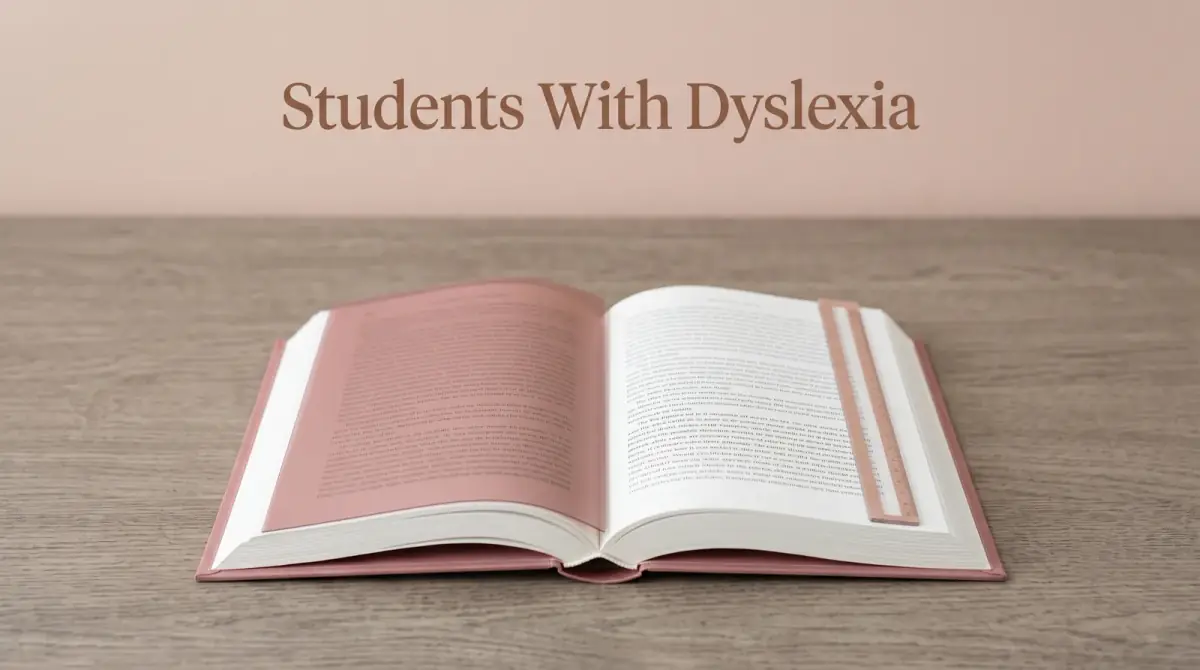
The most effective teaching for dyslexia is multisensory, which means using several senses at once instead of relying on the eyes alone. Linking what a student sees, hears, says, and does helps the connections hold.
- Sound out words while tracing or building the letters by hand.
- Break longer words into syllables and smaller chunks.
- Teach spelling patterns explicitly rather than expecting them to be absorbed.
- Use plenty of repetition and revisiting, without shaming slow progress.
- Colour or highlight tricky letters to make patterns easier to spot.
Go at a steady, patient pace. Overlearning, which means practising something well past the first correct answer, helps skills become secure for a dyslexic learner.
Reduce pressure around reading aloud
Few things are as stressful for a dyslexic student as being made to read aloud cold in front of the class. That fear can poison their whole relationship with reading.
Never spring surprise reading on them. If they do want to read aloud, let them see the passage in advance so they can prepare and succeed.
Reading is hard enough without an audience. Take away the spotlight and you take away much of the fear.
Give extra time for reading and written tasks as standard, so a slower pace never counts against what they actually know. The extra time is about fairness, letting them show real understanding rather than how fast they can decode.
Use tools and formats that lighten the load
Plenty of simple adjustments make written material easier to handle. These are not shortcuts or cheating; they let a capable mind get past the bottleneck of decoding text.
- Offer audiobooks or text-to-speech alongside printed reading.
- Use a clear, larger font with generous spacing between lines.
- Let students show understanding by speaking or recording, not only writing.
- Provide printed notes so they are not reading and copying at once.
- Use coloured overlays or paper if a student finds them easier to read.
When the mechanics of reading are eased, a dyslexic student can put their energy into ideas rather than just decoding the words on the page.
Support writing and spelling gently
Writing pulls together several tricky skills at once for a dyslexic student, so separate them where you can. Let them get ideas down first and tidy the spelling later. Splitting the job this way stops a fear of spelling from blocking the ideas altogether.
Focus feedback on what they meant, not a page bristling with corrections. A sea of red ink teaches a child that their ideas were not worth having in the first place.
Spell-checkers, word banks, and speech-to-text are all fair supports. The point is the thinking, and these tools simply clear the path to it.
Protect confidence and build on strengths
Years of struggling with reading can convince a bright child that they are stupid, which is both untrue and damaging. Guarding confidence is as important as any single lesson.
Many students with dyslexia have real strengths in areas like problem-solving, creativity, big-picture thinking, or speaking. Notice and celebrate these openly.
Praise effort and progress rather than comparing them to classmates. A student who believes in their own mind will keep pushing through the hard parts of reading. Confidence, once it takes root, does as much for progress as any single teaching method.
Work with parents and specialists
Support is strongest when home and school work together. Parents can read with a child, keep it low-pressure, and reinforce the same patient approach used in class.
Teachers and parents should describe what they notice without diagnosing, since that is not their role. If you suspect dyslexia, or a student is falling behind in reading, encourage a proper assessment by a specialist. Trained professionals can identify dyslexia and recommend structured programmes that make a real difference.
Make lessons clear and structured
Dyslexic students do better when they are not also fighting a confusing lesson on top of the reading. Clear steps and predictable routines free up energy for the hard work of decoding.
Give instructions one at a time, and back up anything spoken with written or visual reminders they can return to. Checklists and worked examples cut down how much a student has to hold in mind at once.
- Show a worked example before asking students to try on their own.
- Keep instructions short, with one step visible at a time.
- Provide a printed checklist so nothing rests on memory alone.
Repetition helps as well. Coming back to the same patterns in slightly different ways, without any hint of impatience, is what makes them finally stick.
The bottom line
Helping students with dyslexia means teaching through more than one sense, easing the pressure and the reading load, and fiercely protecting their confidence. Every learner is different, so try these approaches and keep what works for this child. With patience and the right specialist support, dyslexic students can and do thrive.

Comments
0 total