
The short answer
Is math a daily struggle? Learn how to help students with dyscalculia make sense of numbers, with hands-on, non-clinical strategies for the classroom and home.
- Concrete objects make abstract numbers real.
- A slower pace with lots of repetition builds security.
- Visual layouts reduce confusion on the page.
- Low-pressure practice keeps maths anxiety down.
- Specialists can assess and guide structured support.
To help students with dyscalculia, make numbers concrete with hands-on tools, slow the pace, and take the fear out of getting things wrong. Dyscalculia is a learning difference that makes understanding numbers and maths genuinely hard, and it has nothing to do with intelligence or effort. With patient, hands-on support, these students can make real sense of maths. What follows is practical guidance, not clinical advice.
Where dyslexia affects reading, dyscalculia affects number sense: how big numbers are, how they relate, and how operations work. Many of these students freeze at the sight of a worksheet not because they are lazy but because numbers feel slippery and abstract.
The essentials first:
- Concrete objects make abstract numbers real.
- A slower pace with lots of repetition builds security.
- Visual layouts reduce confusion on the page.
- Low-pressure practice keeps maths anxiety down.
- Specialists can assess and guide structured support.
Understand what dyscalculia is
Dyscalculia is a difficulty with understanding numbers and quantities. A student might struggle to tell which of two numbers is larger, lose track in multi-step problems, or forget basic facts no matter how often they practise. Times tables in particular can slip away again and again, however much effort a student puts in.
It is not the same as simply finding maths hard or missing a few lessons. The number sense that many people take for granted does not come naturally, so it has to be built carefully and patiently.
Reading this as a genuine difference, not carelessness, changes your tone, and a calmer adult makes maths feel far less threatening. Patience from the grown-up in the room does more good than any clever trick.
How to help students with dyscalculia make sense of numbers
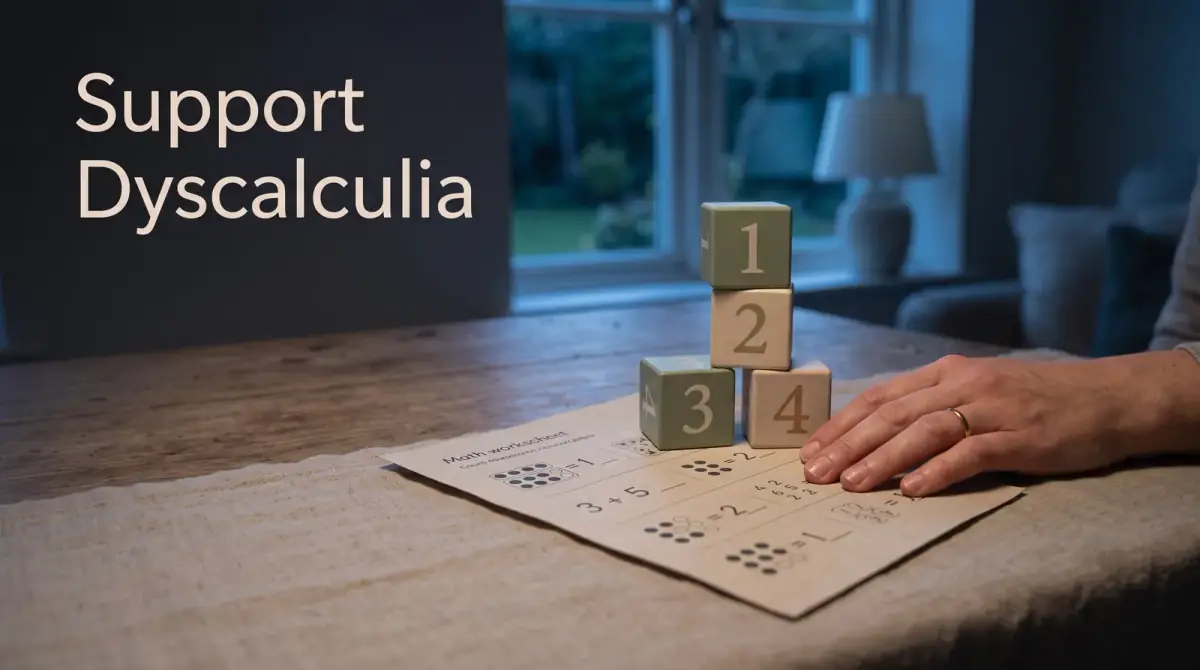
Abstract symbols on a page are exactly where dyscalculia bites hardest, so start with things a student can see, hold, and move. Concrete first, pictures next, symbols last.
- Use counters, blocks, coins, or beads to show what a number really means.
- Let students physically group and regroup objects to see operations happen.
- Move to drawings and number lines before jumping to bare symbols.
- Connect maths to real life, such as money, cooking, or time.
- Say the number, show it, and build it, so several senses work together.
When a student can touch and rearrange the maths, the symbols on the page finally have something solid to stand for.
Slow the pace and build in repetition
Maths builds on itself, so gaps early on quietly wreck everything that follows. For a student with dyscalculia, moving on before a concept is secure guarantees trouble later.
- Make sure each idea is solid before building the next one on top.
- Revisit earlier concepts often, since they fade quickly.
- Practise little and often rather than in long, tiring sessions.
There is no prize for rushing. A concept truly understood, even slowly, is worth far more than a dozen half-grasped ones raced through. A secure foundation makes the next topic far easier, so slow early progress usually pays off later.
Make the page less confusing
Sometimes the layout of the maths itself adds to the struggle. A crowded worksheet can overwhelm a student before they even begin.
Give plenty of space, and put fewer problems on each page. Squared paper helps keep columns lined up so digits do not drift into the wrong place. Folding a worksheet to show one section at a time can also stop a busy page from feeling overwhelming.
A clean, uncluttered page can be the difference between a student trying and a student shutting down.
Highlight the operation signs, since a missed plus or minus can undo an otherwise correct answer.
Reduce maths anxiety
Repeated struggle often grows into real maths anxiety, where fear itself blocks thinking. A student convinced they are hopeless will freeze before they even try.
Take the pressure off speed. Timed drills and being put on the spot tend to fuel the fear, so favour accuracy and understanding over racing the clock.
Treat mistakes as normal and useful. When getting something wrong is safe, a student is far more willing to attempt the next problem instead of giving up. Framing a mistake as information, not failure, slowly loosens the fear that makes maths feel impossible.
Allow supportive tools
Certain tools let a student get on with reasoning instead of getting stuck on recall. Used well, they support learning rather than replacing it.
- Let students use a number line, multiplication grid, or counters.
- Allow a calculator for problem-solving once the concept is understood.
- Provide reference cards with steps or key facts.
- Encourage students to talk through their thinking out loud.
- Provide squared paper to keep digits neatly in their columns.
These props take pressure off weak spots so the student can focus on the actual maths, not on facts that stubbornly refuse to stick.
Work with parents and specialists
Home and school working together makes support far stronger. Parents can weave numbers into everyday life, such as handling money or measuring while cooking, in a relaxed and pressure-free way. These everyday moments give a student low-stakes practice without it ever feeling like a maths lesson.
Adults should describe what they notice without diagnosing, since that is not their role. If a student consistently struggles with numbers well beyond their peers, encourage the family to seek an assessment from an educational specialist. Trained professionals can identify dyscalculia and recommend structured approaches that genuinely help.
Build a positive relationship with numbers
A student who dreads maths will avoid it, and avoidance only widens the gap. Part of the job is helping them feel that numbers are something they can approach, not an enemy waiting to catch them out.
Notice and name every bit of progress, however small. Keep early tasks genuinely achievable so the student slowly collects evidence that they can, in fact, do this.
- Praise the thinking and the effort, not only the right answer.
- Keep tasks small enough to finish on a success.
- Show that everyone finds some maths hard, and that this is normal.
Real-life numbers help too. Sharing out snacks, keeping score in a game, or working out change makes maths feel useful rather than abstract, and useful maths is far less frightening.
The bottom line
Helping students with dyscalculia means making numbers concrete, slowing down, tidying the page, and keeping maths anxiety low. Every learner is different, so try these strategies and keep what works for this student. With patience and the right specialist support, students with dyscalculia can build real, lasting confidence with numbers.

Comments
0 total