
The short answer
Copying everything down can feel pointless. So is note taking a waste of time? Here's when notes truly help you learn and when they just slow you down.
- Copying everything is nearly useless. Your brain stays switched off.
- Active notes work. Summarizing in your own words builds memory.
- Fewer, better notes beat pages of transcription.
- Review matters. Notes you never revisit rarely help.
- The method beats the tool, whether pen or laptop.
Is note taking a waste of time? It can be, if you are just copying words down word for word without thinking. But done right, note-taking is one of the most effective ways to learn and remember. The difference is not whether you take notes; it is how. Active, selective notes help you learn. Mindless transcription mostly wastes your effort.
Key takeaways
- Copying everything is nearly useless. Your brain stays switched off.
- Active notes work. Summarizing in your own words builds memory.
- Fewer, better notes beat pages of transcription.
- Review matters. Notes you never revisit rarely help.
- The method beats the tool, whether pen or laptop.
Is note taking a waste of time?
Let's answer the question directly. Note-taking is a waste of time only when it replaces thinking instead of supporting it.
If you scribble down every word a teacher says, your brain acts like a photocopier. You are busy, but you are not really processing anything. Later, the notes feel like a stranger wrote them.
The problem is not notes. It is passive, mindless notes. Change how you take them and the whole picture flips.
When note-taking actually hurts learning
Sometimes taking notes can genuinely work against you. It is worth spotting these traps.
- Transcribing word for word, which keeps you from thinking about meaning.
- Writing so much you cannot listen, so you miss the actual explanation.
- Making pretty notes you never read again, mistaking decoration for learning.
- Copying slides you could have simply saved instead.
In these cases, note-taking can feel productive while teaching you very little. That is the version that truly wastes time.
What learning research generally suggests
You do not need to read every study to get the gist. Across learning research, one theme keeps showing up: effort during learning tends to build stronger memory.
Notes help most when they make you work, by choosing, rephrasing, and organizing ideas. They help least when they let you coast on autopilot. Results vary by person and subject, but that pattern is remarkably consistent.
So the real question is not "notes or no notes." It is "do my notes make me think?"
Why note taking is important when done right
Now the other side. There is a good reason note-taking has stuck around for centuries. Done well, it forces your brain to work in the exact ways that build memory.
Understanding why note taking is important comes down to what good notes make you do:
- Decide what matters, since you cannot write everything.
- Rephrase ideas in your own words, which deepens understanding.
- Organize information, revealing how ideas connect.
- Create a study resource you can review later.
Each of these is active thinking. That effort is exactly what helps information stick.
How to take notes that improve recall
If you want notes that actually work, focus on thinking, not copying. A few habits make a big difference.
- Listen first, write second. Understand the point, then jot it briefly.
- Use your own words. Rephrasing forces real processing.
- Keep it short. Capture key ideas, not every sentence.
- Add structure, like headings, bullets, or arrows between ideas.
- Leave space for questions and later additions.
The aim is to build a tool for your future self, not a full transcript of the class.
Review beats re-writing
Notes only pay off if you return to them. Revisiting your notes soon after, then again later, is where the real memory boost happens. A quick review the same day goes a long way.
A simple note-taking method to try
If you want a starting point, try this basic loop during and after a lesson.
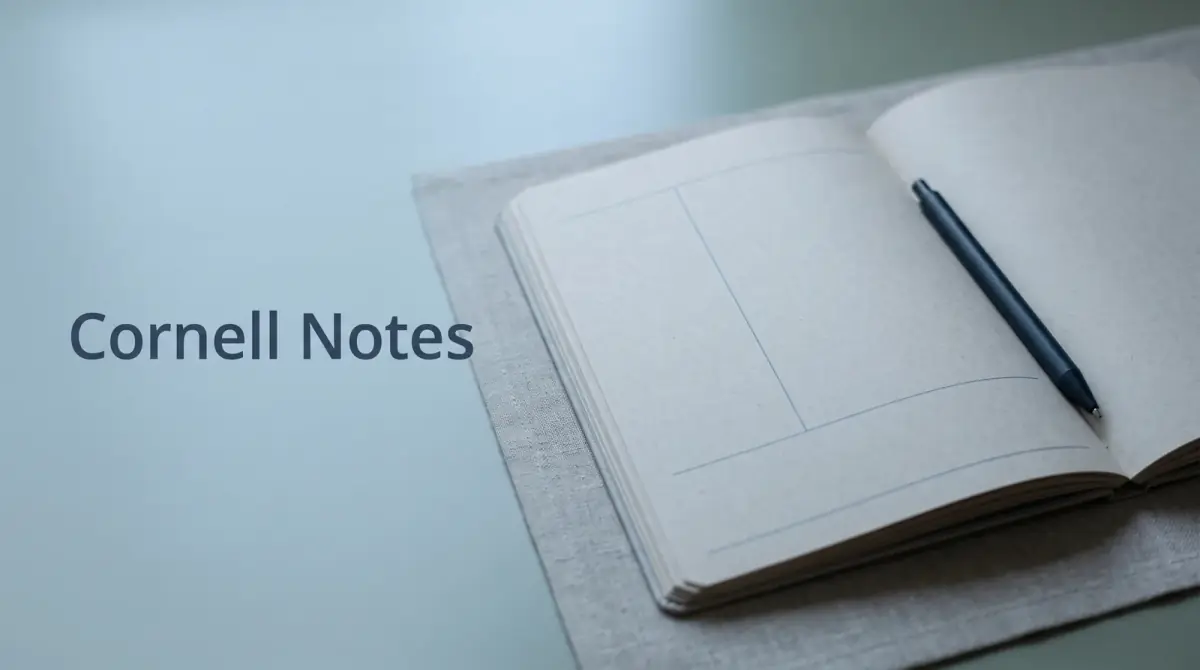
- During class, jot only key points in your own words.
- Leave a margin for questions and connections.
- Right after, add a one or two line summary at the bottom.
- Later, cover your notes and try to recall them from memory.
That last step is the secret. Testing yourself turns notes into real learning instead of just storage.
What about notes you never reread?
Here is a surprise: even notes you never open again can help a little, because writing them made you process the material. Still, notes you review are far more powerful. If you are going to take them, plan to use them.
Match your notes to the task
Not every situation needs the same notes. A fast-moving lecture, a dense textbook, and a quick meeting each call for a slightly different touch.
For talks, capture main ideas and examples before they pass. For reading, you can be choosier, since the text is not going anywhere. Adapt rather than forcing one rigid system on everything.
Handwriting versus typing
People love to argue about pen versus laptop. The truth is calmer than the debate.
Typing lets you write faster, which can tempt you into mindless transcription. Handwriting is slower, which often nudges you to summarize and think. But a focused typist beats a sloppy note-writer any day.
Use whichever tool helps you stay active and selective. The method matters far more than the device.
How to build better note-taking skills
Good note-taking is a skill, and like any skill it improves with practice. If you want to strengthen your note taking skills, keep it simple.
- Try one system and stick with it long enough to judge it fairly.
- Summarize after each session, shrinking your notes into a few key points.
- Test yourself from your notes instead of just rereading them.
- Adjust as you learn what helps you remember.
Over time you will develop a personal style that fits how you think. Think of your notes as a conversation with your future self, and write them clearly enough to be worth returning to.
The verdict
So, is note taking a waste of time? Only when it is passive. Copy words like a machine and you will gain little. Take active, selective notes and review them, and note-taking becomes one of the best learning tools you have.
Do not ask whether to take notes. Ask whether your notes make you think. Get that right, and every minute you spend is time well used.


Comments
0 total