
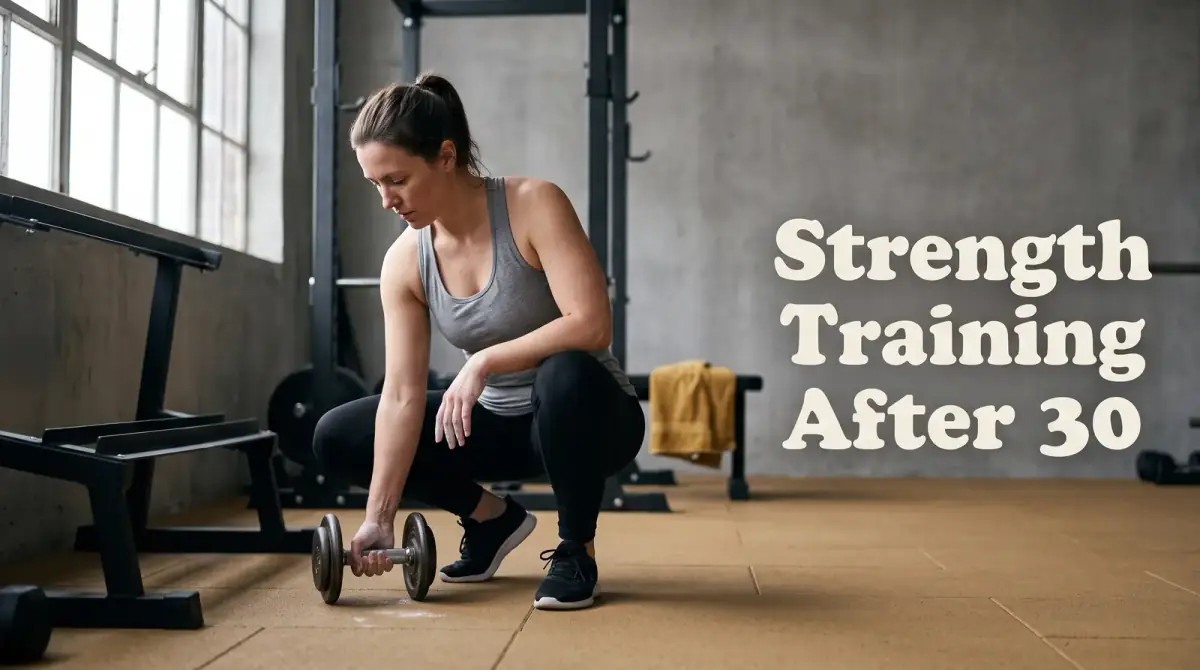
The short answer
A no-nonsense guide to strength training for beginners over 30: five movement patterns, a 2-3 day template, and how to progress without getting hurt.
- Sleep is where adaptation actually happens; short-changing it undoes much of the work
- Eat enough protein spread across the day rather than all at dinner
- Walking on rest days eases soreness more than lying still does
Somewhere around your mid-thirties, a suitcase you have lifted a hundred times starts to feel heavier. You get up off the floor after playing with a toddler and something twinges. The usual explanation is that you are getting older and there is nothing to be done. That explanation is wrong, and strength training for beginners over 30 is the most direct correction available.
The short answer to the question you are probably asking: no, it is not too late, and the returns are unusually generous for people starting from nothing. Two or three sessions a week, built around a handful of basic movements, is enough to change how your body feels within a couple of months. You do not need a complicated programme, a coach, or any particular talent for the gym. You need consistency and a willingness to start lighter than your ego would like.
Why muscle and bone matter more every decade
From roughly your thirties onward, adults tend to lose muscle mass gradually unless they give the body a reason to keep it. Bone density follows a similar pattern. Neither decline is dramatic year to year, which is precisely why it goes unnoticed until something breaks or a familiar task suddenly feels hard.
Resistance training pushes back on both. Loading a muscle signals that it is needed; loading a bone signals the same thing. Beyond that, strength work supports your metabolism, your joints, your posture and your balance — and balance is what determines, decades from now, whether a stumble is a laugh or a hospital stay.
There is a quality-of-life argument too, and it is the one most people actually feel. Being strong makes ordinary life easier. Carrying shopping, moving furniture, hauling a child onto your shoulders, getting a bag into an overhead locker without a small internal negotiation.
Is it too late to start after 30?
Not remotely. Beginners of any age respond well to resistance training, and people who have never trained often make the fastest early progress because everything is new to the body. Much of the improvement in your first month or two is neurological — your nervous system learning to recruit muscle you already have.
What does change with age is recovery. You will likely need slightly more rest between hard sessions than a nineteen-year-old, and your warm-up stops being optional. That is a scheduling adjustment, not a barrier.
The five movements that cover almost everything
Ignore the machines lining the walls for now. Nearly everything useful falls into five patterns, and a programme that includes all of them covers the whole body without a spreadsheet.
Squat
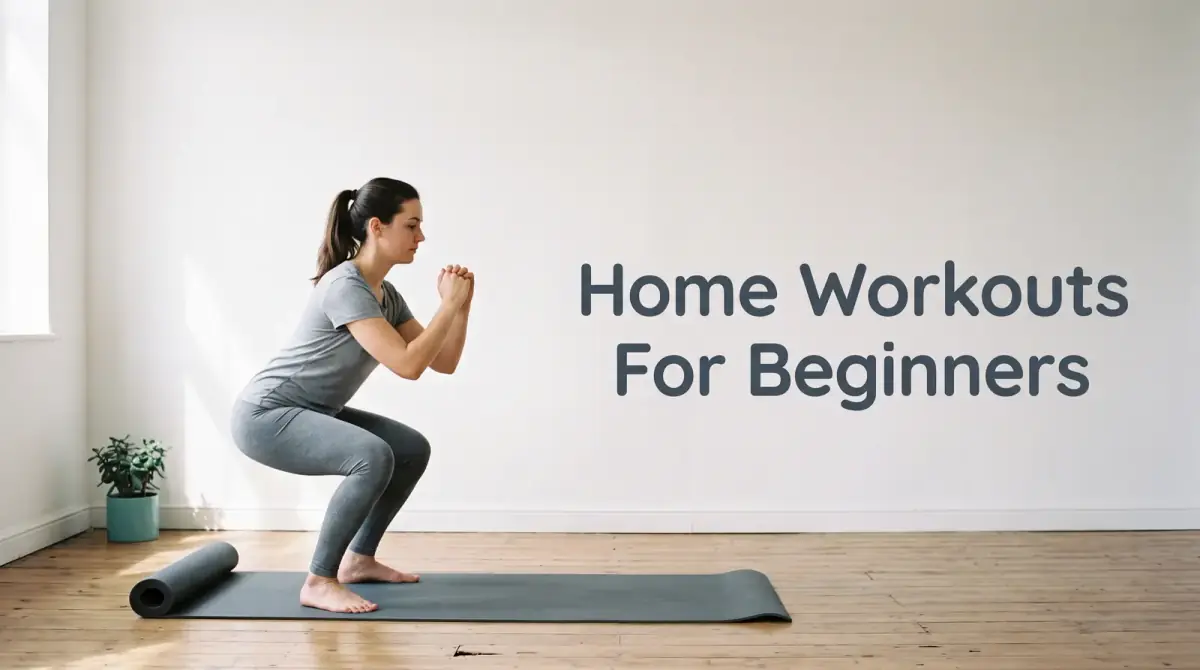
Bending at the knees and hips to lower yourself and stand back up. Beginner version: a box squat, where you sit back to a bench and stand again. It teaches depth and gives you confidence that you will not end up stranded on the floor.
Hinge
Bending at the hips with a relatively still back to pick something up. Beginner version: a Romanian deadlift with light dumbbells, or a hip thrust. This pattern trains the back of your body, which most desk-based adults have neglected for years.
Push
Pressing weight away from you. Beginner version: press-ups with your hands elevated on a bench, or a dumbbell bench press. Elevating your hands makes press-ups easier, and lowering the surface over time is progress you can see.
Pull
Drawing weight toward you. Beginner version: a single-arm dumbbell row, or a seated cable row. Pulling work is the direct antidote to a life spent rounded over a laptop.
Carry
Picking up something heavy and walking with it. Beginner version: a farmer's carry with a dumbbell in each hand for thirty seconds. Unglamorous, brutally practical, and it builds a core in a way that crunches never will.
Your first weekly training template
Full-body sessions beat body-part splits for beginners, because every pattern gets practised several times a week and a missed session does not leave a hole. Two days is genuinely enough to start. Three is better if it fits your life.
- Five to ten minutes of easy movement to warm up — brisk walking, then the first set of each exercise done very light
- One squat variation
- One hinge variation
- One push variation
- One pull variation
- One carry, or a short core exercise such as a plank
Leave at least one rest day between sessions. Monday and Thursday works. So does Tuesday, Thursday and Saturday. The schedule you will actually keep beats the optimal one you will abandon.
How do you pick a starting weight?
Start embarrassingly light. Genuinely. Your first week is for learning the movement, not testing your limits, and the weight that feels almost too easy is usually about right.
From there, aim for sets where you finish with two or three repetitions still in the tank. If you could have done ten more, go heavier next time. If your form falls apart on the final rep, go lighter. That feel-based approach beats any percentage chart for a beginner.
Sets and reps, in plain language
A repetition is one complete movement. A set is a group of them, followed by a rest. For general strength and muscle, most beginners do well with two or three sets of roughly eight to twelve repetitions per exercise, resting a minute or two between sets.
Progress simply means doing slightly more than last time. One extra repetition, one extra set, or a small jump in weight. Not every session, but most weeks. That gradual accumulation is the entire mechanism.
Soreness, recovery and what is normal
Expect to be sore for a day or two after your first few sessions, particularly in muscles you have not used properly in years. That dull, achy stiffness is normal and fades as your body adapts. It is not a measure of a good workout, and chasing it is a mistake.
Sharp pain is a different signal entirely. Pain inside a joint, anything that pinches, or discomfort that lingers well beyond a few days means stop and reassess — and see a doctor or physiotherapist if it persists.
- Sleep is where adaptation actually happens; short-changing it undoes much of the work
- Eat enough protein spread across the day rather than all at dinner
- Walking on rest days eases soreness more than lying still does
The mistakes that set people back
Ego lifting is the big one. Loading a bar with weight you cannot control, usually because someone nearby is lifting more, is how beginners end up injured and discouraged in the same afternoon. Nobody is watching. If they are, they are counting their own sets.
Form first, always. Film a set on your phone occasionally, or book a single session with a coach to check your squat and hinge — a small cost for years of safer training. And if you have an existing injury, a history of back trouble, or a condition affecting your heart or joints, talk to your doctor before you start rather than after something goes wrong.
The takeaway
Two sessions a week. Five movement patterns. Weights light enough that you finish every set in control. That is the whole prescription, and it is unglamorous on purpose.
The people who succeed at this are not the ones who train hardest in January. They are the ones still turning up in March, adding a kilo here and a repetition there, while their suitcase quietly gets lighter.


Comments
0 total