
The short answer
A practical guide to the sleep vs exercise trade-off: which to pick on a bad day, how movement improves your nights, and how to fit both into a busy week.
- Slept badly and exhausted? Choose rest or an easy walk over a hard workout.
- Slept fine but busy? Fit in movement, even a short session counts.
- Chronically short on sleep? Fixing sleep comes first, then build exercise back in.
- Sitting all day, every day? You need movement badly, so guard it like an appointment.
- Both feel impossible? Aim for a good-enough version of each, not perfection.
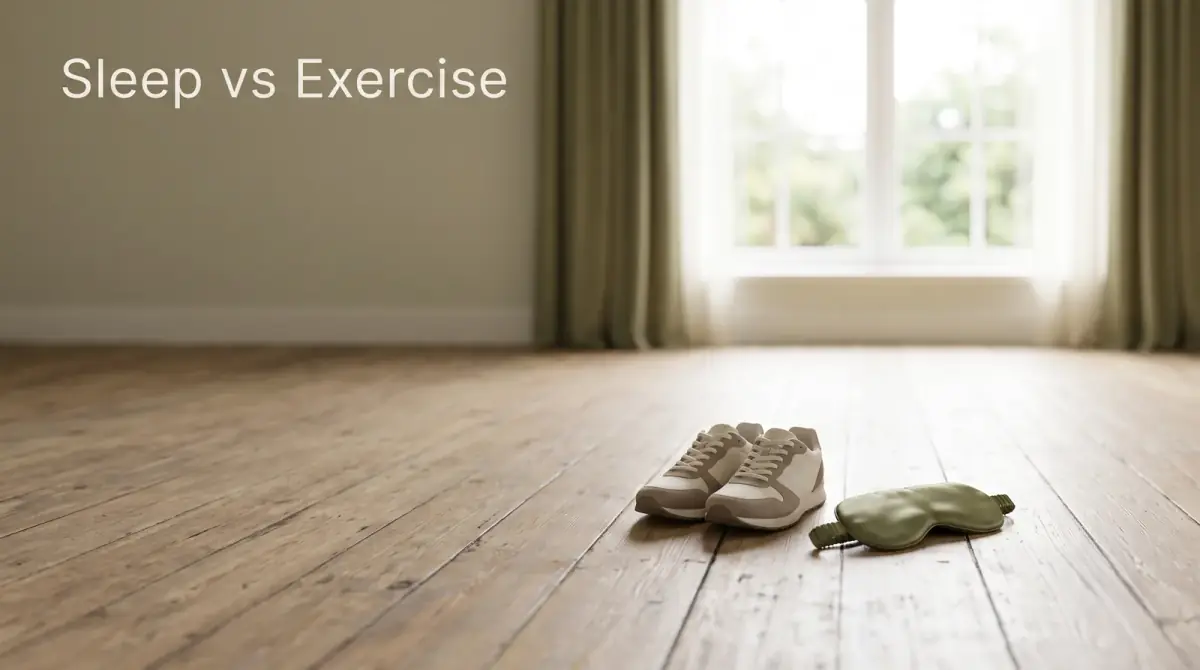
When you have to choose on a given day, sleep usually wins. A single bad night hurts your focus, mood, and appetite more than one skipped workout ever will. But over a full week, the sleep vs exercise question has no clear winner, because your body needs both, and they make each other work better.
So do not treat this as a permanent contest. Think of it as a daily judgment call. Some days you protect your sleep. Other days you protect your movement. The goal is to keep both in your life most of the time.
Quick answer: which one to pick today
- Slept badly and exhausted? Choose rest or an easy walk over a hard workout.
- Slept fine but busy? Fit in movement, even a short session counts.
- Chronically short on sleep? Fixing sleep comes first, then build exercise back in.
- Sitting all day, every day? You need movement badly, so guard it like an appointment.
- Both feel impossible? Aim for a good-enough version of each, not perfection.
Why sleep tends to win on a bad day
Sleep is when your body does its repair work. Your brain sorts memories, your muscles recover, and your hormones reset. Skip it, and almost everything else gets harder.
Short sleep also changes how you eat. When you are tired, hunger signals get louder and cravings for sugar and quick carbs go up. That makes a tough day even tougher.
Then there is the risk side. Training hard on very little sleep raises your chance of sloppy form and injury. Your reaction time drops, and you feel every rep harder than usual. On those days, a gentle walk beats a punishing gym session.
Why exercise still matters every week
Now the other side. Regular movement protects your heart, muscles, mood, and blood sugar in ways sleep alone cannot. If you asked what's better sleep or exercise over months, the honest answer is that neither replaces the other.
Exercise also feeds back into your nights. People who move regularly often fall asleep faster and sleep more deeply. So skipping workouts to save energy for sleep can quietly backfire.
You do not need marathon sessions either. A brisk daily walk, some stairs, a short strength routine a couple of times a week, it all adds up. Consistency beats intensity here.
How to exercise to sleep better
Timing and type make a difference. If you want to know when to exercise to sleep better, most people do well with movement earlier in the day, or at least a few hours before bed.
Morning or afternoon exercise, especially outdoors, helps set your body clock. Daylight plus movement is a strong signal that it is daytime, which makes it easier to feel sleepy later.
Hard, intense workouts too close to bedtime can leave some people wired. Not everyone reacts this way, so test it on yourself. If a late gym session keeps you buzzing, shift it earlier.
Gentle evening movement is different. A relaxed walk after dinner or some light stretching can actually calm you down and help you wind down for bed.
When time is tight: how to prioritise
Most people are not choosing between a perfect gym plan and eight hours of sleep. They are choosing between two imperfect options at 6 a.m. or 9 p.m. Here is a simple way to decide.
- Check your sleep debt. If you have slept badly for several nights, sleep is the priority. Nap or go to bed early instead of forcing a workout.
- Check your movement debt. If you have sat still for days, your body is begging to move. Take the walk.
- Blend them when you can. A short, easy workout plus a slightly earlier bedtime often beats going all in on one and skipping the other.
Remember that intensity is a dial, not a switch. On a low-sleep day you can still move, just gently. A ten-minute walk is not nothing. It keeps the habit alive without draining you.
Simple ways to sleep better tonight
If your sleep is the weak link, a few basics go a long way. None of these are fancy, and that is the point. Learning how to sleep better is mostly about repeating small, boring habits.
- Keep a steady bedtime and wake time, even on weekends.
- Get daylight early in the day to anchor your body clock.
- Dim screens and lights in the last hour before bed.
- Keep your room cool, dark, and quiet.
- Go easy on caffeine after midday and heavy meals late at night.
Give any change a week or two before you judge it. Sleep habits take time to settle, and one good night does not tell you much on its own.
How much of each do you actually need?
Guidelines vary, and your ideal amount depends on your age, health, and daily life. As a rough guide, most adults do well with around seven to nine hours of sleep and regular movement spread across the week.
Movement can be split however suits you. A mix of brisk walking or cardio plus a little strength work covers most bases. You do not have to do it all in one block, and short bouts still count toward the total.
The point is not to chase perfect numbers. It is to notice which side you are neglecting and nudge it back up. Most of us know, deep down, whether we are shorting our sleep or our steps.
Building a week that fits both in
Instead of pitting sleep against exercise every day, zoom out to your week. Plan a few realistic workout slots and a firm-ish bedtime, then flex around real life.
A sample rhythm might be three or four short workouts, a couple of easy walking days, and a nightly wind-down routine. Miss one? No drama. You are aiming for a pattern, not a perfect record.
This is where the sleep vs exercise stress tends to fade. When both are baked into your week, you rarely face an all-or-nothing choice. You just adjust the dials.
A note on when to get help
This is general information, not medical advice. Results vary from person to person, and experts do not always agree on the finer details of timing.
If you regularly cannot sleep, snore heavily, wake up gasping, or feel exhausted no matter what you try, talk to a doctor. The same goes for chest pain, dizziness, or joint problems during exercise. A professional can spot issues a blog never will.
For most healthy people, though, the takeaway is friendly and simple. You do not have to crown a lifelong winner in the sleep vs exercise debate. Protect your sleep, keep moving, and let the two support each other.



Comments
0 total