
The short answer
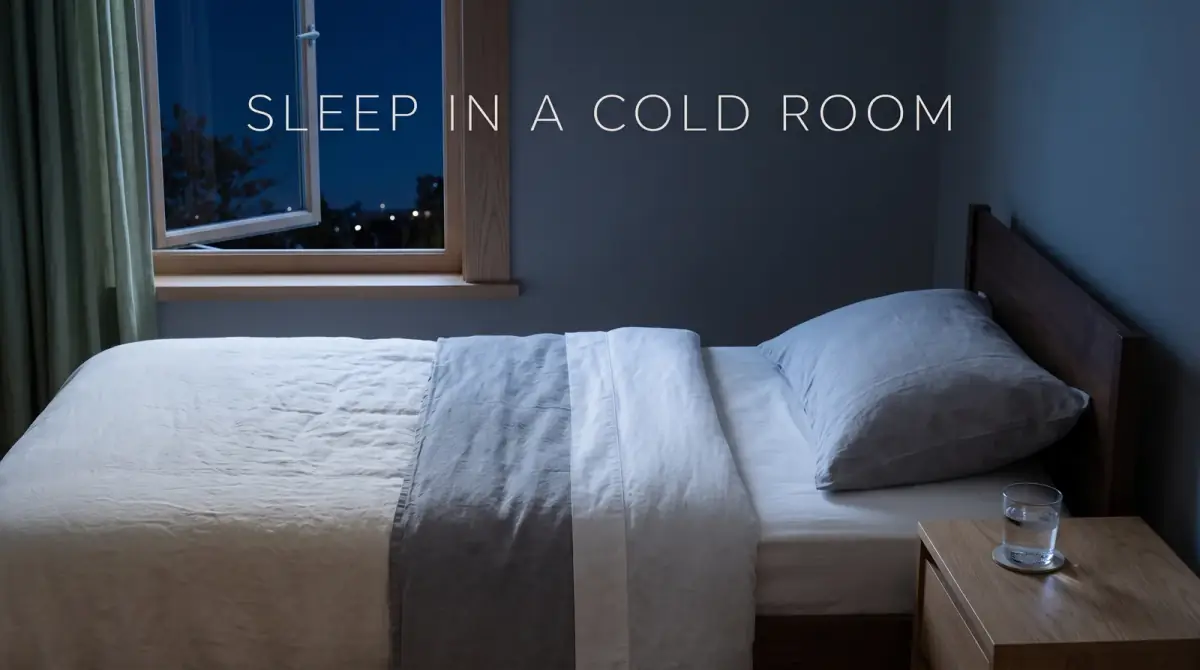
A cool bedroom helps your body cool down, and that drop in temperature is one of the signals that tells your brain to fall into deeper sleep.
- Too warm: restless, sweaty, waking often.
- Just right: cool air, cozy under the covers, easy to stay asleep.
- Too cold: tense shoulders, cold feet, waking up to add a blanket.
You sleep better in a cold room because your body has to cool down before it can fall and stay asleep. In the evening your core temperature naturally starts to drop, and that dip is one of the signals that tells your brain it is time to rest. A cool bedroom helps that process along. A warm, stuffy one works against it.
Most people notice this without knowing the reason. You toss and turn on a hot night, throw a leg out from under the blanket, and finally drift off once things cool down. That is not just in your head. It is your body doing what it is built to do.
The temperature drop that starts your sleep
Your body runs on an internal clock, and part of that clock controls your temperature across the day. You are warmest in the late afternoon and coolest in the early hours of the morning.
As bedtime approaches, blood flow shifts toward your hands and feet, which releases heat and lets your core temperature fall. That gentle cooldown lines up with the release of melatonin, the hormone that makes you feel sleepy. When the two work together, falling asleep feels easy.
A cold room supports this. When the air around you is cool, your body sheds heat more easily and settles into rest faster. This is a big part of why you sleep better in a cold room than a warm one.
Why a warm room keeps you awake
A hot bedroom traps heat against your skin and slows that natural cooldown. Your body keeps trying to release warmth, but it has nowhere to send it. So you sweat, kick off the covers, and wake up more often through the night.
Heat tends to disturb the deeper stages of sleep the most. You might still get hours in bed, but the quality suffers. You wake up groggy even after what looked like a full night.
Humidity makes it worse. Damp air stops sweat from evaporating, so your body cannot cool itself the usual way. That is why a muggy summer night feels so much harder than a dry one at the same temperature.
The ideal bedroom temperature for deeper sleep
There is no single perfect number, because bodies differ. Still, many sleep specialists point to a range on the cooler side of comfortable, roughly the mid-60s in Fahrenheit, or somewhere around 16 to 19 degrees Celsius.
Use that as a starting point, not a rule. Some people rest best a touch warmer, others cooler. What matters is that the room feels slightly cool when you climb into bed, so your body can keep shedding heat as you drift off.
- Too warm: restless, sweaty, waking often.
- Just right: cool air, cozy under the covers, easy to stay asleep.
- Too cold: tense shoulders, cold feet, waking up to add a blanket.
If your feet get cold enough to wake you, that is a sign the room has gone too far. Warm feet actually help you fall asleep, so a pair of socks can matter more than the thermostat.
How a cold room helps you sleep better
Deep sleep is the stage where your body does much of its repair work. Muscles recover, memories settle, and you wake feeling genuinely rested rather than just less tired.
Because a cool room supports the temperature drop your body wants, it tends to help you reach and hold those deeper stages. You spend less of the night half-awake and more of it in the sleep that actually restores you.
This is one of the simplest and cheapest ways to sleep better at night naturally. You are not adding anything. You are just removing a common obstacle.
How to sleep better by cooling your room
You do not need to crank the air conditioning to get the benefit. Small changes add up, and some cost nothing at all.
- Open a window or use a fan. Moving air helps sweat evaporate and carries heat away from your skin.
- Switch to breathable bedding. Cotton and linen let heat escape. Heavy synthetic sheets trap it.
- Take a warm shower before bed. It sounds backward, but warming up then stepping out sends heat away from your core, which speeds the cooldown that makes you sleepy.
- Cool the room early. Lower the thermostat or open the window an hour before bed so the space is ready when you are.
- Dress light. Thin, loose sleepwear beats heavy pajamas for most people.
If you share a bed, you can each adjust with your own layers rather than fighting over one blanket. Separate covers are a small change that saves a lot of arguments.
Watch your feet and hands
Warm hands and feet help your body release heat from its core, which is exactly what you want at bedtime. If your room is cool but your feet are freezing, warm socks or a hot water bottle by your feet can help you drift off faster. It is a small trick that makes a cool room work in your favor instead of against it.
When cold is not the answer
A cool room helps most people, but it is not a fix for everything. If you are doing all of this and still sleeping badly, the room temperature may not be the real problem.
Stress, late caffeine, alcohol, screens in bed, and an irregular schedule all disrupt sleep no matter how cool the room is. It is worth looking at those habits too.
Some health conditions and medications also affect body temperature and sleep. If you regularly wake drenched in sweat, feel exhausted despite a full night in bed, or suspect something like sleep apnea, that is worth raising with a doctor. This article is general information, not a substitute for personal medical advice.
Key takeaways
- Your body cools down to fall asleep, so a cool room supports that natural process.
- A warm, humid room traps heat and disturbs the deeper, more restful stages of sleep.
- Aim for slightly cool rather than cold, roughly the mid-60s Fahrenheit as a starting point, and adjust to what feels right.
- Warm feet, breathable bedding, and moving air help you sleep better in a cold room.
- If poor sleep continues despite a cool room, look at habits and consider talking to a professional.
The next time you struggle to settle, try nudging the temperature down before you reach for anything else. It is one of the easiest ways to sleep better, and your body already knows what to do with the help.



Comments
0 total