
The short answer
Sunlight, a few key foods, and smart daily habits can lift your levels of the sunshine vitamin. Here is how to increase vitamin D naturally and safely.
- Aim for short, regular exposure. A little sun on your arms and face several times a week does more than one long session.
- Midday sun is strongest. The sun sits higher in the middle of the day, which is when your skin makes vitamin D most efficiently.
- Do not burn. More time in the sun does not mean more vitamin D once your skin has had enough, and burning raises skin cancer risk. Cover up or use sunscreen for longer stretches outdoors.
The simplest way to increase vitamin D naturally is a mix of sensible sunlight, a few vitamin D rich foods, and steady daily habits. Your skin makes this vitamin when sunlight hits it, and you can top up the rest through your plate. Learning how to increase vitamin D matters because a large share of people run low, especially through the darker months.
Vitamin D is often called the sunshine vitamin, and low levels can leave you feeling tired, low in mood, and run down. The good news is that raising it does not require anything fancy. Let us walk through the natural routes that actually work.
Why vitamin D matters so much
Before the how, a quick word on why vitamins are important, and this one in particular. Vitamin D helps your body absorb calcium, which keeps your bones and teeth strong. It also supports your muscles, your immune system, and your general sense of energy and wellbeing.
When you run short over time, you may notice tiredness, aches, low mood, or getting sick more easily. These signs are vague and have many causes, so they are a nudge to look closer, not a diagnosis.
How to increase vitamin D with sunlight
Sunlight is the original source. When ultraviolet light from the sun reaches your skin, your body makes vitamin D on its own. For many people, short and regular sun exposure is the easiest natural boost.
- Aim for short, regular exposure. A little sun on your arms and face several times a week does more than one long session.
- Midday sun is strongest. The sun sits higher in the middle of the day, which is when your skin makes vitamin D most efficiently.
- Do not burn. More time in the sun does not mean more vitamin D once your skin has had enough, and burning raises skin cancer risk. Cover up or use sunscreen for longer stretches outdoors.
How much you need varies a lot. Your skin tone, age, where you live, the season, and how much skin is exposed all change the math. People with darker skin generally need more time in the sun to make the same amount.
When sunlight is not enough
If you live somewhere with long, dark winters, work indoors all day, or cover your skin for most of the day, the sun alone may not cover you. This is where the question of when to vitamin d from other sources becomes important. In those months, food and supplements do more of the work.
How to boost vitamin D through food
Food is a reliable, year-round route, and it is the answer to how to vitamin d up your levels when the sun is scarce. Few foods are naturally rich in it, so it helps to know which ones count.
- Oily fish: salmon, mackerel, sardines, and trout are among the best natural sources.
- Egg yolks: a modest but easy everyday source.
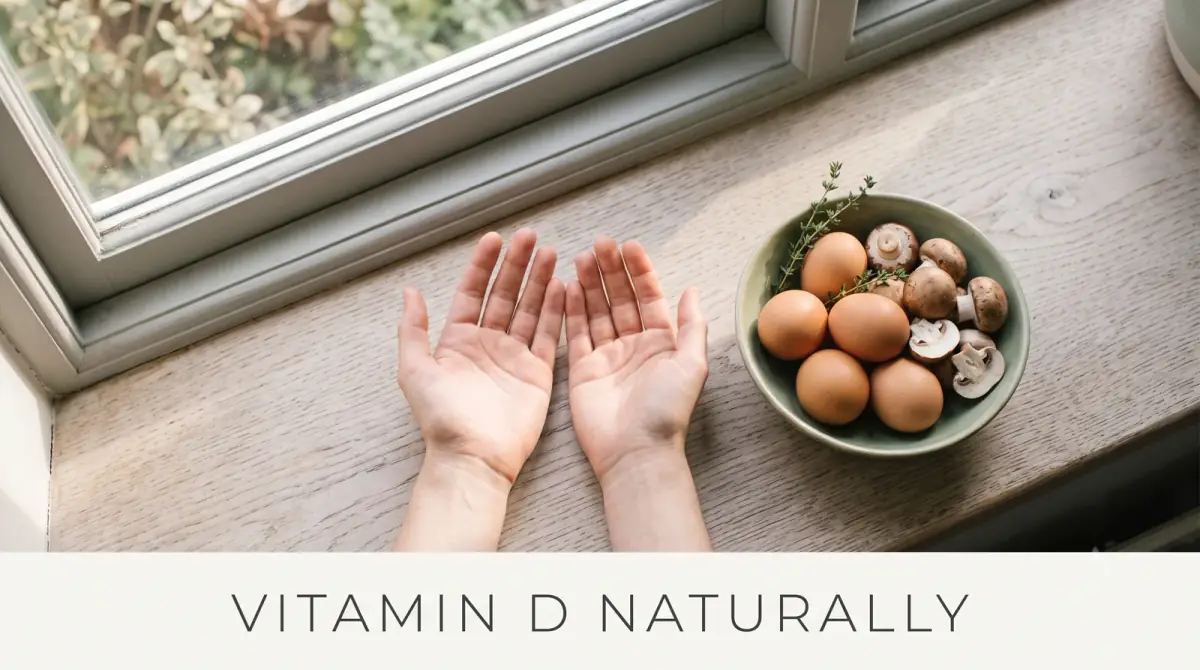
- Mushrooms: some are grown or treated with light to raise their vitamin D content.
- Fortified foods: many milks, plant drinks, cereals, and spreads have vitamin D added. Check the label.
Building a few of these into your week adds up. A couple of servings of oily fish, eggs at breakfast, and a fortified cereal or milk can each nudge your levels in the right direction.
Daily habits that help
Beyond sun and food, a few simple habits make it easier to keep your levels steady.
- Get outside daily. Even a short walk on a bright day helps, and it lifts your mood too.
- Open up to the light when you can. If you work indoors, step out at lunch rather than staying at your desk.
- Keep vitamin D foods in your regular shop. Habits stick when the food is already in the house.
- Support absorption with a balanced diet. Vitamin D is fat soluble, so it absorbs well alongside meals that contain some healthy fat.
None of these are dramatic. That is the point. Small, repeatable actions beat occasional big efforts.
Should you take a supplement?
Sometimes natural sources are not enough, and a supplement is a sensible option, particularly through winter or if you get little sun. In many places, health authorities suggest that a lot of people consider a vitamin D supplement during the darker months.
A few points to keep in mind:
- More is not always better. Very high doses over time can cause harm, so follow the guidance on the label or from a professional.
- Look for the form usually called vitamin D3, which the body uses readily.
- A blood test can tell you whether you are actually low, which takes the guesswork out.
If you are unsure how much to take, or you have a health condition, are pregnant, or take other medications, ask a doctor or pharmacist. This article is general information, not personal medical advice.
Who is most at risk of running low
Some people are more likely to fall short and may need to pay closer attention. It helps to know if you are in one of these groups.
- People who spend most of their time indoors, including many office and shift workers.
- Those who live far from the equator, where winter sun is weak for months.
- People with darker skin, which makes vitamin D more slowly from the same sun.
- Older adults, whose skin makes less vitamin D than it used to.
- Anyone who keeps most of their skin covered when outdoors.
If a few of these describe you, food and a winter supplement matter more, and a check with your doctor is worth considering.
When to seek advice
See a professional if you have ongoing tiredness, bone or muscle pain, frequent illness, or low mood that will not lift. These can have many causes, and a simple blood test can check your vitamin D level. Getting the right answer beats guessing.
Key takeaways
- The best way to increase vitamin D naturally is sensible sunlight plus vitamin D rich foods.
- Short, regular sun exposure without burning is the natural starting point.
- Oily fish, egg yolks, mushrooms, and fortified foods are your main food sources.
- In dark months or with little sun, a supplement can help, but do not overdo it.
- A blood test and professional advice take the guesswork out if you suspect you are low.
Raising your vitamin D is rarely complicated. A bit more time outside, a few smart food choices, and a supplement when needed will usually do the job. Start small, stay consistent, and let the sunshine vitamin do its work.




Comments
0 total