
The short answer
They sound like the same thing, but they are not. Learn the simple difference between vitamins and minerals, what each one does, and why your body needs both.
- Vitamins come from living things; minerals come from the earth.
- Both are needed in small amounts, but they are not the same thing.
- Vitamins are grouped as fat-soluble or water-soluble.
- Minerals include things like calcium, iron, and potassium.
- A varied, balanced diet usually covers most of what you need.
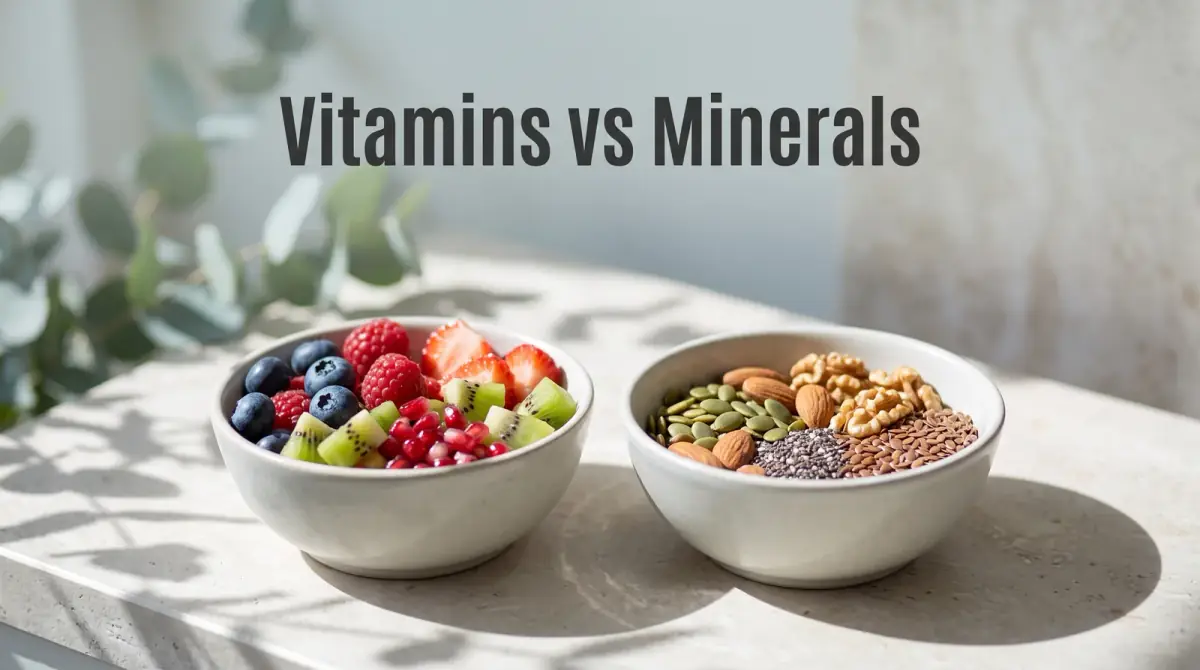
Vitamins vs minerals: what is the actual difference? In short, vitamins are made by living things like plants and animals, while minerals come from the earth, such as soil and water. Both are nutrients your body needs in small amounts, but they are not the same thing. Your body relies on both to work properly.
We tend to say vitamins and minerals in one breath, as if they were identical. They are closely related teammates, but they play different roles. Here is a simple guide to how they differ and why both matter.
Key takeaways
- Vitamins come from living things; minerals come from the earth.
- Both are needed in small amounts, but they are not the same thing.
- Vitamins are grouped as fat-soluble or water-soluble.
- Minerals include things like calcium, iron, and potassium.
- A varied, balanced diet usually covers most of what you need.
Vitamins vs minerals: the core difference
The simplest way to remember vitamins vs minerals is where they come from. Vitamins are organic, meaning they are produced by living things. Fruits, vegetables, and animal foods are packed with them.
Minerals are inorganic. They start in the soil and water, then move into plants and the animals that eat those plants. When you eat those foods, the minerals pass to you.
There is another quiet difference. Minerals hold their structure, but vitamins are more fragile. Heat, light, and air can break some vitamins down, which is why long cooking or old produce can lose them.
Neither group is more important than the other. They are partners, and your body needs a steady supply of both to function at its best.
What are vitamins?
Vitamins are nutrients your body needs to grow, heal, and turn food into energy. You need them in tiny amounts, but they do heavy lifting behind the scenes.
It helps to know how vitamins are classified. They fall into two main groups:
- Fat-soluble vitamins (A, D, E, and K) dissolve in fat. Your body can store them for later, so you do not need them every single day.
- Water-soluble vitamins (the B vitamins and vitamin C) dissolve in water. Your body does not store much, so you need them regularly.
That storage difference matters. Because water-soluble vitamins are not stored well, topping them up through daily food is important. Any extra usually leaves your body rather than building up.
This is also why a varied diet is more forgiving than it sounds. If you miss a nutrient one day, a different meal the next can quietly make up for it, as long as your overall pattern is reasonable. Your body is built to smooth out small day-to-day gaps.
What are minerals?
Minerals are elements from the earth that your body uses for structure and countless everyday processes. Think of calcium for your bones or iron for your blood.
They usually split into two groups by how much you need:
- Major minerals, such as calcium, potassium, sodium, and magnesium. You need these in larger amounts.
- Trace minerals, such as iron, zinc, and iodine. You need only tiny amounts, but they still matter a great deal.
Because minerals are sturdy, they survive cooking better than many vitamins do. They will not be destroyed by heat the way a delicate vitamin can be.
That is one reason a broth, or the water from cooked vegetables, can still carry useful minerals even when some vitamins have faded.
Is vitamins and minerals the same thing?
People often ask, is vitamins and minerals the same thing? The answer is no, even though they work side by side. They differ in origin, in structure, and in how your body handles them.
The easiest memory trick: vitamins come from things that were once alive, while minerals come from rocks and soil. Same team, different players. Both belong to a wider group called micronutrients, which simply means nutrients you need in small amounts.
Why both vitamins and minerals matter
Understanding why vitamins are important is easy once you see what they do. They support your immune system, energy, skin, vision, and healing, among many other jobs.
Minerals are just as vital. They build bones and teeth, carry oxygen, steady your heartbeat, and help nerves and muscles work. Without them, the body simply cannot run.
Here is the key point. Vitamins and minerals often work together. For example, your body uses vitamin D to help absorb calcium. Miss one, and the other cannot do its job well. That is why balance beats obsessing over any single nutrient.
Iron offers another example. Pairing iron-rich foods with a little vitamin C can help your body take in more of that iron. The pieces fit together, which is part of why a mixed diet works so well.
How to get enough of both
For most people, food is the best source. A varied, colorful diet covers the bases without much fuss.
- Eat a range of fruits and vegetables in different colors.
- Include whole grains, beans, nuts, and seeds.
- Add lean proteins and, if you eat them, dairy or fortified alternatives.
- Do not overcook vegetables, since gentle cooking preserves more vitamins.
Variety is the real secret. Different foods carry different nutrients, so mixing it up naturally fills the gaps. No single food has everything your body needs.
Falling short over time can show up as vague signs like tiredness, weakness, or getting sick more easily. These symptoms have many causes, so they are not proof of a deficiency on their own. Still, a steadily poor diet raises the odds.
Frozen fruits and vegetables count too, and they are often just as nutritious as fresh. They can be a budget-friendly way to keep variety on the table all year round.
Do you need supplements?
Supplements can help in specific situations, such as a diagnosed deficiency or certain life stages. But they are not a free pass, and more is not always better. Some vitamins and minerals can cause harm in high doses.
This is general information, not medical advice. Before starting a supplement, talk with a doctor or registered dietitian, especially if you are pregnant, take medication, or have a health condition. They can test for real gaps and guide you safely.
So, vitamins vs minerals: same goal, different origins and roles. Vitamins come from living things and can be fragile, while minerals come from the earth and are sturdier. Your body needs both, working together, to stay healthy. Focus on a varied diet, and you will likely give both what they need.



Comments
0 total