
The short answer
A practical, grocery-list guide to the best anti-inflammatory foods and drinks, what inflammation does to your body, and how to build a plate that helps you cool down.
- Oily fish like salmon, sardines, and mackerel for omega-3 fats.
- Leafy greens and colorful vegetables such as spinach, kale, broccoli, and peppers.
- Berries and other whole fruit for natural antioxidants.
- Extra-virgin olive oil, nuts, and seeds for healthy fats.
- Beans, lentils, and whole grains for fiber.
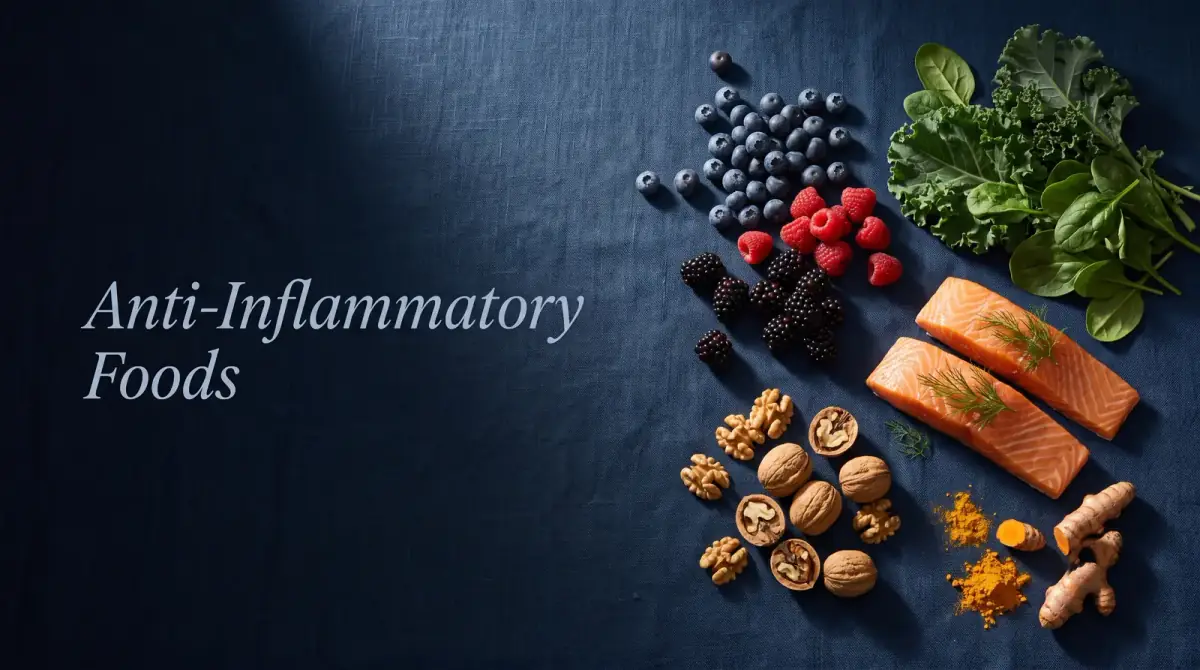
The best anti-inflammatory foods are mostly whole, colorful, and barely processed: oily fish, leafy greens, berries, olive oil, nuts, beans, and spices like turmeric and ginger. Eat more of these and cut back on ultra-processed food and added sugar, and your body has less to fight against day to day. No single meal is magic, but a steady pattern of good choices adds up over weeks and months.
Think of this as a grocery list, not a strict diet. You do not have to overhaul everything at once. Swapping in a few of these foods each week is enough to start.
Quick answer: what to reach for
- Oily fish like salmon, sardines, and mackerel for omega-3 fats.
- Leafy greens and colorful vegetables such as spinach, kale, broccoli, and peppers.
- Berries and other whole fruit for natural antioxidants.
- Extra-virgin olive oil, nuts, and seeds for healthy fats.
- Beans, lentils, and whole grains for fiber.
- Green tea, water, and turmeric or ginger drinks to sip through the day.
What inflammation does to the body
Inflammation is your body's repair crew. When you cut your finger or fight off a cold, your immune system floods the area with cells and chemicals to heal it. That short-term response is a good thing, and you want it.
The trouble starts when inflammation never fully switches off. Understanding what inflammation does to the body over the long run helps explain why food matters here. Low-grade, constant inflammation is linked with several long-term health problems and can leave you feeling tired, achy, or generally run down.
Food is not the only factor. Sleep, stress, movement, and smoking all play a part. But what you eat is something you touch three times a day, so it is a sensible place to start.
The best anti-inflammatory foods to fill your cart
Here are the best inflammation reducing foods, grouped the way you might shop for them. You do not need every item. Pick a few from each group and rotate them.
Vegetables and fruit
Aim for color. Deep greens, red and orange peppers, tomatoes, beets, and berries all carry natural plant compounds that support a calmer immune response. Frozen counts, and it is often cheaper, so keep a bag or two on hand.
A simple rule: try to make vegetables half of your plate at lunch and dinner. That one habit crowds out a lot of less helpful food without any counting.
Healthy fats
Not all fat is a problem. Extra-virgin olive oil, avocados, nuts, and seeds provide fats that your body uses in a helpful way. Oily fish deserves its own mention because of its omega-3 content, which is one of the most studied nutrients for calming inflammation.
If fish is not your thing, walnuts, chia seeds, and ground flaxseed offer plant-based omega-3s. They are easy to stir into oatmeal or yogurt.
Beans, whole grains, and fiber
Fiber feeds the good bacteria in your gut, and a healthier gut tends to mean a calmer immune system. Beans, lentils, oats, brown rice, and whole-grain bread all help. Swapping white grains for whole grains is a small change with a real payoff.
Herbs and spices
Turmeric, ginger, garlic, cinnamon, and rosemary do more than add flavor. Turmeric in particular is a favorite for its active compound, and it works best paired with a little black pepper and fat. Season generously; it is a free upgrade.
The best inflammation drink options
What you sip matters too. The best inflammation drink is not fancy or expensive. Plain water is the foundation, since even mild dehydration makes you feel worse.
- Green tea is rich in plant compounds and makes an easy daily habit.
- Ginger or turmeric tea, made with fresh root or a warm spiced milk, is soothing and simple.
- Tart cherry juice is popular after exercise, though keep an eye on sugar.
- A berry-and-spinach smoothie blends several of the best foods into one glass.
On the flip side, sugary sodas, energy drinks, and heavy alcohol tend to push in the wrong direction. You do not have to quit them forever, but treating them as occasional rather than daily helps.
Foods that quietly fuel inflammation
Adding good foods is only half the picture. It also helps to ease off the ones that tend to stoke inflammation. The usual suspects are:
- Ultra-processed snacks and fast food
- Sugary drinks and lots of added sugar
- Refined white bread, pastries, and many packaged baked goods
- Processed and heavily charred meats
- Deep-fried foods and some heavily refined oils
You do not need to be perfect. A slice of birthday cake will not undo a good week. It is the everyday pattern that counts, not the occasional treat.
How to build an anti-inflammatory plate
Picturing a plate makes this easy to remember. Fill half with vegetables and fruit, a quarter with a protein like fish, beans, or chicken, and a quarter with a whole grain. Add a drizzle of olive oil and a handful of herbs or spices.
A few sample meals:
- Baked salmon, roasted broccoli, and brown rice with a squeeze of lemon.
- Lentil soup with spinach, garlic, and a slice of whole-grain bread.
- Greek yogurt with berries, walnuts, and a sprinkle of cinnamon.
Start with one swap this week. Maybe it is berries instead of a pastry, or olive oil instead of butter. Small changes are the ones that stick.
A realistic word on results
Food can support how you feel, but it is not a cure, and results vary from person to person. Some people notice more energy or less stiffness within a few weeks; others see subtler, slower changes. Experts generally agree that an overall eating pattern matters more than any single superfood.
This article is general information, not medical advice. If you have ongoing pain, swelling, or a diagnosed condition, or you take medication, talk with a doctor or a registered dietitian before making big changes. They can tailor advice to you, which a grocery list never can.
The good news is that the best anti-inflammatory foods are the same ones that support your heart, gut, and energy. Eat more color, more fiber, and more real food, and the rest tends to follow.

Comments
0 total