
The short answer
Racing heart, tight chest, spinning thoughts. Here is what an anxiety attack feels like in body and mind, why it happens, and calm, practical ways to ride the wave.
- Racing or pounding heart
- Tight chest or trouble catching your breath
- Shaky hands, sweating, or chills
- Dizziness or a lightheaded, unreal feeling
- Racing, looping thoughts and a sense of dread
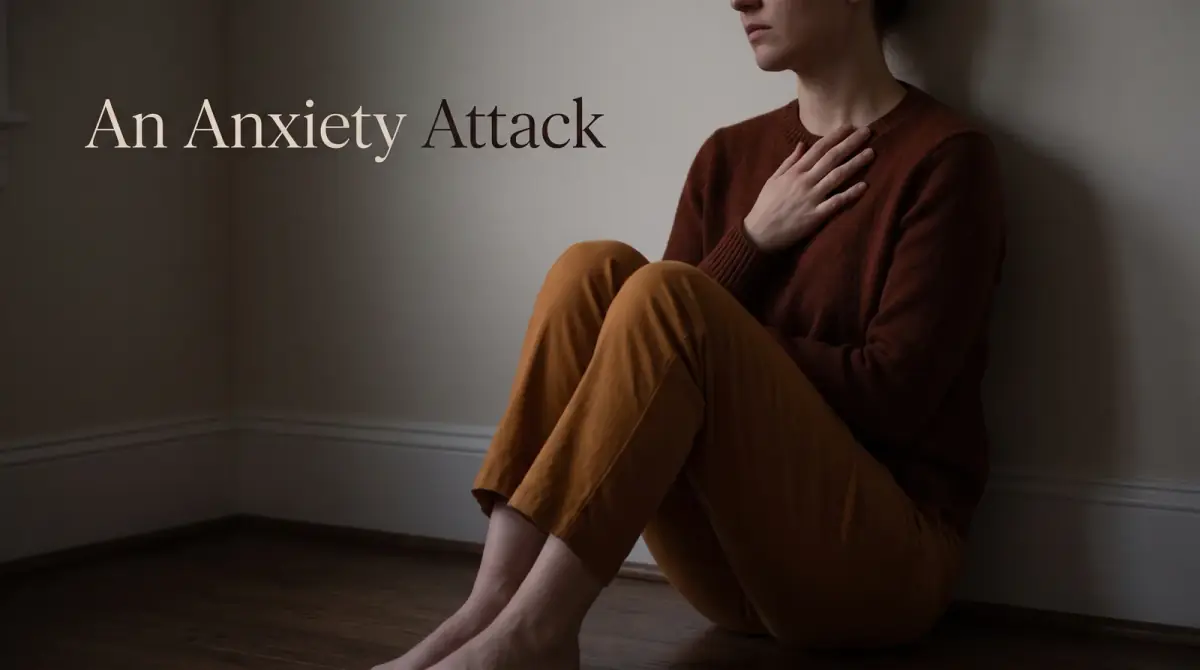
An anxiety attack often feels like a sudden wave of intense fear, with a racing heart, tight chest, shaky hands, and thoughts that spin out of control. It can feel like something is badly wrong with your body, even when you are physically safe. That is exactly what an anxiety attack feels like for many people, and it is far more common than you might think.
The reassuring part is that the feeling usually peaks and then fades. It is deeply unpleasant, but it is not dangerous on its own, and there are calm ways to ride it out.
Quick answer: common signs
- Racing or pounding heart
- Tight chest or trouble catching your breath
- Shaky hands, sweating, or chills
- Dizziness or a lightheaded, unreal feeling
- Racing, looping thoughts and a sense of dread
- A strong urge to escape, or that you cannot cope
What an anxiety attack feels like in your body
The physical side often hits first. Your heart may pound or race. Your chest can feel tight, and your breathing may turn fast and shallow.
Other signs show up too. Sweaty palms, trembling hands, a churning stomach, or a wave of heat or cold. Some people feel dizzy, tingly, or strangely detached, as if the world is not quite real.
These sensations can be scary because they mimic other problems. Many people worry they are having a heart problem the first time. That fear is understandable, and it is also part of what fuels the attack.
What an anxiety attack feels like in your mind
The mental side runs alongside the physical. Your thoughts may race and loop, jumping to worst-case scenarios. It can feel like you have lost control, or that something terrible is about to happen.
Many people describe a strong urge to escape the room, the meeting, or the situation. Others feel frozen and unable to speak. There is no single correct way it shows up.
Understanding how an anxiety attack feels like this, both body and mind at once, helps explain why it is so overwhelming. The two feed each other in a loop.
What anxiety feels like versus a panic attack
People often ask how everyday anxiety differs from an attack. In plain terms, what anxiety feels like day to day is more of a background hum: tension, worry, restlessness, or trouble switching off.
An attack is that dial turned way up, fast. Some people use anxiety attack and panic attack to mean similar things. A panic attack tends to be a sudden, intense surge that peaks within minutes.
The labels matter less than what you feel. If a wave of fear hits hard and fast, the calming steps below apply either way.
Why anxiety happens
It helps to know why anxiety happens in the first place, because the reason is not a flaw in you. Anxiety is your body's alarm system doing its job, just at the wrong moment.
When your brain senses a threat, it triggers a fight-or-flight response. Stress hormones surge, your heart speeds up, and your breathing quickens to prepare you to act. This is brilliant if you face real danger.
The trouble is that this alarm can fire when there is no physical threat, only stress, pressure, or worry. Your body reacts as if you must run, even while you sit still at your desk. That mismatch is the attack.
An anxiety attack is a smoke alarm going off when there is no fire. Loud, but not proof of danger.
How to ride out an anxiety attack
When one hits, your aim is not to fight the feeling but to let it pass. Struggling against it often makes it louder. Try these steps.
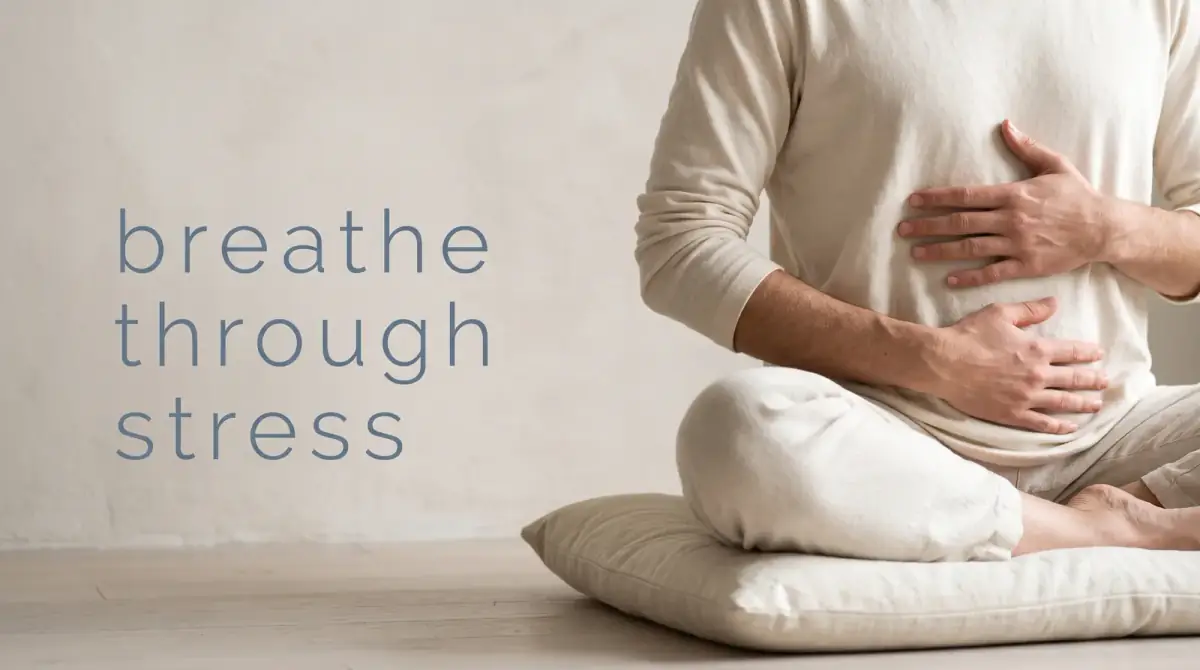
- Slow your breath. Breathe out for longer than you breathe in. A slow out-breath signals safety to your body.
- Name what is happening. Tell yourself this is anxiety, and it will peak and pass. Naming it lowers its power.
- Ground yourself. Notice five things you can see, four you can hear, and so on. This pulls you back to the present.
- Drop your shoulders. Unclench your jaw and hands. Softening your body eases the loop.
- Wait it out. Remind yourself the peak is short. You do not have to fix it, only outlast it.
You will not do these perfectly in the moment, and that is fine. Even remembering one of them helps.
How long does an anxiety attack last?
This varies, but the most intense part is usually short. Many attacks peak within several minutes and then start to ease, even though the shaky aftermath can linger for a while.
Knowing this can help in the moment. When the fear whispers that it will never stop, you can gently remind yourself that the peak passes. You are waiting out a wave, not facing a permanent state.
Afterward, be kind to yourself. You may feel drained or shaky for a bit, which is normal. A glass of water, some fresh air, and a slower pace can help you recover.
Steadying yourself between episodes
What you do on calm days shapes how often attacks show up. A few gentle habits build a steadier baseline.
- Keep sleep fairly regular, since tiredness lowers your buffer.
- Move your body most days, even a short walk.
- Go easy on caffeine and alcohol, which can both stir anxiety.
- Practice slow breathing when you are calm, so it is easier under pressure.
- Talk to someone you trust rather than carrying it alone.
Results vary from person to person, and progress is rarely a straight line. Be patient with yourself as you learn what settles you.
When to reach out for help
This is general information, not medical advice. Anxiety attacks are common and treatable, and asking for help is a sign of strength, not weakness.
Speak with a doctor or a mental health professional if attacks happen often, if you start avoiding places or people because of them, or if they interfere with work, sleep, or relationships. Effective support exists, from talking therapies to other options a professional can explain.
Two more things. If you ever have chest pain you are unsure about, get it checked, because it is better to be safe. And if you have thoughts of harming yourself, reach out to a crisis line or emergency services right away.
Knowing what an anxiety attack feels like takes some of its power away. It is loud and frightening, but it passes, and you do not have to face it alone.
Comments
0 total