
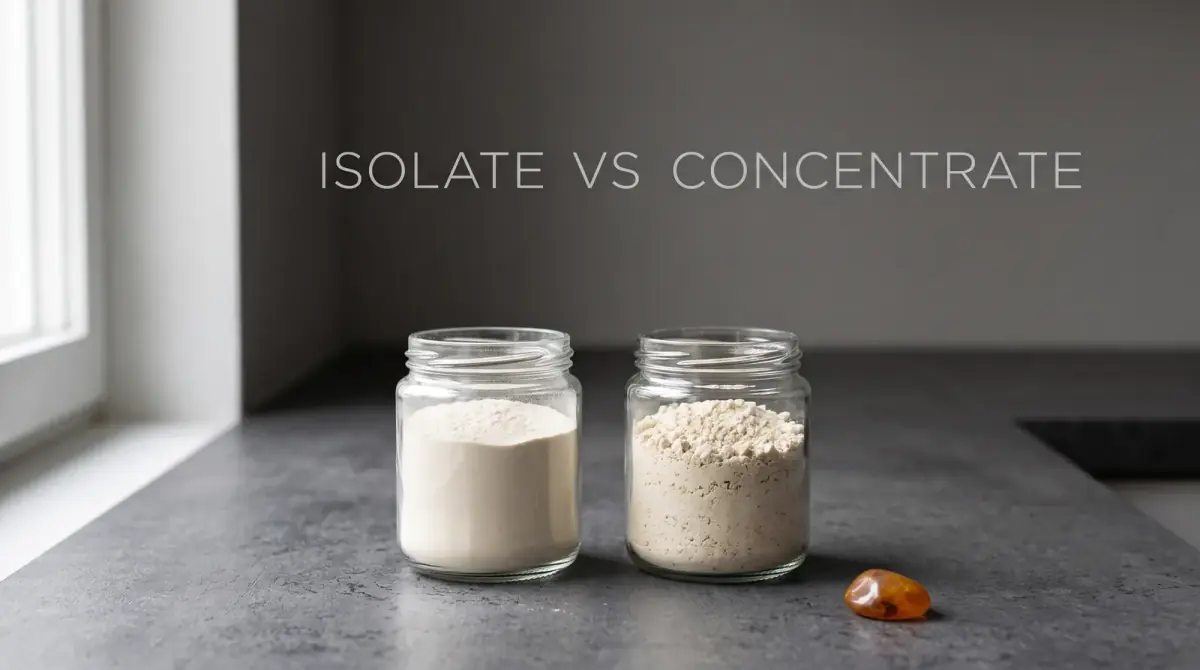
The short answer
Whey isolate is more filtered, higher in protein, and lower in carbs and fat. Concentrate is cheaper and richer in taste. Here is how to pick the right one.
- Whey concentrate: filtered less, so it keeps more of the natural carbs and fat from milk.
- Whey protein isolate: filtered more, stripping out most of the carbs, fat, and lactose to leave a higher share of pure protein.
The short version: whey protein isolate is filtered further than concentrate, so it packs more protein per scoop with less carbohydrate, fat, and lactose. Concentrate keeps a little more of those, which makes it cheaper and often creamier. Both build the same muscle. The right one depends on your budget, your stomach, and your goals.
If you have ever stood in the supplement aisle wondering why two tubs of the same brand cost so differently, this is usually the answer. Let us break down what actually separates them so you stop guessing at the label.
How protein powder is made
To understand the difference, it helps to know how protein powder is made. Whey is the liquid left over when milk is turned into cheese. On its own it is mostly water with some protein, lactose, fat, and minerals mixed in.
That liquid is dried and filtered to concentrate the protein. How far the makers push the filtering is what creates the two types you see on shelves.
- Whey concentrate: filtered less, so it keeps more of the natural carbs and fat from milk.
- Whey protein isolate: filtered more, stripping out most of the carbs, fat, and lactose to leave a higher share of pure protein.
That extra processing is why isolate costs more. You are paying for the additional filtering steps.
Whey protein isolate vs concentrate at a glance
Here is the practical comparison, without the marketing spin.
Protein per scoop
Isolate has a higher protein percentage, often noticeably so. Concentrate still delivers plenty of protein, just with a bit more of everything else alongside it. If you count every gram of protein per scoop, isolate wins narrowly.
Carbs, fat, and lactose
Concentrate holds onto more carbs and fat, including more lactose, the natural sugar in milk. Isolate removes most of it. This matters most if you are watching carbs closely or your stomach reacts to dairy.
Digestion
Because isolate contains less lactose, some people find it easier on the stomach. If concentrate leaves you bloated or gassy, isolate is worth trying before you give up on whey entirely.
Taste and texture
The leftover fat and carbs in concentrate tend to make it taste richer and blend creamier. Many people simply prefer how it drinks. Isolate can feel a touch thinner, though good brands taste great either way.
Cost
Concentrate is usually the cheaper option, sometimes by a fair margin. For most everyday users, that value is hard to argue with.
Which one is the best protein powder for you?
There is no single best protein powder for everyone. The best one is the type that fits your goals and that you will actually enjoy drinking. Use these simple guides.
- On a budget or new to protein: concentrate gives you solid protein for less money. A great starting point.
- Watching carbs, fat, or calories closely: whey protein isolate keeps the numbers lean.
- Sensitive to lactose: isolate is often gentler, though not lactose free unless the label says so.
- Chasing maximum protein per scoop: isolate edges it out.
- Prioritizing taste and creaminess: many people prefer concentrate.
You do not have to pick a side forever. Plenty of people keep a tub of concentrate for daily shakes and reach for isolate only when they want to keep calories tight.
Is protein powder good for health?
People often ask, is protein powder good for health, and the honest answer is that it is a convenient food, not a magic one. Protein itself is essential. It helps repair muscle, keeps you full, and supports your body in countless ways. Powder is just an easy way to get more of it when whole food is not handy.
For most healthy adults, a scoop or two a day fits comfortably into a balanced diet. It is not a requirement, though. You can hit your protein needs with food alone. Powder simply makes it easier, especially around workouts or busy mornings.
A few sensible cautions apply. Quality varies between brands, so look for clear labels and third-party testing where you can. If you have kidney trouble, are pregnant, or have any medical condition, check with a doctor before adding a supplement. And remember that no powder replaces a diet built mostly on real food.
Are there other types of whey?
You may also spot whey protein hydrolysate on shelves. This is whey that has been partly broken down to absorb faster, and it usually costs the most. For everyday lifters, the difference is small enough that isolate or concentrate covers almost every need.
There are also plant-based powders like pea, soy, and rice protein for anyone avoiding dairy. They work differently, but they are a solid route if whey does not agree with you.
How to use whey protein
Once you have picked a type, using it is simple. Both isolate and concentrate mix the same way and fit the same moments in your day.
- After a workout: a shake gives your muscles protein when they are ready to use it, though the exact timing matters less than most ads suggest.
- As a quick breakfast: blend a scoop with milk, fruit, and oats when you are short on time.
- To fill a gap: if a meal runs light on protein, a shake tops you up.
You do not need to chase a magic window. What counts most is getting enough total protein across the whole day. A shake is just one easy way to help you reach that number.
How much do you actually need?
Most healthy adults do well spreading protein across their meals, with a scoop or two of powder filling any gaps. You rarely need more than that. Piling on extra scoops will not build muscle faster, and it can crowd out other foods your body needs. More is not better here.
The bottom line
- Whey protein isolate is more filtered, higher in protein, and lower in carbs, fat, and lactose.
- Concentrate keeps more of those, which makes it cheaper and often tastier.
- Both support muscle and recovery equally well.
- Choose isolate for lean numbers or a sensitive stomach, concentrate for value and flavor.
- Protein powder is a helpful convenience, not a replacement for a balanced diet.
Do not overthink it. Pick the type that matches your budget and sits well with your stomach, get enough total protein across the day, and you are set. The tub you finish beats the fancy one gathering dust in the cupboard.


Comments
0 total