
The short answer
Discover gentle yoga poses for back pain relief that stretch, strengthen, and soothe your back, with simple steps you can do at home.
- Move slowly and stay in control of every transition.
- Breathe deeply and never hold your breath during a stretch.
- Stop at sharp pain. Mild stretching is fine, but pain is a signal to back off.
- Use props like a folded blanket or cushion for comfort and support.
- Warm up first with gentle movement before deeper stretches.
Yoga poses for back pain relief can gently stretch tight muscles, strengthen the ones that support your spine, and ease the tension that builds up from sitting all day. When practiced slowly and mindfully, yoga is one of the most accessible ways to soothe a sore back at home. The key is to move gently, breathe deeply, and never push into sharp pain.
Most everyday back discomfort comes from tightness, weak core muscles, and poor posture rather than serious injury. Yoga addresses all three. Below are gentle, beginner-friendly poses you can weave into a short daily routine.
Can yoga really help with back pain?
Yes, gentle yoga can be a helpful tool for many kinds of common back pain. It improves flexibility in the hips and spine, builds the core and back strength that supports good posture, and encourages relaxation, which eases muscle tension. Moving your body gently is often far better for a stiff back than staying completely still.
That said, yoga is not a cure for every problem. If your pain is severe, follows an injury, or comes with numbness, weakness, or tingling down your legs, see a healthcare professional before starting any routine.
What are the best gentle yoga poses for back pain?
These poses focus on gentle stretching and gradual strengthening. Move into each one slowly, hold only as long as it feels comfortable, and let your breath guide the pace.
Cat-Cow Stretch
This gentle flow warms up the spine and relieves stiffness. Start on your hands and knees. As you inhale, drop your belly and lift your gaze, arching gently. As you exhale, round your back toward the ceiling and tuck your chin. Flow slowly between the two for several breaths.
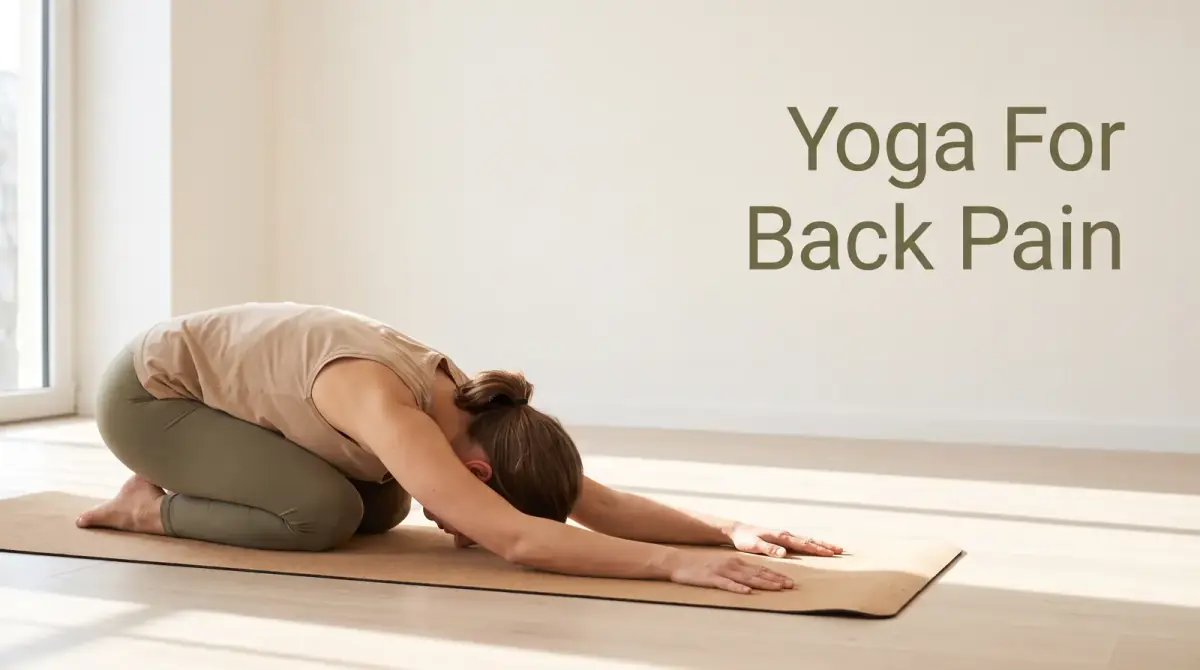
Child's Pose
A restful stretch for the lower back and hips. From your hands and knees, sit your hips back toward your heels, extend your arms forward, and rest your forehead on the floor. Breathe slowly and let your back release with each exhale. This is a great pose to return to any time you need to rest.
Knees-to-Chest
Lie on your back and gently draw both knees toward your chest, holding them with your hands. This eases tension in the lower back. You can hold still or rock slightly side to side for a soothing massage along your spine.
Supine Spinal Twist
Lying on your back, bring one knee across your body toward the floor while keeping your shoulders down. Turn your head the opposite way if it feels comfortable. This gentle twist releases the lower back and hips. Repeat on both sides.
Sphinx Pose
Lie on your stomach with your forearms on the floor and elbows under your shoulders. Gently lift your chest, keeping your neck long and shoulders relaxed. This mild backbend can help strengthen the lower back gradually. Ease off if you feel any pinching.
Bridge Pose
Lie on your back with knees bent and feet flat. Press through your feet and lift your hips, engaging your glutes and core. This strengthens the muscles that support your spine. Lower slowly and repeat a few times.
The goal of these poses is relief and support, not intensity. Gentle, consistent practice does far more for your back than occasional strenuous effort.
How should you practice yoga safely for back pain?
Safety matters most when your back is already sensitive. Following a few simple principles keeps your practice helpful rather than harmful.
- Move slowly and stay in control of every transition.
- Breathe deeply and never hold your breath during a stretch.
- Stop at sharp pain. Mild stretching is fine, but pain is a signal to back off.
- Use props like a folded blanket or cushion for comfort and support.
- Warm up first with gentle movement before deeper stretches.
Consistency beats intensity. A short, gentle session most days will help far more than one long, ambitious workout that leaves you sore.
How often should you do yoga for your back?
For gentle relief, even ten to fifteen minutes a day can make a noticeable difference over time. Many people find that a brief morning routine loosens overnight stiffness, while a short evening session helps release the tension built up during the day.
Listen to your body and adjust. On days when your back feels tender, favor the restful poses like Child's Pose and Knees-to-Chest. On days you feel stronger, you can add the gentle strengthening poses. Progress in yoga is patient and gradual, so give your body time.
When should you avoid yoga and see a professional?
Yoga is safe for most people with mild, everyday back discomfort, but there are times to pause and seek guidance. See a doctor or physical therapist if your pain is severe or persistent, if it started after a fall or injury, or if you experience numbness, weakness, or tingling that travels down your legs. A professional can rule out serious causes and tailor movements to your specific needs.
Otherwise, these gentle yoga poses offer a simple, natural way to care for your back. Roll out a mat, move slowly, breathe deeply, and be kind to yourself. With a little daily practice, you may find your back feeling looser, stronger, and more at ease.




Comments
0 total