
The short answer
Is the idea of learning styles a myth? We unpack what the research really shows, why matching lessons to a style fails, and the proven methods that help you learn.
- Match the method to the material. Learn geography with maps, music by listening, and a lab skill by doing it. The subject decides the best format, not your label.
- Test yourself. Recalling information from memory beats rereading it. Use flashcards or practice questions.
- Space it out. Study in shorter sessions across several days rather than cramming it all at once.
- Mix it up. Combine reading, listening, drawing, and explaining out loud. Using several senses helps ideas stick.
- Explain it simply. If you can teach an idea in plain words, you truly understand it.
Is the idea of learning styles a myth? For the most part, yes. The popular belief that each person learns best in one fixed style, and that teaching to that style boosts results, has been tested many times, and the evidence has not held up. You can have a preference for how information is presented, but matching lessons to it does not reliably help you learn more.
This surprises people because the idea feels true. Plenty of us say we are visual learners or hands-on learners, and that preference is real. What research questions is the next step, the claim that matching teaching to that label improves how much you actually learn.
What people mean by learning styles
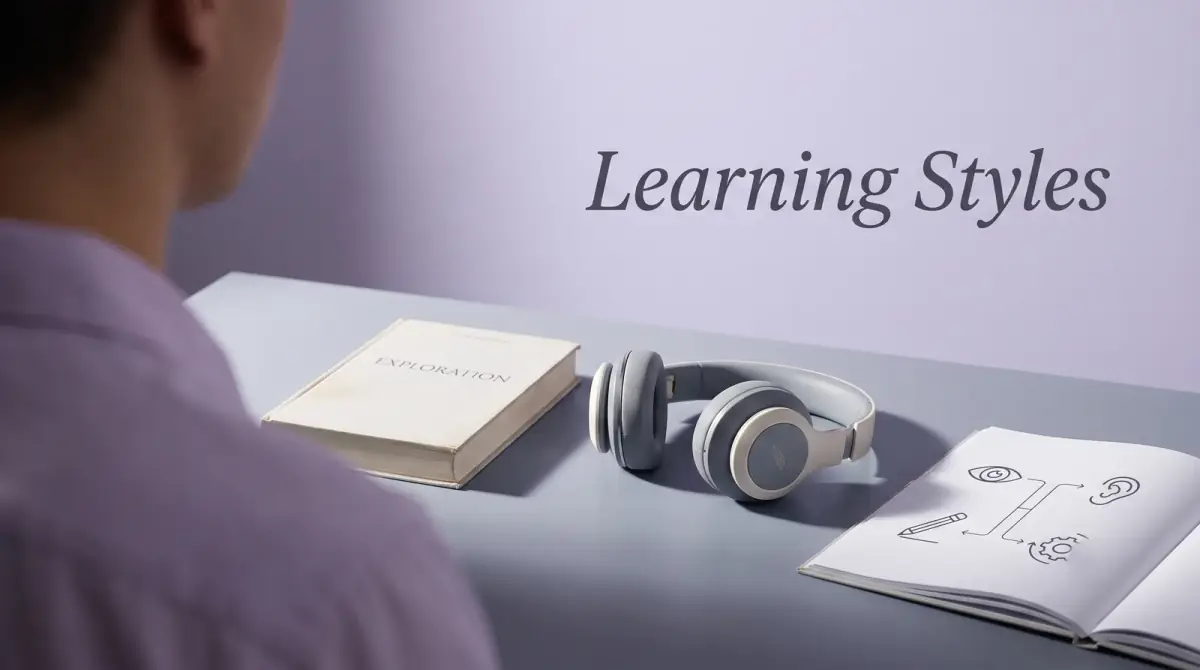
The classic version sorts people into a handful of types. You will often see four listed: visual, auditory, reading and writing, and kinesthetic, which means learning by doing. Some versions stretch the list even further. A few even claim dozens of styles, which quickly becomes impossible to test or teach to.
So how many learning styles are there? It depends who you ask, because there is no agreed master list. Different models name different styles, and that alone is an early hint that the framework is shakier than it looks.
How are learning styles a myth in practice?
Here is the core problem. For the theory to be useful, teaching someone in their preferred style should help them learn better than teaching them another way. When researchers test that directly, they generally do not find the boost the theory predicts.
People labeled as visual learners do not reliably do better with pictures than with words. The preference exists, but the payoff does not follow. That gap between what we feel and what actually helps is why so many experts now call learning styles a myth.
When were learning styles debunked?
There is no single moment you can point to. The idea has been questioned for a long time, and over the last couple of decades several major reviews of the research have concluded there is little solid evidence behind it.
Despite that, the belief is still everywhere in schools and study guides. Ideas that feel intuitive are sticky, even after the evidence turns against them. So while you will not find one clean debunking date, the expert consensus has leaned away from learning styles for years.
Why the myth feels so convincing
A few things keep this idea alive. It is simple. It flatters us with a tidy label. And it seems to match real experience, since we all have preferences.
But a preference is not the same as an advantage. You might enjoy a video more than a textbook and still remember the same amount, or even less. Liking a method and learning from it are two different things, and it is easy to confuse the two. A method can feel smooth and familiar precisely because it is not challenging you, and mild challenge is often where real learning happens.
The real risk of believing the myth
Believing you have one fixed learning style can quietly hold you back. A student who decides they are not a reader may avoid textbooks, skip written instructions, and lean only on videos, even when the written version would teach them more.
Labels can also turn into excuses. It is easy to blame a poor grade on a teacher not matching your style, rather than on a study method that never involved testing yourself. Dropping the label puts you back in charge of how you learn. That small shift in mindset can change how you approach every new subject you meet.
What actually helps you learn
Here is the good news. The methods that do work are well studied, and they help almost everyone, whatever style you think you are.
- Match the method to the material. Learn geography with maps, music by listening, and a lab skill by doing it. The subject decides the best format, not your label.
- Test yourself. Recalling information from memory beats rereading it. Use flashcards or practice questions.
- Space it out. Study in shorter sessions across several days rather than cramming it all at once.
- Mix it up. Combine reading, listening, drawing, and explaining out loud. Using several senses helps ideas stick.
- Explain it simply. If you can teach an idea in plain words, you truly understand it.
Notice that none of these depend on being a certain type of learner. They work because of how memory works, which is the same for all of us.
What to do with your own preference
You do not have to ignore what you enjoy. If diagrams keep you interested, use them. Enjoying study makes you do more of it, and doing more is what really counts.
Just do not box yourself in. Telling yourself you cannot learn from reading because you are a visual learner only limits you. The strongest learners reach for every tool, not just one, and they pick the tool that fits the task in front of them. Over time, using a wider range of methods also makes you a more flexible learner, ready for whatever a new subject throws at you.
Key takeaways
- The strong version of learning styles is largely a myth. Preferences are real, but matching lessons to them does not reliably improve learning.
- There is no fixed number of styles. Lists vary from model to model, which is a red flag on its own.
- No single date debunked the idea, but research reviews over the past couple of decades have found little support.
- Proven methods like self-testing, spacing, and matching format to the subject help everyone.
- Use your preferences to stay engaged, but do not let a label limit how you learn.
So the next time someone asks whether learning styles are a myth, you can give a fair answer. The label is fun, but the evidence points somewhere more useful. Study in the ways that are proven to work, and you will learn more no matter which style you thought was yours.



Comments
0 total