
The short answer
Want to learn like a high achiever? These study tips from top students cover planning, active recall, and simple habits you can copy to study smarter, not longer.
- Plan the session before you sit down, so you never study aimlessly.
- Quiz yourself instead of rereading notes you already recognise.
- Spread revision across days rather than cramming it into one night.
- Work in focused blocks with genuine breaks between them.
- Aim to understand ideas, not just memorise them word for word.
The best study tips from top students are not about spending more hours at your desk. They come down to studying with intention: making a plan, testing yourself instead of rereading, spacing your revision, and guarding your focus and sleep. High achievers tend to work smarter rather than longer, and almost all of their habits are simple enough for anyone to copy.
What sets strong students apart is rarely raw talent. It is usually a set of small, repeatable choices that quietly add up over a term. Below is what actually works, drawn from the habits high achievers lean on again and again.
The quick version first, then the detail:
- Plan the session before you sit down, so you never study aimlessly.
- Quiz yourself instead of rereading notes you already recognise.
- Spread revision across days rather than cramming it into one night.
- Work in focused blocks with genuine breaks between them.
- Aim to understand ideas, not just memorise them word for word.
Study tips from top students start with a plan
Strong students rarely open a book and hope for the best. They decide what they are covering and why before they begin, which turns a vague evening into a clear, doable task.
A plan does not need to be elaborate. Two minutes with a notebook is enough to name the topic, set a goal, and decide how long you will give it. That small step removes the endless dithering that eats the first half hour of most study sessions.
- Pick one or two topics per session, not the whole syllabus at once.
- Write your goal as a question you want to answer by the end.
- Keep a running list so you always know what comes next.
When you know exactly what you are doing, you spend far less time deciding and far more time actually learning.
They test themselves instead of rereading
Rereading a chapter feels productive because the words look familiar, but recognising something is not the same as remembering it. Top students close the book and force themselves to recall the material from scratch.
This is often called active recall, and it is uncomfortable on purpose. The effort of dragging an answer out of memory is exactly what makes it stick for the exam.
- Read a section, then cover it and write down what you remember.
- Turn every heading into a question and answer it from memory.
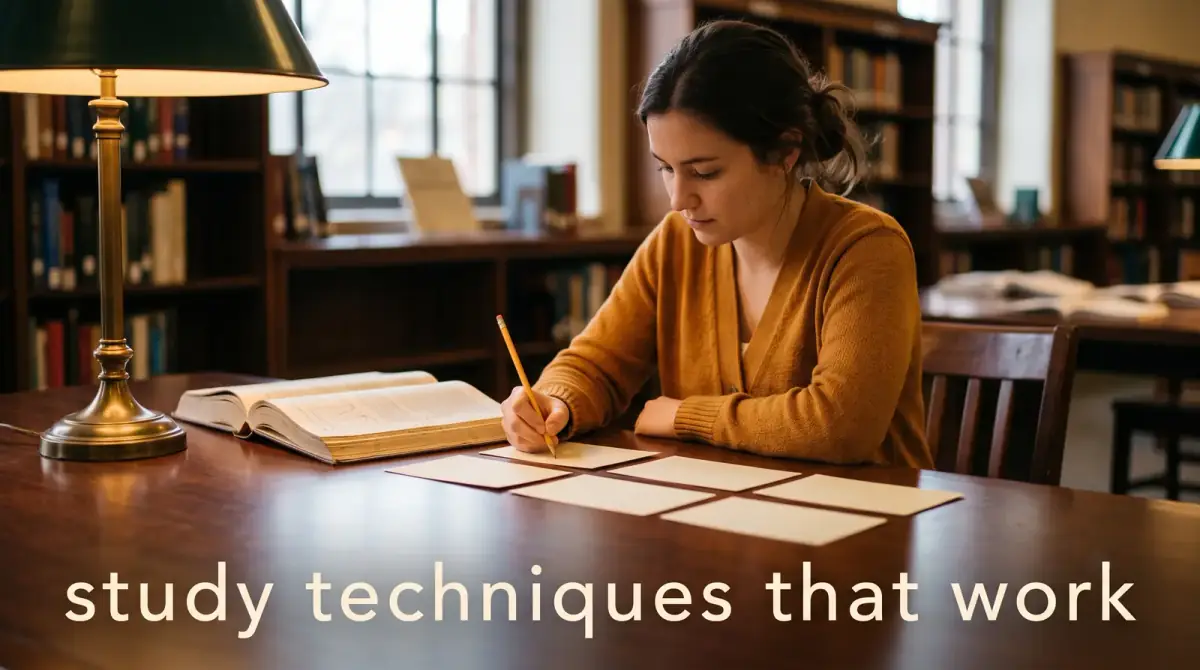
- Use flashcards and quiz yourself, rather than just flipping through them.
- Check your answers, then revisit only the parts you got wrong.
If you can explain an idea without looking, you know it. If you cannot, you have found exactly what to review next, which is useful information rather than a failure.
They space revision instead of cramming
Cramming can get you through tomorrow's test, but most of it is gone by the following week. High achievers revisit material in short bursts spread over several days.
This spacing gives your memory a chance to strengthen each time you come back to a topic. A little today, a little in a few days, a little next week beats one long, panicked night before the deadline.
The real trick is to start earlier, not to study more. Ten focused minutes on a topic three separate times will usually beat half an hour crammed into one sitting, and it feels far less stressful too.
They work in focused blocks with real breaks
Nobody concentrates well for three hours straight. Top students protect their attention by working in shorter blocks and resting properly in between.
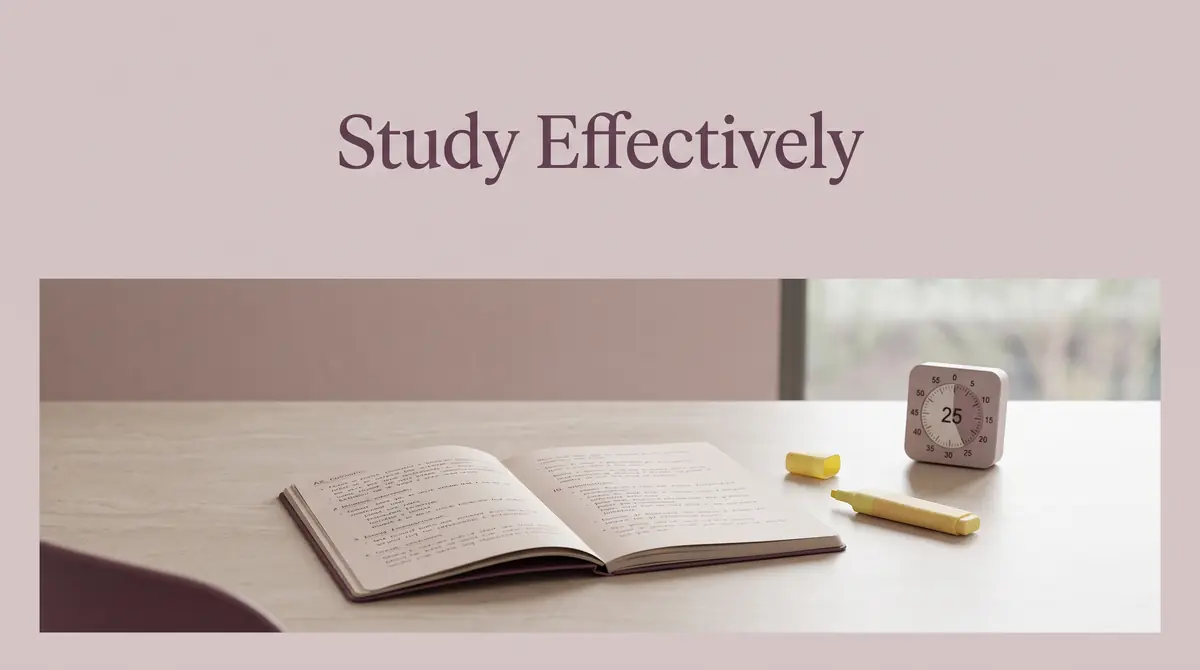
A common rhythm is around 25 to 45 minutes of focus followed by a short break, with a longer break after a few rounds. Test a couple of lengths and keep the one that leaves you sharp rather than drained.
The break matters as much as the work. Stand up, stretch, drink water, or look out a window. Scrolling your phone is not a rest for a tired brain; it simply swaps one demand for another and leaves your focus more scattered than before.
They aim to understand, not just memorise
Memorising facts without meaning is fragile. The moment a question is worded differently, the answer vanishes. Strong students dig for the reason behind the fact.
They ask why something works, how it connects to what they already know, and where it might apply in a new situation. That web of connections is far harder to forget than a single stranded fact.
If you can teach it to someone else in plain words, you truly understand it.
Explaining a topic out loud, even to an empty room, quickly exposes the gaps you would otherwise sail right past.
They ask for help early
One quiet habit of high achievers is that they do not suffer in silence. When something does not click, they ask sooner rather than later.
A confusing idea rarely fixes itself. Left alone, it tends to block everything built on top of it, so a small gap slowly becomes a large one. Asking early keeps the problem small and manageable.
- Ask your teacher a specific question rather than just saying you are lost.
- Compare notes with a classmate who explains things clearly.
- Look up a short explanation, then test whether it actually helped.
They protect sleep, food, and movement
The most underrated study tip is to look after your body. A rested brain learns faster than a tired one, no matter how many clever tricks you stack on top of it.
Top students tend to guard their sleep, especially before exams, because a full night does more for memory than one more hour of cramming. They also eat something steady rather than running on sugar, and they move a little to reset a foggy mind.
None of this is glamorous, but it is the quiet engine under every other habit on this list. Skip it, and the rest gets much harder than it needs to be.
They learn from their mistakes
Top students treat a wrong answer as a signpost, not a verdict. Instead of hiding a bad mark, they look closely at where it went wrong and why.
This turns every quiz and practice paper into a study tool. The mistakes point straight at the gaps, so the next round of revision is targeted rather than scattered.
- Go back over the wrong answers, not only the final score.
- Work out whether it was a slip, a gap, or a misread question.
- Redo that type of question until it starts to feel routine.
The bottom line
The most useful study tips from top students are refreshingly ordinary: plan the session, test yourself, space it out, take real breaks, and protect your rest. Results vary from person to person, so try a few and keep whatever fits you. Pick one habit for your next study session and build slowly from there.
Comments
0 total