

The short answer
Grades follow routines, not last-minute bursts. Learn the good study habits that make studying easier, from planning and consistency to smart breaks, and how to build them.
- A regular study time so the decision is already made for you.
- A tidy, distraction-light spot that your brain links with focus.
- Short, planned sessions instead of vague marathons.
- Active study over passive rereading.
- Breaks and rest that keep the habit sustainable.
Good study habits are the routines that make studying feel automatic instead of a nightly fight. The ones worth building are simple: study at a set time, plan what you will cover, keep sessions short and focused, and take real breaks. Grades tend to follow routines, not bursts of last-minute effort, and habits are what carry you when motivation runs low.
The good news is that habits are built, not born. You do not need willpower of steel. You need a few small routines repeated often enough that they start to run on their own.
Here is what to build, in brief:
- A regular study time so the decision is already made for you.
- A tidy, distraction-light spot that your brain links with focus.
- Short, planned sessions instead of vague marathons.
- Active study over passive rereading.
- Breaks and rest that keep the habit sustainable.
Why study habits beat bursts of motivation
Motivation is real, but it comes and goes. Some evenings you feel ready to work, and many evenings you simply do not. If your studying depends on feeling motivated, it will always be patchy.
A habit removes that daily negotiation. When studying happens at the same time in the same place, your brain stops asking whether you feel like it and just starts. That quiet consistency is what pulls ahead over a whole term.
Think of habits as a system that keeps working on the days willpower does not show up at all.
Study at the same time every day
The single most powerful study habit is a consistent time. When study slots into your day like a fixed appointment, you stop wasting energy deciding when to start.
Look at your week and find realistic windows. Maybe it is right after school, or the quiet hour after dinner. What matters is that it repeats until it stops feeling like a decision.
- Attach study to something you already do, such as a meal or your journey home.
- Start small, even 20 to 30 minutes, so the habit is easy to keep.
- Keep the same slot for at least a couple of weeks before judging it.
Miss a day? That is normal. Just return the next day without turning one slip into a reason to quit the whole thing.
Build a space that signals focus
Where you study shapes how well you study. A cluttered, noisy spot pulls your attention everywhere, while a simple one lets your mind settle into the task.
Try to keep one place mainly for studying. Over time your brain links that spot with focus, and settling in gets easier each session. A consistent corner of a table works just as well as a dedicated desk.
Before you start, clear away anything unrelated and put your phone in another room. Having water, pens, and materials ready means you are not popping up every few minutes and breaking your own concentration.
Plan short, focused sessions
Long open-ended study time sounds serious but usually turns foggy. A strong habit is to plan a short session with a clear goal, then stop when it is done.
Decide what you are covering before you sit down, and phrase it as something you can finish. "Learn these ten terms" beats "study biology" because you can actually complete it and feel the win.
- Name one or two topics for the session.
- Set a length that keeps you sharp, often 25 to 45 minutes.
- Take a short break, then decide whether to run another block.
Finishing a small session on a high note makes you far more willing to come back and do it again tomorrow.
Make studying active, not passive
A habit is only as good as what you do inside it. Rereading notes for an hour feels like studying but teaches your brain very little. Active habits do the heavy lifting.
Build the routine of closing the book and testing yourself. Write what you remember, turn headings into questions, or explain the idea out loud as if teaching a friend.
This effort feels harder than rereading because it is harder, and that difficulty is exactly what moves the material into lasting memory.
Use breaks and rest to keep it sustainable
A study habit that burns you out will not last, so rest is part of the routine, not a reward for finishing it. Short breaks between blocks keep your focus fresh.
During a break, step away from screens. Stretch, walk, or look out a window for a moment so your mind genuinely resets rather than trading one screen for another.
Sleep is the biggest habit of all. A tired brain cannot hold on to what it studies, so protecting a full night's rest quietly powers every other habit on this list.
How to start a new study habit and make it stick
New habits fail when we try to change everything at once. The trick is to start almost embarrassingly small and let the routine grow on its own.
- Pick one habit to build first, not five.
- Make it tiny enough that skipping it feels silly.
- Attach it to an existing part of your day so you remember it.
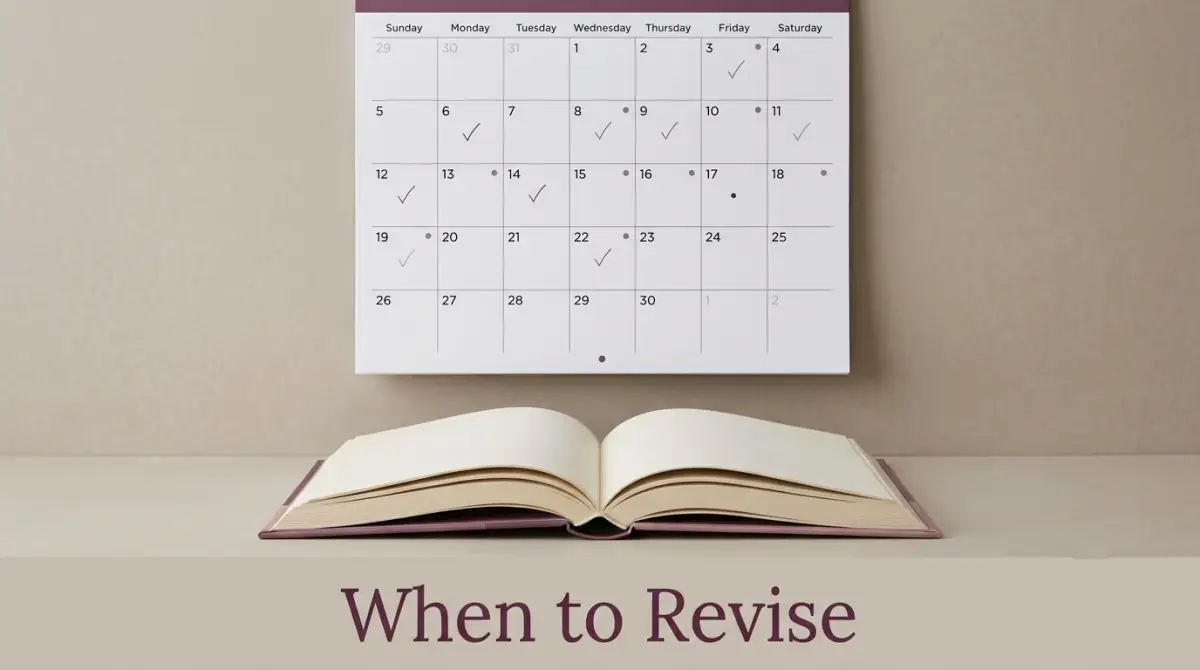
- Track it simply, even a tick on a calendar, to watch the streak grow.
Give any new routine a few weeks before you judge it. Early on it takes effort, but repetition slowly turns that effort into something closer to automatic.
Review and adjust your habits
No routine is perfect on the first try, so treat your study habits as something you tune rather than set in stone. Every couple of weeks, notice honestly what is working and what keeps slipping.
Maybe your evening slot keeps getting swallowed by tiredness, or one subject always needs more time than you give it. Small adjustments keep a routine alive instead of letting it quietly fall apart.
- Ask which sessions felt focused and which felt wasted.
- Shift the time or the place if something clearly is not fitting.
- Keep the parts that work and drop the parts that do not.
A habit you review is a habit that lasts. The goal is steady progress, not a flawless system you abandon the moment it slips.
The bottom line
Good study habits are less about intensity and more about consistency: a regular time, a focused space, short active sessions, and enough rest to keep going. Start with one small routine, repeat it until it feels normal, then add the next. The habits do the work so you do not have to rely on motivation alone.

Comments
0 total